

Shopify is booming in Australia, with its app ecosystem set to transform eCommerce by 2026. The marketplace now offers thousands of solutions, making it harder than ever to pick the best shopify partner apps for your store.
With so many choices, business owners often feel overwhelmed and unsure where to start. The right apps can mean the difference between stagnation and serious growth.
This guide will reveal the top 7 shopify partner apps for Australian brands. Discover how these tools can help you boost sales, streamline operations, and create standout customer experiences.
Ready to find the apps that will set your store apart? Read on for expert insights and actionable recommendations.
Why Choosing the Right Shopify Partner Apps Matters in 2026
The Shopify app ecosystem is evolving at lightning speed. As we head into 2026, the Shopify App Store now boasts more than 8,000 apps, up from 7,000 just two years ago. This explosion of choice brings new opportunities, but also new challenges for merchants seeking the right shopify partner apps.
The Evolving Shopify Ecosystem
Shopify’s marketplace is more crowded and competitive than ever. With over 8,000 apps now available, merchants have an immense range of options, from AI-powered automation tools to advanced marketing integrations. This rapid growth is driven by constant innovation among developers, all vying to create the next must-have app.
According to Shopify App Store Growth Statistics 2026, the number of shopify partner apps continues to climb each year. This means store owners must regularly review their toolkit to stay ahead.
Impact on Business Growth
The right shopify partner apps can directly transform your bottom line. Apps that bundle products or offer upsells have boosted average order value by up to 30% in some stores. Automation apps are freeing up valuable hours, allowing teams to focus on marketing and product innovation.
Consider a local beauty brand that implemented a subscription and loyalty app. Within months, they saw a 20% increase in repeat purchases. The impact of a well-chosen app is both immediate and measurable.
Key Considerations When Selecting Apps
Not every app fits every business. It is critical to ensure any shopify partner apps you consider integrate smoothly with your current workflows. Look for the “Built for Shopify” badge, which signals higher reliability and ongoing support.
Always check user reviews. Only 5% of users leave feedback, but their experiences often highlight real strengths and weaknesses. Prioritise apps with a track record of consistent updates and responsive support.
Cost vs. Value
Shopify partner apps come in all price ranges, from free to $300 or more per month. The key is balancing cost against the real value delivered. Free trials and freemium models make it easy to test before committing.
For example, many email marketing apps offer robust free tiers, but their premium plans unlock advanced automation and segmentation features. Always map out potential ROI before upgrading, and keep an eye on cumulative monthly app spend.
| App Type | Typical Cost (AUD/month) | Free Trial? | ROI Potential |
|---|---|---|---|
| Email Marketing | $0–$50 | Yes | High (segmentation, AOV up) |
| Bundling/Upsell | $0–$80 | Yes | High (AOV, conversion) |
| Automation | $0–$300+ | Yes | Moderate to High (time saved) |
Security and Data Privacy
Australian merchants must evaluate shopify partner apps for compliance with privacy laws and Shopify’s own data guidelines. Poorly vetted apps can expose your business to data breaches, downtime, or loss of customer trust.
Prioritise apps that are transparent about data handling and provide clear support contacts. Regularly review app permissions and audit your installed apps to minimise risk.
Staying Competitive in 2026
Early adoption of trending shopify partner apps can be a game-changer for ambitious brands. Many successful Australian stores credit their growth to smart app choices—leveraging automation, bundling, or customer experience tools before their competitors catch on.
App partnerships help brands scale from startup to established business. Staying informed and agile with your app strategy is a must for thriving in the fast-paced world of Shopify.
Top 7 Shopify Partner Apps To Boost Your Business in 2026
Shopify partner apps are the backbone of modern eCommerce. In 2026, the right apps can mean the difference between steady growth and falling behind. With over 8,000 options, finding the best fit is tough, especially in the fast-paced Australian market.
Below, you’ll find a deep dive into the top 7 Shopify partner apps making waves for Australian brands. For each, you’ll get a clear sense of price, features, benefits, who it’s for, and how real stores are using them to get ahead. This is your shortcut to a more profitable, efficient, and customer-centric Shopify store.
Kida Digital: Conversion-Led Shopify Development
Kida Digital stands out in the crowded world of shopify partner apps by offering a genuine alternative to the do-it-yourself grind and expensive agency models. Their transparent pricing and free discovery call remove barriers for small businesses ready to scale up.

Core features include done-for-you Shopify builds, conversion optimisation, and tailored promotion setup. The founder-led approach means you get personal guidance, not just a generic service. Clients benefit from a fast four-week turnaround, hands-on training, and ongoing support. This is ideal for Australian eCommerce owners who want results without the overwhelm.
Pros:
- Rapid, conversion-focused results.
- Personalised training and ongoing support.
- Deep understanding of the Australian market.
Cons:
- Boutique approach may not scale for very large or global brands.
Real-world examples show Kida Digital clients moving from frustration to live stores in weeks. Many report saving up to AU$400 a month through smarter site optimisation. The education-first model gives owners confidence and control instead of endless agency bills.
If you’re comparing agencies and app-based solutions, Kida Digital is a smart choice for those who value results and clarity. You can explore more on Affordable alternatives to Shopify agencies if you’re weighing your options.
Shopify partner apps like this one are built for momentum. They make launching and running a store less daunting, so you can focus on growth.
Judge.me Product Reviews App
Social proof is currency in eCommerce, and Judge.me is one of the most trusted shopify partner apps for collecting and displaying customer reviews. With a free plan and an affordable paid tier at $15/month, it’s accessible for stores at any stage.
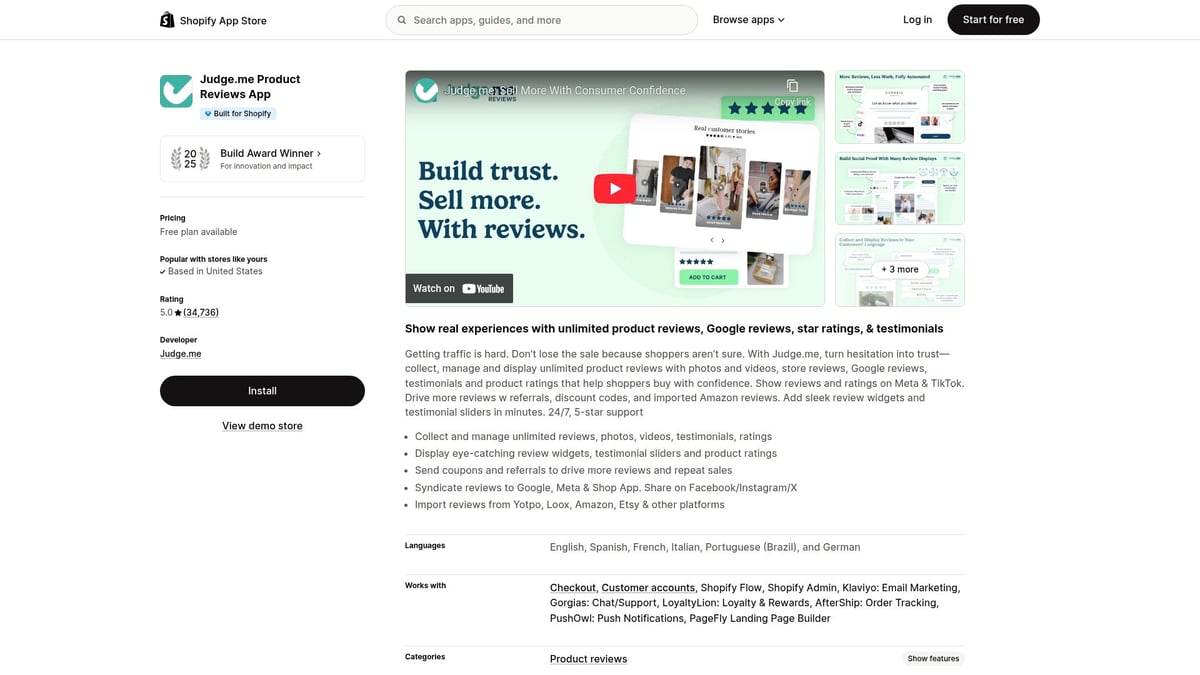
Key features:
- Unlimited product reviews and star ratings.
- Photo and video testimonials.
- Automated review requests.
The benefits are clear: Judge.me boosts trust, improves SEO, and increases conversions. Its seamless integration and high degree of customisation mean you can match reviews to your brand’s look and feel. The app’s support team is responsive and knowledgeable, making setup and troubleshooting simple.
Pros:
- High customisability.
- Excellent customer support.
- Strong SEO impact.
Cons:
- Some advanced features require a paid plan.
With over 34,000 reviews and a 5.0-star rating, Judge.me’s reputation is rock solid. Australian and global brands alike rely on it to build credibility fast. For stores wanting to harness user-generated content, this shopify partner apps solution is a proven performer.
PageFly Landing Page Builder
PageFly is a favourite among shopify partner apps for merchants who want to create high-converting pages without touching code. The free plan is robust, and premium options start at $24/month.
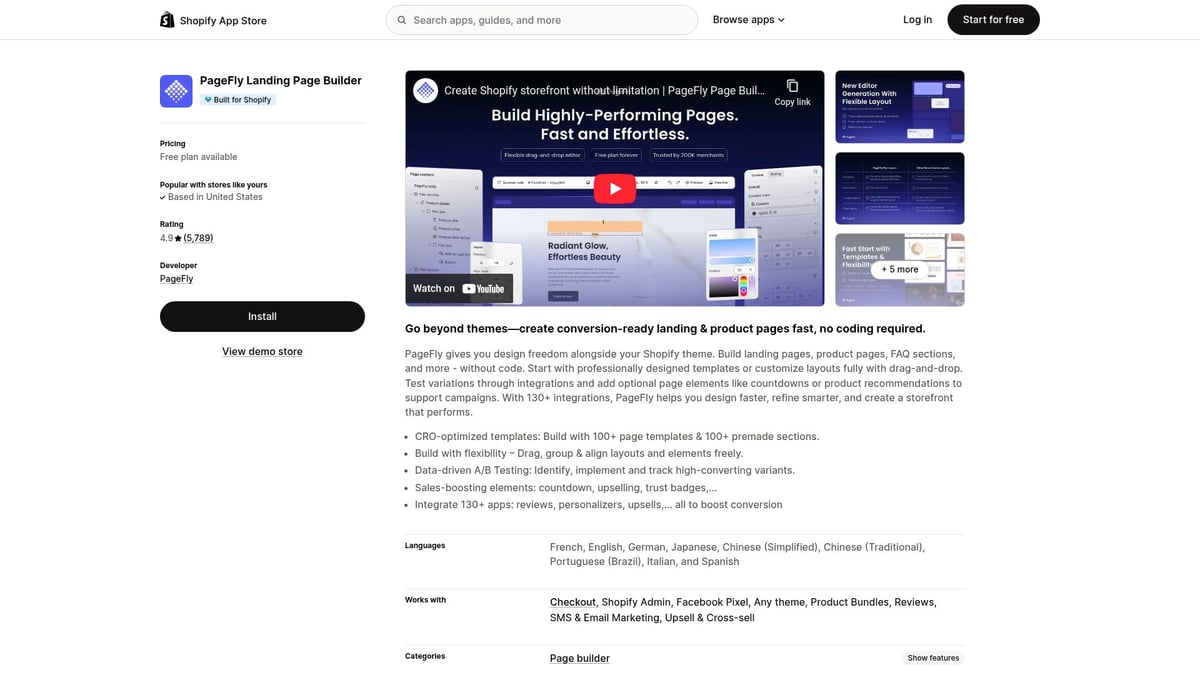
Core features include a drag-and-drop builder, conversion-focused templates, mobile-ready designs, and A/B testing. This flexibility lets you craft landing, product, and sales pages tailored to every campaign or product launch.
Ideal for merchants running regular promotions or those needing to improve site UX, PageFly’s strengths lie in its design options and reliable support. Integration with most Shopify themes is smooth, and the learning curve is manageable for basic use.
Pros:
- Flexible, intuitive design tools.
- Strong support and documentation.
- Integrates with most Shopify themes.
Cons:
- Advanced features may take time to master.
With more than 5,700 reviews and a 4.9-star rating, retailers using PageFly have seen measurable conversion lifts. Campaign-specific pages built using this shopify partner apps solution often outperform standard product pages, driving higher sales and engagement.
Kaching Bundles Quantity Break
Increasing average order value is a top priority for many brands, and Kaching Bundles Quantity Break is one of the shopify partner apps leading that charge. The app is free to install, with paid features for more advanced use.
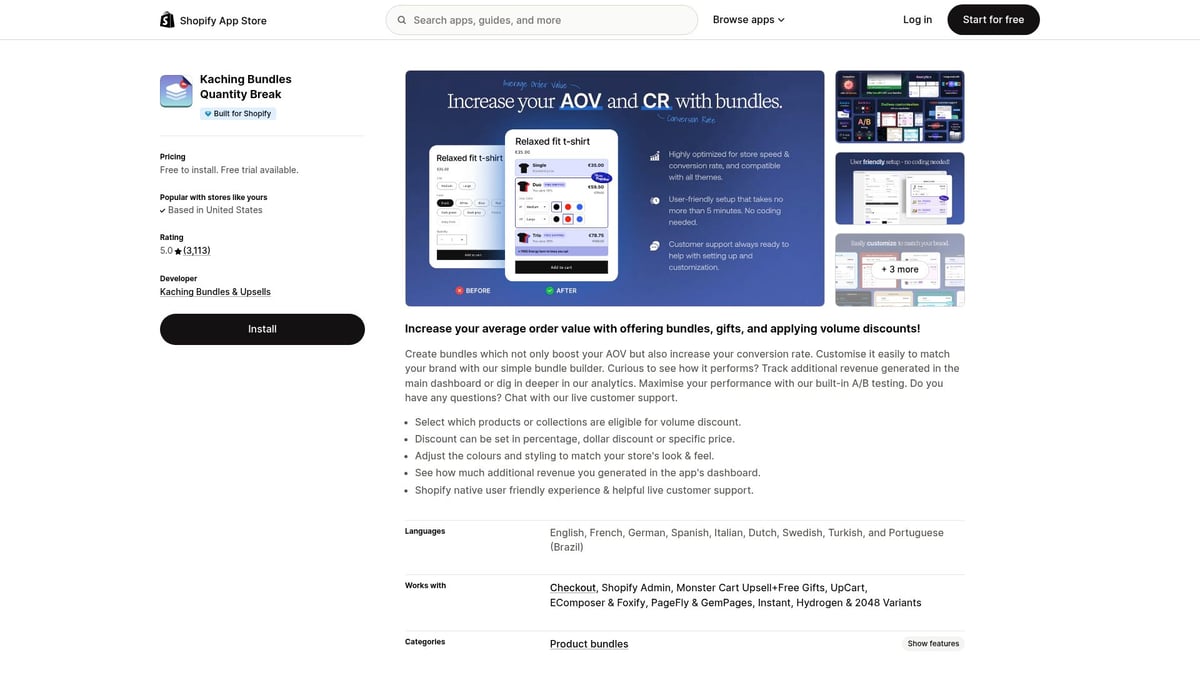
Core features:
- Volume discounts and BOGO offers.
- Free gifts with purchase.
- Upsell and cross-sell bundles.
Setting up Kaching is straightforward, and the dashboard is easy to use. It’s especially effective for stores with multiple SKUs or products that naturally bundle together. The app is certified “Built for Shopify,” so reliability is high.
Pros:
- User-friendly, intuitive dashboard.
- High ratings from merchants.
- Drives larger purchases.
Cons:
- Some features may overlap with other apps.
- Best results for stores with several product options.
With over 3,100 reviews and a 5.0-star rating, merchants report up to a 25% increase in bundled sales. For shopify partner apps aiming to directly impact AOV, Kaching is a smart, scalable choice.
ParcelWILL Order Tracking
Post-purchase experience is crucial for customer satisfaction. ParcelWILL is one of the shopify partner apps that transforms order tracking into a branded, data-rich touchpoint. Free and paid plans scale with your order volume, so it fits both small and large stores.
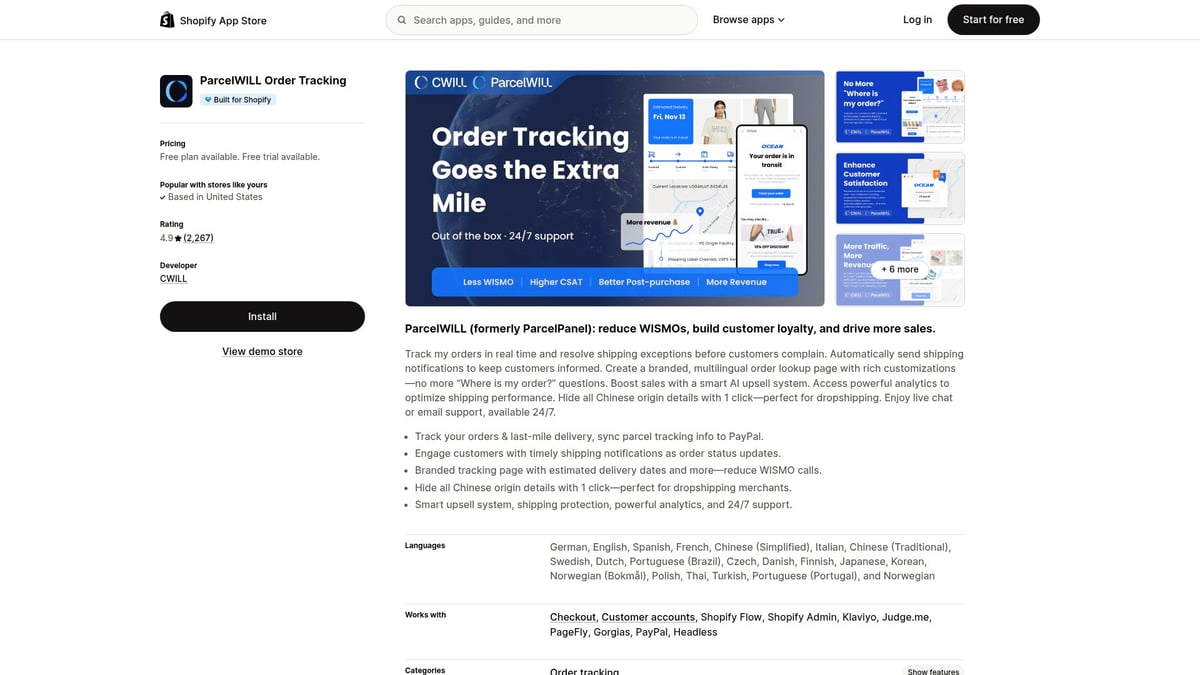
Key features:
- Real-time order tracking across multiple couriers.
- Custom-branded tracking pages.
- Automated customer notifications and analytics.
The main benefits are fewer “Where is my order?” (WISMO) queries, higher customer satisfaction, and reduced support workload. Integration is seamless, and notifications can be fully customised to match your store’s tone.
Pros:
- Supports many couriers, local and international.
- Easy to set up and customise.
- Reduces customer service time.
Cons:
- Advanced analytics only in paid plans.
Boasting 2,200+ reviews and a 4.9-star rating, ParcelWILL has helped stores cut WISMO queries by up to 40 percent. For shopify partner apps focusing on customer experience, this one is hard to beat.
Tiny SEO Speed Image Optimizer
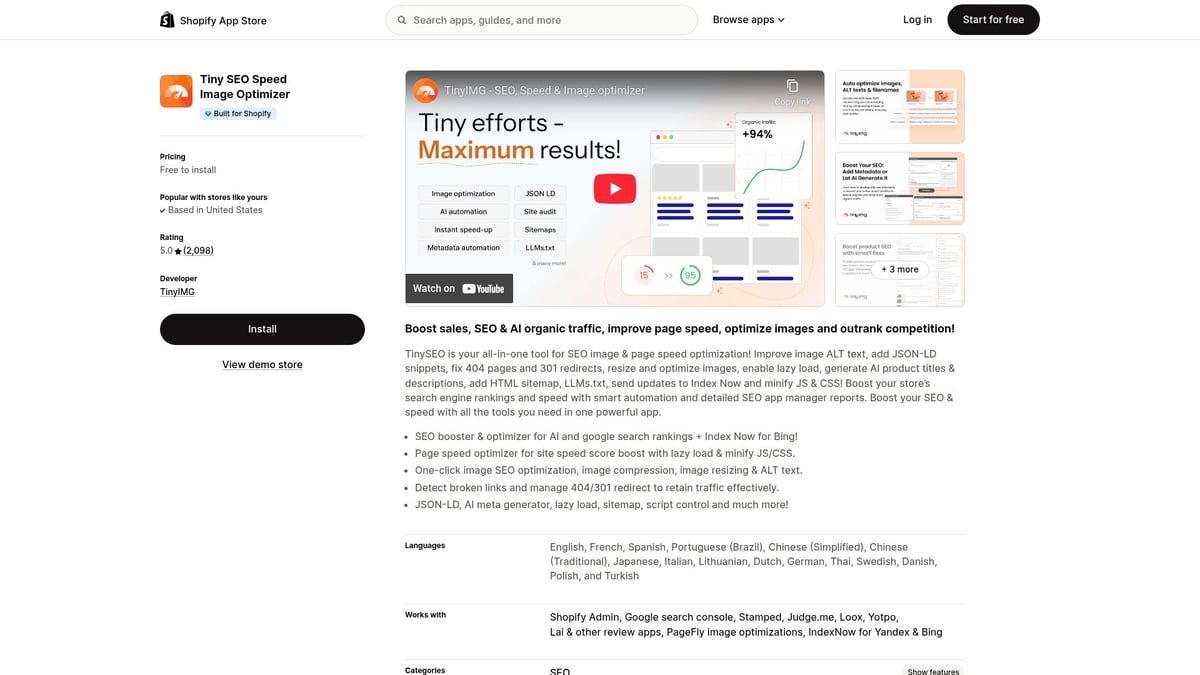
Site speed and SEO are more important than ever in 2026. Tiny SEO Speed Image Optimizer is among the most effective shopify partner apps for boosting loading times and search rankings. The app is free to install, with premium automation for larger stores.
Core features:
- Image compression and optimisation.
- AI-driven SEO suggestions.
- Automated alt tags and page speed improvements.
The “set and forget” approach means once installed, your images are continually optimised. This leads to faster page loads and improved Google rankings, which are critical for attracting and retaining customers.
Pros:
- No coding required.
- Measurable SEO and speed gains.
- Works in the background with minimal input.
Cons:
- Free plan has some feature limits.
- Full automation in premium plans.
With 2,000+ reviews and a perfect 5.0-star rating, merchants consistently report bumping up organic traffic and keeping bounce rates low. As shopify partner apps go, this one delivers clear, ongoing value.
Loox – Visual Product Reviews
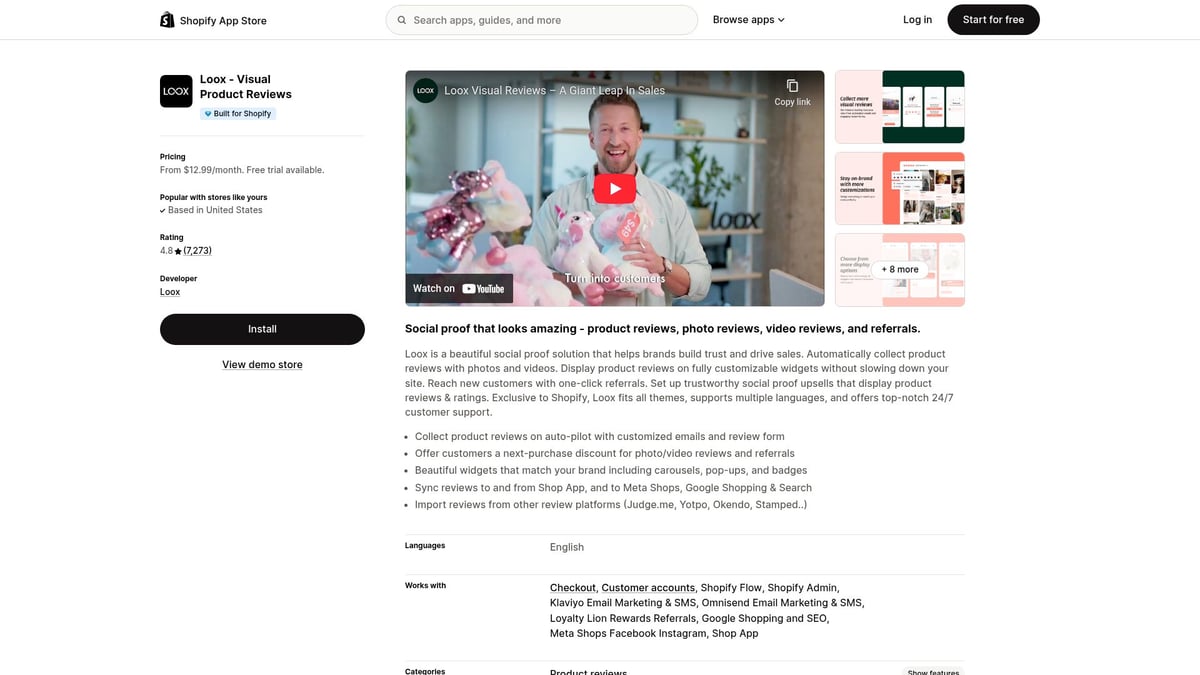
Visual reviews drive trust and conversions. Loox has become one of the most popular shopify partner apps for brands that rely on visual storytelling and influencer marketing. There’s a free trial, and paid plans start at $9.99/month.
Key features:
- Photo and video reviews.
- Referral and rewards programs.
- Automated review requests and customisable widgets.
Loox’s beautiful display options and simple setup make it a favourite for brands with visually appealing products. Referral incentives encourage customers to share their experiences, driving both reviews and new sales.
Pros:
- Attractive, visual-first review displays.
- Easy to implement and manage.
- Boosts social proof and trust quickly.
Cons:
- Best suited for stores with strong visuals.
- Most advanced features are in higher-tier plans.
With over 7,200 reviews and a 4.8-star average, Loox users often see a measurable uptick in conversion rates from review-generated sales. Among shopify partner apps, it’s a standout for brands that want to make an impression.
How to Evaluate and Implement Shopify Partner Apps for Maximum ROI
Choosing the right shopify partner apps can transform the trajectory of your eCommerce business. Australian merchants in 2026 face a crowded marketplace, so a clear, methodical approach is essential. Let’s break down how to select, implement, and maximise your app investments for genuine growth.
Step-by-Step App Selection Process
Start by identifying your store’s main objectives. Are you looking to lift conversions, automate tasks, or boost retention? Make a shortlist of shopify partner apps with strong user ratings and the “Built for Shopify” badge, ensuring reliability.
Compare pricing structures: free, freemium, or paid. Weigh potential ROI, especially where free trials are available. Test shortlisted apps for compatibility and ease of use. Assess support and update frequency—responsive support is crucial.
For a deeper dive into integrated solutions, explore Shopify store development services that complement app choices for long-term growth.
Integration Best Practices
Before installing new shopify partner apps, always use a development or staging store. This helps you test functionality and ensures the app won’t disrupt your live storefront.
Monitor key metrics like site speed and UX after adding an app. Check for code conflicts or duplicated features. Document any changes so you can revert quickly if needed.
Seamless integration reduces friction and supports a smoother customer journey, keeping your store running at peak performance.
Measuring Success
Define clear KPIs before launching new shopify partner apps. These might include conversion rates, average order value, or customer satisfaction scores.
Leverage built-in analytics to track performance. For example, if a bundling app raises AOV by 20 percent or a support app cuts WISMO queries by 40 percent, you have hard evidence of ROI. Benchmarks from the Impact of Shopify Apps on eCommerce Growth show that well-chosen apps can directly boost both sales and efficiency.
Use Shopify’s reporting tools to compare pre- and post-install results, and adjust your app stack accordingly.
Avoiding Common Pitfalls
Too many shopify partner apps can slow your site and muddy the customer experience. Limit your stack to essential tools and regularly audit usage.
Watch out for hidden costs in premium tiers. Remove any app that no longer aligns with your goals. Test updates in a safe environment to prevent unexpected issues.
A lean, high-performing app stack will always beat a cluttered one.
Staying Ahead in 2026
Stay curious and keep up with new releases in the Shopify app ecosystem. Join partner communities to swap recommendations and get real-world feedback.
Early adoption of trending shopify partner apps—especially those with AI or automation—can give you a long-term edge. Regularly review your strategy as your business grows, so your tech stack evolves alongside your goals.
Frequently Asked Questions About Shopify Partner Apps in 2026
Navigating shopify partner apps can feel like a maze, especially with Shopify’s ecosystem growing every year. Here are the most common questions from Australian store owners, answered with clarity and real-world insight.
What qualifies an app as a “Shopify Partner App”?
A Shopify Partner App is created, supported, and maintained by trusted third-party developers who meet Shopify’s strict standards. These apps must pass Shopify’s security, integration, and reliability checks before being listed. The “Built for Shopify” badge is a sign of quality, ensuring the app works smoothly within the platform and receives regular updates.
For 2026, with over 8,000 apps available, choosing certified shopify partner apps means you’re less likely to face compatibility or support issues. This is especially important as the app landscape keeps evolving.
How often should I review my installed apps?
It’s wise to review your shopify partner apps at least every quarter. Regular reviews help you spot underperforming tools or features that are no longer relevant as your business grows.
Many merchants find that quarterly audits keep their store lean, fast, and secure. Removing unused apps also lowers the risk of unexpected costs or technical conflicts. Mark your calendar to make this a habit.
Are free apps as effective as paid ones?
Free shopify partner apps can be surprisingly robust. Many offer generous features, especially for new or smaller stores. Paid plans, however, often unlock advanced capabilities such as deeper analytics or automation.
For example, Judge.me and ParcelWILL both have free tiers with optional upgrades. It pays to test a free version first, then consider premium plans if you need more power. Always weigh the cost against the potential ROI.
Can apps slow down my Shopify store?
Yes, installing too many shopify partner apps, or apps with poor coding, can impact your site’s speed. This affects both user experience and SEO rankings. To keep your store running at its best, choose well-reviewed apps, and monitor your site’s performance after each install.
Consider using optimisation tools to help. For more guidance on improving speed and conversions, check out this SEO optimisation for Shopify pages guide.
How do I get support for app issues?
Most shopify partner apps offer email or live chat support directly through the app dashboard or the Shopify App Store. Before installing, read user reviews to see how responsive the support team is.
Prompt support can make a world of difference, especially during busy sales periods. If you run into issues, don’t hesitate to reach out—the best app partners value your business and work to solve problems quickly.
What’s the best way to test a new app?
Always test new shopify partner apps in a development or duplicate store first. This lets you see how the app interacts with your existing setup, without risking your live site.
Use free trials to check ease of use, integration, and real impact on your KPIs. Monitor changes in speed, conversion, or customer experience before making a final decision. Careful testing helps avoid surprises.
Are these apps suitable for Australian eCommerce businesses?
Absolutely. All the shopify partner apps featured in this guide are widely used by Australian merchants. They support local requirements, including GST and shipping integrations.
With Shopify’s market share growing across Australia and globally, the right apps can help your business stay competitive. For more on Shopify’s growth and why app selection matters, see these Shopify’s Market Share and Growth in 2026 statistics.
After breaking down the best Shopify Partner Apps for 2026, you’ve probably got a clearer picture of how the right tools can seriously boost your sales and efficiency. But let’s be real—it’s still easy to feel stuck when it comes to turning all this info into real momentum for your business. If you want guidance that’s tailored to your goals, not just another generic agency pitch or confusing DIY route, we should talk. You can Go From Stuck to Selling in 4 Weeks—no strings, just straightforward advice and a plan built for where you are right now.


Be the first to comment