

Ecommerce is changing faster than ever, and Shopify store owners in 2026 face competition that is stronger and smarter. Standing out requires more than just good products.
Looking at shopify case studies gives you real proof of what works and what doesn’t. These stories are the best way to spark ideas and learn from others’ wins and mistakes.
This article shares seven shopify case studies from different industries. You’ll see creative solutions, hard data, and strategies you can use to grow your own store. Get ready for practical inspiration you can actually apply.
Why Shopify Case Studies Matter in 2026
The ecommerce landscape in 2026 is more competitive than ever. For Shopify store owners, staying ahead means learning from those who have already blazed the trail. That is where shopify case studies come into play. These real-life stories offer a wealth of knowledge, showing what works, what does not, and how to pivot when things get tough.
Shopify has rapidly evolved its platform over the past year. New tools for automation, omnichannel selling, and AI-driven analytics are changing how merchants operate. The impact is clear: businesses that adapt quickly are seeing major gains. By diving into shopify case studies, you get a front-row seat to innovations like one-click checkout, unified inventory, and advanced fulfilment systems.
The numbers back it up. Shopify supported more than 1.7 million businesses worldwide by 2025, with Australian stores achieving 23% year-on-year growth. According to Shopify’s Global Market Share in 2025, the platform’s market presence continues to expand, making it a top choice for ambitious brands. When you study shopify case studies, you see not just success, but also the practical steps taken to reach those milestones.
Every store faces hurdles: scaling up, managing fulfilment, delivering a seamless customer experience, or integrating online and offline channels. The beauty of shopify case studies is in how they reveal solutions to these challenges. Brands like Skullcandy and Sea Bags have completely transformed their business models by leveraging Shopify’s latest features. Their journeys show that learning from both wins and setbacks leads to smarter, more confident decisions.
7 Inspiring Shopify Case Studies to Boost Your Store in 2026
Shopify case studies offer a window into what’s possible for ambitious store owners in 2026. By examining real brands that have tackled common ecommerce challenges, you can uncover proven strategies to accelerate your own growth.
Each example below explores a different industry, business model, and path to success. Whether you’re scaling up, expanding internationally, or unifying sales channels, these shopify case studies deliver the inspiration and practical insight you need.
Skullcandy: Accelerating Growth with a 90-Day Digital Transformation
Skullcandy, a global leader in audio electronics, needed to modernise its digital infrastructure to keep pace with fierce competition. The brand chose an enterprise-level Shopify Plus solution, focusing on rapid migration, a custom theme, and omnichannel support.
Within just 90 days, Skullcandy completed a full digital transformation. This agility set a new standard for enterprise brands. The new site integrated advanced analytics and omnichannel sales, which allowed the team to make swift, data-driven decisions.
During the first holiday season after switching to Shopify, Skullcandy achieved a 45% year-on-year revenue increase. This dramatic result highlights the power of embracing platform innovation and speed. The project’s unique selling point was its startup-like agility at an enterprise scale.
For electronics brands and fast-scaling retailers, this shopify case studies example shows what’s possible when you prioritise speed and integration. It’s ideal for brands needing rapid transformation and omnichannel expansion.
While the process required significant planning and resources, the payoff was clear. For those interested in accelerating their own transformation, How to build Shopify stores fast offers a practical guide to launching quickly without sacrificing quality.
Mejuri: Cutting Fulfilment Costs and Lead Times with Shopify
Mejuri, a fast-growing luxury jewellery brand, faced mounting challenges as it expanded into the UK market. International fulfilment was slow and costly, risking customer satisfaction and profitability.
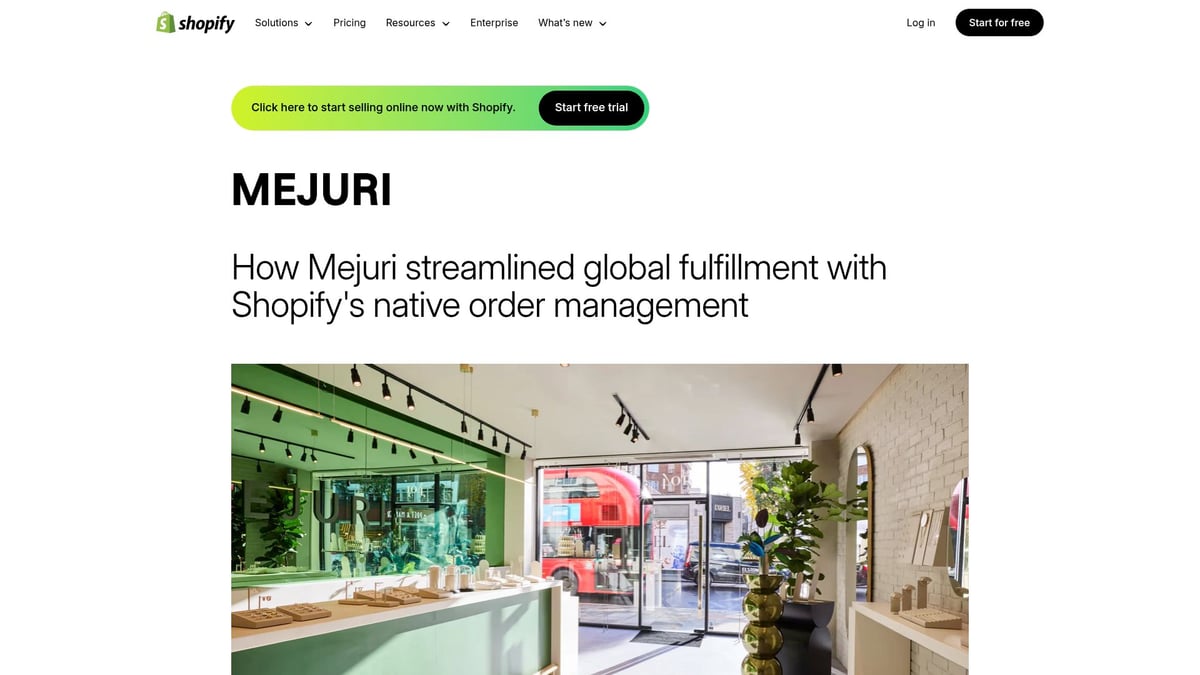
By adopting Shopify Plus with custom logistics integrations, Mejuri slashed UK lead times by 80%. Monthly shipping costs dropped by $100,000. Advanced shipping rules and automation streamlined operations, ensuring customers received their orders faster and more reliably.
This shopify case studies example stands out for its seamless international logistics. Mejuri’s ability to scale globally while enhancing the customer experience offers a blueprint for other luxury and lifestyle brands. If you’re considering international expansion or looking to optimise fulfilment, this case provides actionable inspiration.
The setup was complex, requiring careful planning and integration of multiple systems. Still, the results—better customer retention, lower costs, and global reach—made the investment worthwhile. For any store eyeing new markets, learning from shopify case studies like Mejuri’s can help avoid costly pitfalls.
FROM FUTURE: Boosting Omnichannel Revenue with Shopify POS
FROM FUTURE, a Parisian fashion label, needed to unify its online and in-store operations to deliver a seamless customer journey. The brand leveraged Shopify POS and the Plus plan, integrating real-time inventory and centralised management.
Within months, FROM FUTURE saw a 10% increase in omnichannel revenue. Customer data insights improved, helping staff personalise service and drive repeat purchases. The fully integrated POS system supported retail growth, making it easy to scale up new locations.
For fashion and apparel brands with both physical and digital footprints, this shopify case studies example highlights the benefits of omnichannel integration. Unifying sales channels boosts efficiency and enhances the customer experience.
While the initial investment in POS hardware and software can be significant, the long-term gains in revenue and customer loyalty are compelling. Retailers seeking to unify brick-and-mortar and ecommerce can learn a lot from FROM FUTURE’s approach to shopify case studies.
Russell Hendrix: Scaling B2B Ecommerce with Shopify
Russell Hendrix, a major supplier to the foodservice industry, needed a robust B2B ecommerce platform to handle complex orders and customer accounts. Shopify’s B2B solutions, combined with custom integrations, made the transition possible.
After migrating from a legacy system, Russell Hendrix saw a 43% increase in B2B online orders and a 24% revenue jump within 12 months. Features like bulk pricing, dedicated account management, and seamless ordering transformed the business.
This shopify case studies example is ideal for industrial suppliers, wholesalers, or distributors. The migration required some custom development, but the result was a scalable, flexible platform tailored for complex sales.
Shopify’s B2B tools enabled Russell Hendrix to streamline operations and respond quickly to customer needs. For any business looking to modernise its B2B ecommerce, shopify case studies like this one offer a clear playbook for success.
Sea Bags: Unifying 36 Stores and Capturing New Customers
Sea Bags, a retailer specialising in handcrafted bags, faced the challenge of managing 36 physical stores alongside a growing online presence. Using Shopify Plus with multi-store management, the brand centralised operations and automated marketing.
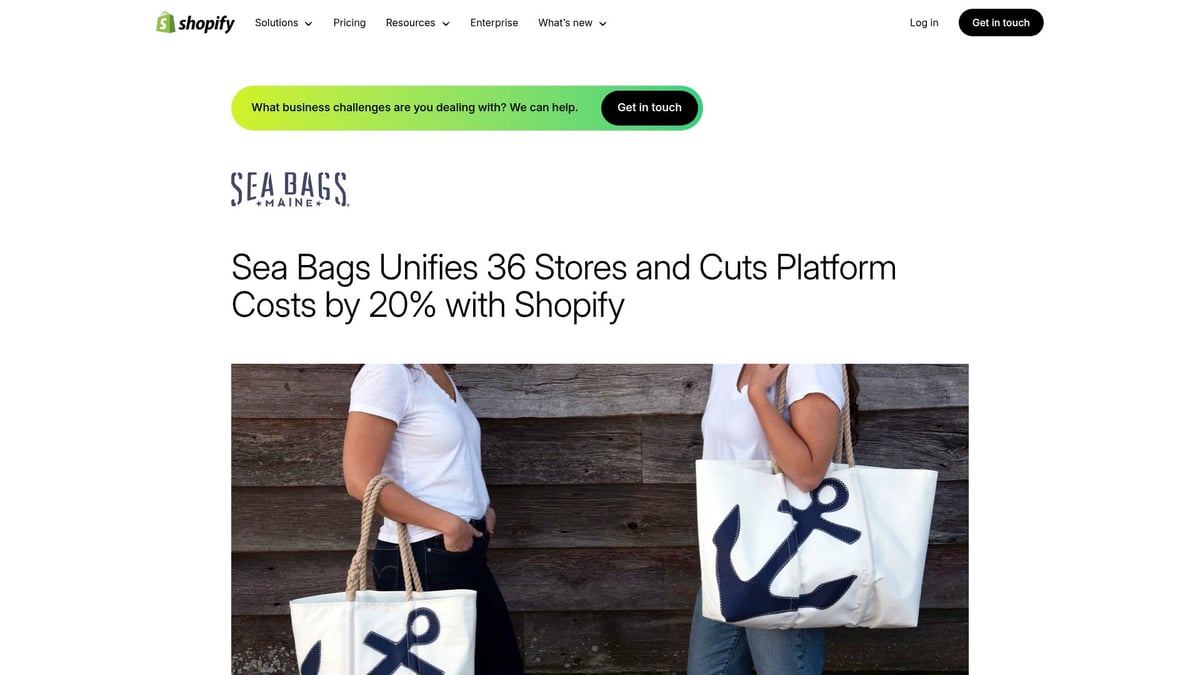
This move reduced operational costs by 20% and added 1,200 new customer emails every week. The ability to manage multiple locations efficiently allowed Sea Bags to focus on customer acquisition and retention.
This shopify case studies story is particularly relevant for retailers expanding regionally or consolidating multiple stores. The key benefit is streamlined management and rapid growth of the customer base.
Staff needed training on the new system, but the benefits far outweighed the learning curve. Sea Bags demonstrates how shopify case studies can guide multi-location brands to scale without losing efficiency or customer connection.
Dermalogica: Increasing Conversions and Reducing Maintenance with Shopify Horizon Theme
Dermalogica, a leading skincare brand, wanted to modernise its site and cut down on maintenance. Upgrading to the Shopify Horizon theme on Shopify Plus delivered immediate results.

The new theme reduced the need for custom code, improved user experience, and sped up site performance. Dermalogica saw a 9% increase in conversion rates, annual software savings of over $35,000, and 40% less developer time required.
This shopify case studies example is a game-changer for health and beauty brands or any store burdened by legacy code. The transition required some downtime, but the ongoing savings and improved scalability made it worthwhile.
Modern themes like Horizon offer fast performance and easy updates, helping stores stay agile in a crowded market. If you’re considering a theme upgrade, shopify case studies like Dermalogica’s show the value of investing in your site’s foundation.
V’s Barbershop: Unifying B2C and B2B for 40% More Conversions
V’s Barbershop, a hybrid retailer and service provider, needed a platform that could handle both B2C and B2B sales. By leveraging Shopify Plus and the DigitalJAS integration, the brand achieved a unified site experience.
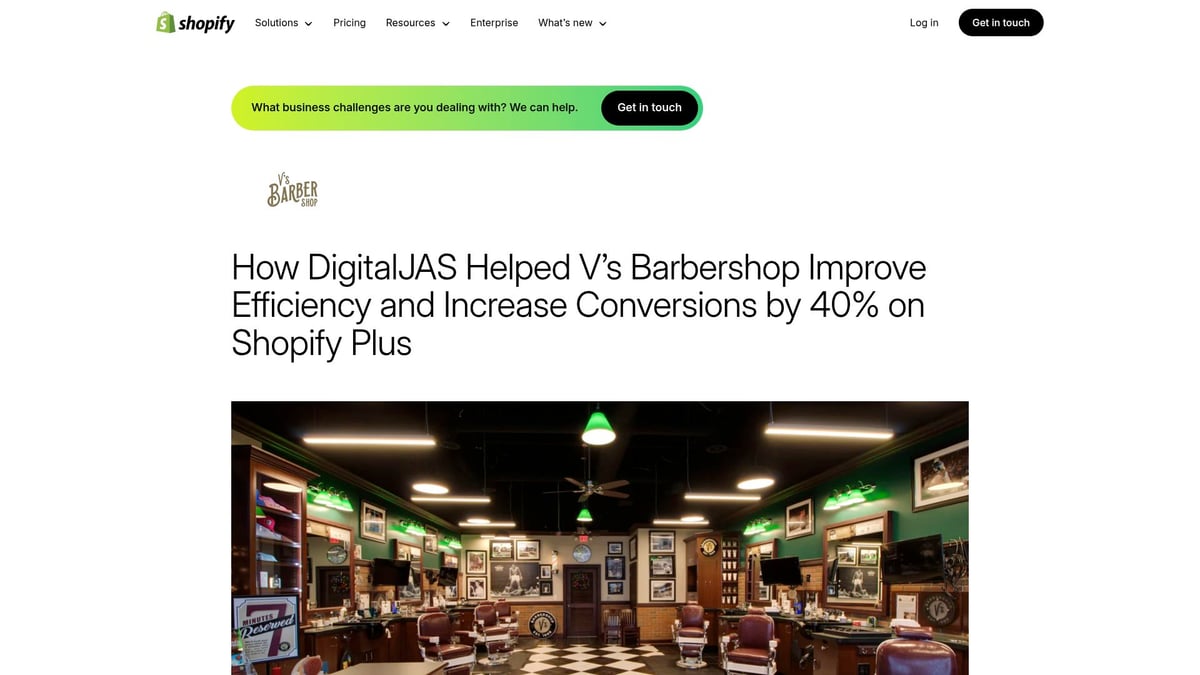
The results were impressive: a 40% increase in conversions, faster site performance, and simplified operations. Dual-channel management allowed V’s Barbershop to serve both retail customers and wholesale partners from one dashboard.
This shopify case studies example is highly relevant for service-based retailers with physical products. While some niche requirements may need third-party integrations, the overall gains in efficiency and sales are substantial.
By unifying B2B and B2C, V’s Barbershop unlocked new revenue streams and streamlined admin work. For any business looking to bridge service and product sales, this shopify case studies lesson is a must-read.
Key Takeaways from Top Shopify Case Studies
Shopify case studies offer a window into what’s working for ambitious ecommerce brands in 2026. By analysing these real-world transformations, you can spot patterns, avoid common mistakes, and accelerate your own growth. The lessons from these stories are not just theory—they are battle-tested strategies that can give your store a competitive edge.
Recurring Strategies Across Shopify Case Studies
Across all seven shopify case studies, several themes stand out:
- Rapid digital transformation is achievable with the right platform and planning.
- Omnichannel integration consistently leads to higher revenue and better customer experiences.
- Automation, especially in fulfilment and inventory, saves time and cuts costs.
- Upgrading to modern themes and reducing custom code delivers faster sites and higher conversions.
- Unifying B2B and B2C operations streamlines management and boosts sales.
These strategies are not isolated. For example, Dermalogica’s switch to a modern theme resulted in a 9% conversion lift and $35K saved annually. Meanwhile, Russell Hendrix saw a 43% jump in B2B orders after implementing dedicated Shopify B2B tools.
The Power of Digital Agility in 2026
Today’s ecommerce landscape demands agility. Many brands in these shopify case studies completed major transformations in under 90 days. Skullcandy’s digital overhaul is a prime example, showing how speed and scalability can drive a 45% year-over-year revenue spike.
Recent data supports this trend—stores migrating to Shopify report average revenue growth between 20% and 45%. According to Shopify’s Market Share and Growth Trends, Shopify’s global footprint and feature set continue to expand, making it easier for merchants to adapt quickly.
Omnichannel and Automation: Revenue and Savings
Integrating online and offline sales channels is no longer optional. From Future boosted omnichannel revenue by 10% after adopting Shopify POS. Sea Bags unified 36 stores, capturing 1,200 new customer emails each week and cutting costs by 20%. These shopify case studies prove that automation in fulfilment and operations is a game changer for both customer satisfaction and the bottom line.
Modern Themes and Unified Operations
Switching to modern, well-supported themes reduces the need for ongoing code maintenance. This was clear in Dermalogica’s case, where a theme upgrade slashed developer time by 40%. V’s Barbershop unified B2C and B2B channels, increasing conversions by 40% and simplifying management. The right theme and integrations can help you achieve similar results.
Actionable Insights for Your Store
What can you take from these shopify case studies? Focus on agility, invest in omnichannel solutions, automate wherever possible, and streamline your tech stack. If you’re ready to implement these strategies, consider expert Shopify store development services to guide your next steps. The evidence is clear—real-world examples show that with the right approach, sustainable growth is within reach.
How to Apply These Lessons to Your Shopify Store
Making the leap from inspiration to action starts with a clear-eyed assessment of your current Shopify store. List out your biggest challenges—are you struggling with slow fulfilment, clunky checkout, or stagnant revenue? Compare your situation to the shopify case studies above. Are there parallels in logistics, omnichannel, or B2B needs? Identify what’s holding you back and where the biggest growth opportunities lie. Even small tweaks, like modernising your theme or streamlining inventory, can spark significant improvement.
Next, prioritise actions based on proven strategies from shopify case studies. Consider which case reflects your situation best: Is it Mejuri’s logistics overhaul, or FROM FUTURE’s omnichannel approach? Start with one impactful change. For example, if international shipping eats into your profits, look at Mejuri’s fulfilment model. If you’re worried about high agency fees, explore affordable alternatives to $10k Shopify sites to get expert help without breaking the bank. Break bigger projects into smaller, manageable steps to keep momentum.
Tracking progress is crucial. Use Shopify’s built-in analytics or third-party tools to monitor the impact of your changes. Set clear KPIs—conversion rate, average order value, or new email signups—based on outcomes seen in shopify case studies. Regularly review your data to spot trends and catch issues early. Don’t be afraid to experiment: test a new theme, tweak your product page SEO, or trial a new fulfilment partner. Continuous improvement is what keeps top stores ahead of the curve.
Finally, invest in learning and expert support. Leverage guides like SEO optimisation for Shopify product pages to keep your store competitive. Join Shopify forums, attend webinars, or connect with other Australian merchants who have implemented similar strategies. If your store’s needs are complex, consider partnering with a Shopify expert for custom solutions. Remember, the most successful shopify case studies started with a willingness to adapt, learn, and act. Your next big breakthrough could be just one smart step away.
If these seven Shopify success stories have sparked ideas for your own store, you’re already ahead of the curve. Taking action is the next step, and you don’t need to do it alone or get bogged down in endless research. Whether you’re looking to speed up your site, unify channels, or finally ditch the DIY overwhelm, let’s put a plan in place that’s built for your goals and your reality. You can break through the plateau and start selling with confidence—fast. Ready to see what’s possible for your business? Go From Stuck to Selling in 4-Weeks


Be the first to comment