

Running a Shopify store means dealing with technical questions, customer service decisions, and platform updates that can't always wait until Monday. Support at Shopify becomes a lifeline when you're troubleshooting checkout errors at 11pm or trying to understand why your inventory sync isn't working. The good news is that Shopify offers multiple support channels, though what you get access to depends entirely on your plan level and whether you're willing to pay for premium assistance. For small Australian eCommerce businesses, understanding what support is included and what requires external help can save you hours of frustration and unexpected costs.
What Support at Shopify Actually Includes
Shopify's base support offering covers technical platform issues, billing questions, and basic functionality guidance.
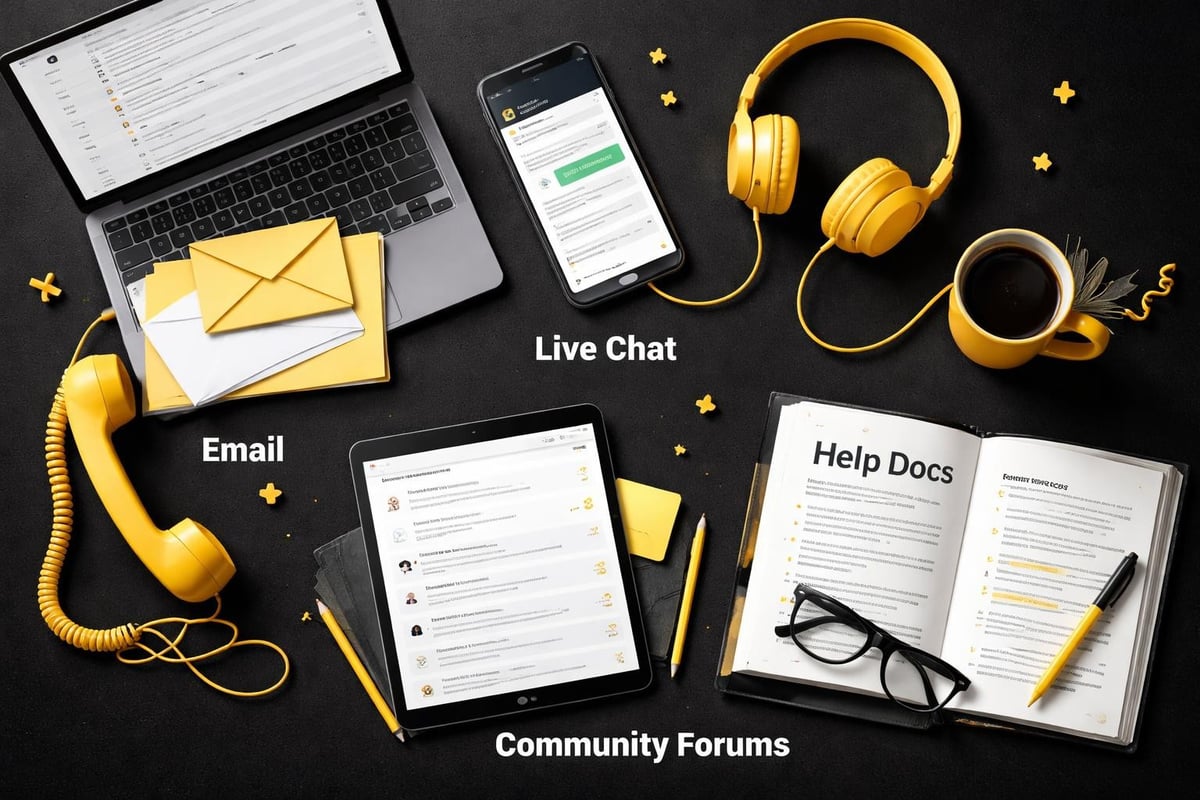
Every paid Shopify plan includes 24/7 support through email and live chat. That means if your store breaks at 2am on a Sunday, you can reach someone who works for Shopify directly. Phone support is also available but only during business hours, which for Australian stores means considering US time zones.
The quality and speed of response varies significantly based on your plan tier.
Basic Shopify subscribers get standard support with typical response times ranging from a few hours to 24 hours for email. Live chat tends to be faster, but wait times increase during peak periods like Black Friday or major platform updates.
Shopify Plus customers receive priority support with dedicated account management and faster response guarantees. This tier is designed for stores processing significant volume and needing enterprise-level reliability.
What support at Shopify doesn't cover is equally important to understand.
The support team won't build custom features, write code for your theme, troubleshoot third-party app conflicts in depth, or provide strategic business advice. They focus on platform functionality, not implementation specifics or marketing strategy.
The Reality of Getting Help Quickly
Response time matters most when your store is down or checkout isn't processing orders.
A 2024 survey of eCommerce platform users found that 67% rated support response time as their top priority when evaluating platforms. Shopify's average first response time sits around 2-4 hours for standard plans during normal periods, but this can stretch to 12-24 hours during high-traffic seasons.
Live chat generally provides the fastest path to a human.
When you open a chat window, you're typically connected within 5-15 minutes during standard hours. The challenge is that chat agents have limited ability to escalate complex issues immediately. They work from scripts and knowledge bases, which means straightforward questions get resolved quickly while technical problems often get transferred or require follow-up emails.
Email support allows for more detailed explanations and screenshots.
If your issue involves multiple steps to reproduce or requires sharing backend settings, email often yields better results than trying to explain everything in a chat window. The trade-off is waiting longer for that initial response.
Phone support exists but isn't always the best option.
Many Australian store owners find phone support frustrating because of time zone differences and the need to explain technical issues verbally. Unless you're a Shopify Plus customer with a dedicated line, you'll often end up in the same queue as chat and email requests.
Support Resources Beyond Direct Contact
The Shopify Help Center contains thousands of articles covering setup, troubleshooting, and platform features.
These articles are searchable and regularly updated, making them valuable for DIY problem-solving. The documentation quality is generally high, with step-by-step instructions and screenshots. However, it's written for a global audience, which means some payment gateway or shipping advice doesn't apply directly to Australian stores.
The Shopify Community forums connect store owners with each other and occasional Shopify staff responses.
Real store owners share solutions to problems they've encountered, which can be incredibly useful for non-urgent issues or strategic questions. The forums are particularly strong for app recommendations and workaround solutions. Support at Shopify through community channels doesn't come with guaranteed response times, but experienced users often reply within hours.
Shopify Academy offers free courses on running an eCommerce business.
While not support in the traditional sense, these resources help prevent problems by teaching best practices for store setup, marketing, and operations. The courses cover everything from building effective product pages to managing inventory.
YouTube and third-party blogs provide unofficial support content.
Many Shopify experts and agencies publish tutorials and troubleshooting guides that often explain concepts more thoroughly than official documentation. These resources fill gaps in Shopify's official support, particularly around advanced customization and app integration.
When Support at Shopify Isn't Enough
Shopify's support team excels at platform issues but has clear boundaries around what they'll help with.
Theme customization falls outside their scope. If you want to change how your product pages look or add custom functionality, support will point you to theme documentation but won't write code for you. This is where many small businesses get stuck, particularly those who launched on DIY platforms and expected ongoing technical assistance.
App troubleshooting becomes complicated when issues involve third-party software. Shopify support can confirm whether an app is installed correctly and check for known conflicts, but they'll redirect you to the app developer for functionality problems. When an app breaks your checkout or conflicts with your theme, you're often bounced between support teams.
Strategic decisions about platform features, plan upgrades, or business direction aren't part of the support mandate. They'll explain what a feature does but won't tell you whether it's right for your business model or how to implement it effectively.
This is where external support becomes necessary.
Many Australian stores find themselves needing a Shopify developer for issues that official support can't or won't address. The decision point comes when you're spending more time troubleshooting than running your business.
Comparing Support Across Shopify Plans
| Plan Level | Support Channels | Response Priority | Additional Features |
|---|---|---|---|
| Basic Shopify | Email, chat, phone | Standard queue | Help Center access |
| Shopify | Email, chat, phone | Standard queue | Help Center access |
| Advanced Shopify | Email, chat, phone | Standard queue | Help Center access |
| Shopify Plus | Email, chat, phone, dedicated line | Priority escalation | Account manager, Slack channel |
The differences in support quality between standard plans and Plus are significant enough that some businesses upgrade primarily for better support access.
A Shopify Plus subscription starts at $2,000 USD monthly, which is prohibitive for most small Australian stores. The priority support and dedicated account management only make financial sense when your store is generating substantial revenue and downtime costs are measured in thousands per hour.
For businesses on standard plans, the support experience is largely identical whether you're on Basic or Advanced Shopify. You're accessing the same support queue with the same response times. The main differences between these plans relate to features and transaction fees, not support quality.

Getting Better Results from Support Interactions
How you approach support at Shopify directly impacts resolution speed and quality.
Provide specific details upfront. Instead of "my checkout isn't working," explain exactly what happens: "customers can add products to cart but when they click checkout, they get a 404 error. This started after I updated my theme yesterday."
Include screenshots and URLs. Visual evidence helps support agents understand your issue faster and reduces back-and-forth clarification requests.
Check Help Center first for common issues. Questions about changing your domain, setting up shipping zones, or adding products have detailed documentation that's faster than waiting for a support response.
Use the right channel for your urgency level. Store-down emergencies warrant chat or phone. Questions about features or best practices work fine via email.
Document your interactions. Keep records of ticket numbers and responses, particularly for ongoing issues that require multiple contacts. Referencing previous conversations helps new agents understand context quickly.
Support agents work better with customers who understand platform limitations.
Asking Shopify support to recommend which theme you should buy or whether you should use Shopify Payments will result in generic answers. They'll explain options but won't make business decisions for you. According to Shopify's own research on handling customer service demand, clear communication and realistic expectations improve support outcomes significantly.
App-Based Support Solutions
Third-party apps extend support capabilities beyond what Shopify provides natively.
Help desk apps like Gorgias, Zendesk, and Re:amaze centralize customer support tickets from email, chat, and social media. These tools don't help with Shopify platform issues, but they dramatically improve how you manage customer care for your store's shoppers.
Live chat apps add real-time communication to your storefront. While Shopify's support team uses chat to help you, these apps let you provide the same experience to your customers.
Knowledge base apps let you build self-service support resources directly into your store. Creating FAQ pages and how-to guides reduces repetitive support requests about shipping times, return policies, and product usage.
The irony is that while these apps improve your ability to support customers, they sometimes create new technical issues that require support themselves. App conflicts and integration problems are common sources of support tickets for store owners.
What Australian Store Owners Need to Know
Time zones create unique challenges for Australian businesses relying on support at Shopify.
Peak support hours align with North American business days, which means Australian evenings and mornings often see faster response times than midday. If you're reaching out during Australian business hours, you're contacting support during their overnight shift when staffing is thinner.
Payment and shipping specifics for Australia sometimes fall outside support agents' immediate knowledge. Questions about Australia Post integration, Afterpay setup, or GST handling may require escalation to specialists who understand regional requirements.
Currency and pricing advice needs Australian context. When support documentation references pricing or fees, it's typically in USD. Conversion rates and local payment gateway fees affect actual costs for Australian merchants.
Local Shopify Partners and developers often provide better support for region-specific issues. A developer familiar with Australian eCommerce understands Sendle versus Australia Post, knows how EOFY sales patterns work, and can navigate local consumer protection requirements that US-based support agents may not encounter regularly.
When to Invest in Professional Help
Support at Shopify handles platform issues, but building and optimizing a store requires strategic expertise.
Many Australian small businesses launch their stores themselves, hit technical or strategic roadblocks, then spend weeks trying to troubleshoot issues that a specialist could resolve in hours. The calculation isn't just about time but opportunity cost.
Launch support matters most when you're setting up core systems. Getting payment gateways, shipping calculations, and tax settings right from the start prevents customer service nightmares later.
Conversion optimization goes beyond what support can address. Making your store actually sell requires understanding user behavior, testing checkout flows, and implementing proven design patterns that platform support won't guide you through.
Custom functionality requires development skills that support teams don't provide. Whether you need specific product filtering, subscription modifications, or integration with external systems, you're looking at developer territory.
For stores that need comprehensive setup without agency-level pricing, focused packages that include technical implementation and strategic direction offer middle-ground solutions. These approaches provide the structure and expertise that support at Shopify doesn't cover while remaining accessible for small business budgets.

The Hidden Costs of Inadequate Support
Poor support experiences cost more than just time.
Lost sales accumulate when checkout problems go unresolved. Even a few hours of downtime during peak traffic periods can mean hundreds or thousands in missed revenue.
Customer trust erodes when issues with orders, payments, or shipping take too long to resolve. Your customers don't care whether the problem is Shopify's fault, an app conflict, or a theme issue. They judge your business on the outcome.
Business momentum stalls when you're constantly firefighting technical issues instead of marketing, product development, and growth activities. Many store owners spend 10-15 hours weekly on technical troubleshooting that could be delegated or prevented entirely with proper initial setup.
DIY fatigue leads to abandoned stores. A 2023 study of eCommerce startups found that 34% of failed Shopify stores cited technical overwhelm and insufficient support as primary closure reasons, not lack of market demand.
The businesses that succeed on Shopify understand when to use platform support, when to leverage community resources, and when to bring in specialized help. They treat support as an ecosystem, not a single vendor relationship.
Building Your Support Strategy
Smart store owners develop a layered approach to getting help when needed.
Tier 1: Self-service resources for common questions and minor issues. Check documentation, search forums, and review app guides before reaching out.
Tier 2: Platform support for billing, platform bugs, and feature clarification. Use Shopify's official channels for issues within their scope.
Tier 3: App developer support for problems specific to third-party tools. Most quality apps offer email or ticket-based support.
Tier 4: Professional development support for custom work, strategic decisions, and complex technical issues. Whether through a Shopify Partner, specialized agency, or independent developer, this tier handles what other levels can't.
Having this structure prevents you from wasting hours in the wrong support channel or attempting fixes beyond your skill level.
Different business stages require different support intensity. A pre-launch store needs setup expertise. An established store needs optimization and scaling support. A store in crisis needs immediate problem resolution regardless of cost.
Support for Your Support
Many store owners underestimate the importance of supporting their own customer base well.
While you're figuring out support at Shopify for your technical issues, your customers are trying to reach you about orders, products, and shipping. The same frustrations you experience with slow support responses or unclear answers, your customers experience with your store.
Response time expectations have shortened dramatically. A 2025 customer service survey found that 76% of online shoppers expect responses within 2 hours during business hours. Your ability to meet these expectations depends partly on having your own technical issues resolved quickly.
Support tools and processes you implement affect customer satisfaction directly. Email templates, automated order updates, clear return policies, and accessible FAQs reduce support burden while improving customer experience.
Staff training matters for stores with team members handling customer inquiries. Your support staff needs to understand Shopify's limitations and capabilities to set realistic customer expectations and escalate issues appropriately.
The relationship between internal technical support and external customer support creates a multiplier effect. When your store runs smoothly because you have good technical support, you spend less time apologizing to customers about problems and more time actually helping them.
Support at Shopify provides the foundation for running your store, but it's only one piece of a complete support ecosystem. For Australian small businesses that need more than basic platform support, working with specialists who understand both Shopify's technical requirements and eCommerce strategy makes the difference between constant troubleshooting and actual growth. If you're ready to build your store properly from the start or need strategic direction beyond what platform support provides, Kida Digital offers conversion-focused Shopify development designed specifically for small Australian businesses launching or scaling their online stores.


Be the first to comment