
Running a small business in Australia means competing with international brands that have unlimited budgets and dedicated tech teams. Your local footwear store or handmade candle business needs the same professional online presence without the agency price tag. Web Shopify has become the practical answer for thousands of Australian small businesses who need an eCommerce platform that works without requiring a computer science degree. The platform handles the technical infrastructure while you focus on what actually matters: selling your products and serving your customers.
Why Web Shopify Works for Australian Small Businesses
Shopify processes over 10% of all eCommerce transactions in Australia as of 2026.
That's not by accident.
The platform removes the barriers that traditionally kept small businesses offline: server management, security certificates, payment processing integration, and mobile responsiveness. You get a professional online store without needing to understand the code that powers it. For a Melbourne-based ceramics studio or a Perth fitness supplement brand, this means launching an online store in weeks rather than months.
The Australian eCommerce market grew 23% in 2025, reaching $63 billion in annual sales. Small businesses captured a larger share of that growth than ever before, primarily because platforms like web Shopify made professional online selling accessible. You're not building a website anymore. You're building a sales channel that needs to convert browsers into buyers.
The Real Cost of Web Shopify in 2026
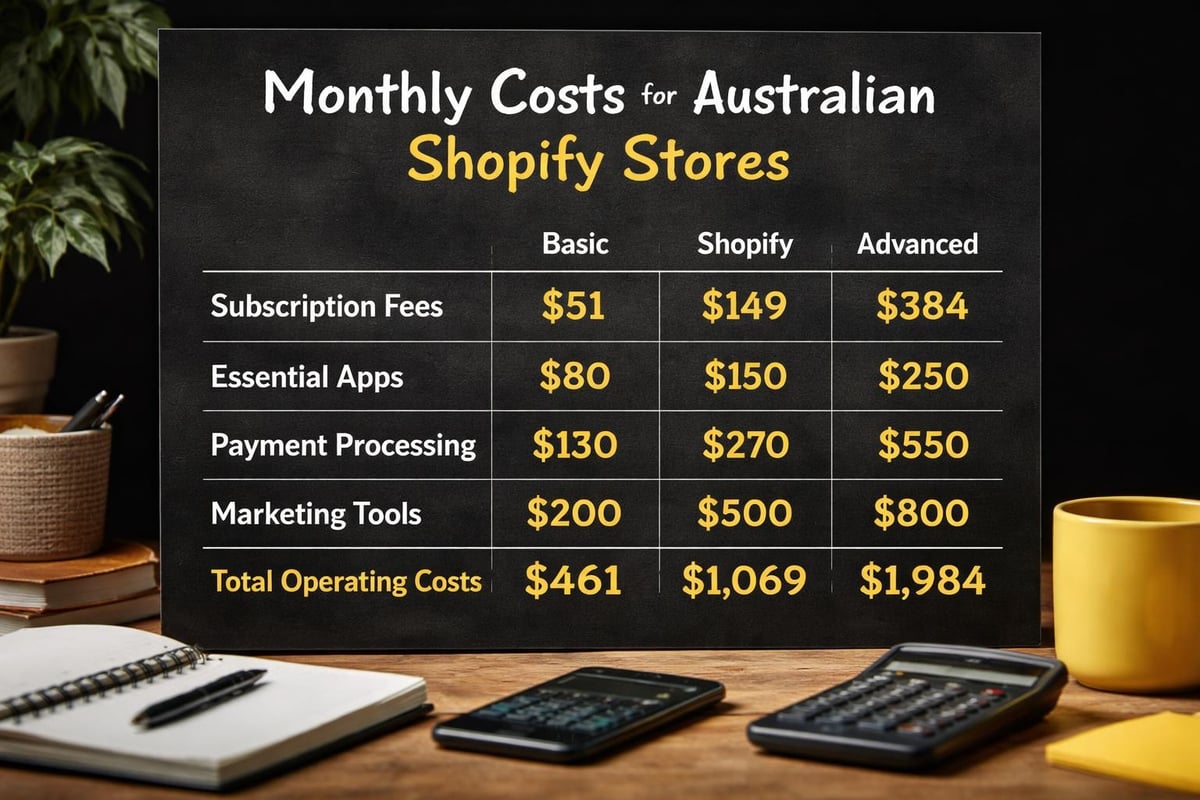
Shopify's pricing starts at $39 AUD per month for the Basic plan.
That covers hosting, security, and core eCommerce features. Compare that to the $8,000-$15,000 many Australian agencies charge for custom builds, and the value becomes clear. But the subscription cost is only part of the equation. You'll need:
- A domain name ($15-$30 annually)
- Email marketing tools ($0-$50 monthly depending on list size)
- Product photography (DIY or $200-$800 per product shoot)
- Theme customization ($0-$350 for premium themes)
- Apps for reviews, shipping, and inventory ($0-$100 monthly)
The total monthly cost for most small Australian businesses sits between $150-$400 when factoring in essential tools and apps. That's still dramatically less than maintaining a custom-coded website or paying ongoing agency retainers. The Done-for-you Shopify Builds package covers everything a new eCommerce business needs to launch within four weeks, removing the guesswork from choosing themes, apps, and integrations.
What Makes a Web Shopify Store Actually Convert
Traffic without conversions is just expensive entertainment.
Your store needs to do more than look professional. It needs to guide visitors toward purchase with minimum friction. According to Baymard Institute, the average cart abandonment rate across eCommerce sits at 70.19%. Australian stores see similar numbers. That means seven out of ten people who add products to their cart leave without buying.
Your web Shopify store needs to address the common barriers:
Unexpected shipping costs: Show shipping estimates on product pages, not just at checkout.
Complicated checkout process: Enable Shop Pay for one-tap purchases, especially on mobile.
Security concerns: Display trust badges and clear return policies above the fold.
Poor mobile experience: Test every page on actual phones, not just browser simulators.
The top Shopify design trends for 2025-2026 emphasize lightning-fast performance and mobile-first micro interactions because these elements directly impact conversion rates. A Perth outdoor gear retailer increased conversions by 34% in 2025 simply by reducing their homepage load time from 4.2 seconds to 1.8 seconds.
Homepage Structure That Sells
Your homepage has one job: get people to product pages.
Skip the brand story essay. Skip the full product catalogue. Focus on clear navigation, social proof, and your bestsellers. Here's what works in 2026:
- Hero section with a single clear benefit and one CTA
- Featured collections showing 3-4 product categories maximum
- Social proof via customer photos or review highlights
- Value propositions covering shipping, returns, and guarantees
- Email capture positioned after value demonstration, not immediately
A Sydney-based skincare brand restructured their homepage following this framework and saw their bounce rate drop from 58% to 41% within two weeks. Visitors spent more time on site and product page visits increased by 27%. The changes cost nothing but required honest assessment of what customers actually needed to see first.
Building Your Web Shopify Store From Scratch
Most small business owners underestimate the planning phase.
You can technically launch a store in a weekend, but that store won't convert. Strategic setup requires thinking through customer journey, product organization, and post-purchase experience before touching any design elements. Building Shopify stores quickly is possible, but only when you've done the foundational work first.
Product Organization and Collections
Your collection structure determines how easily customers find what they need.
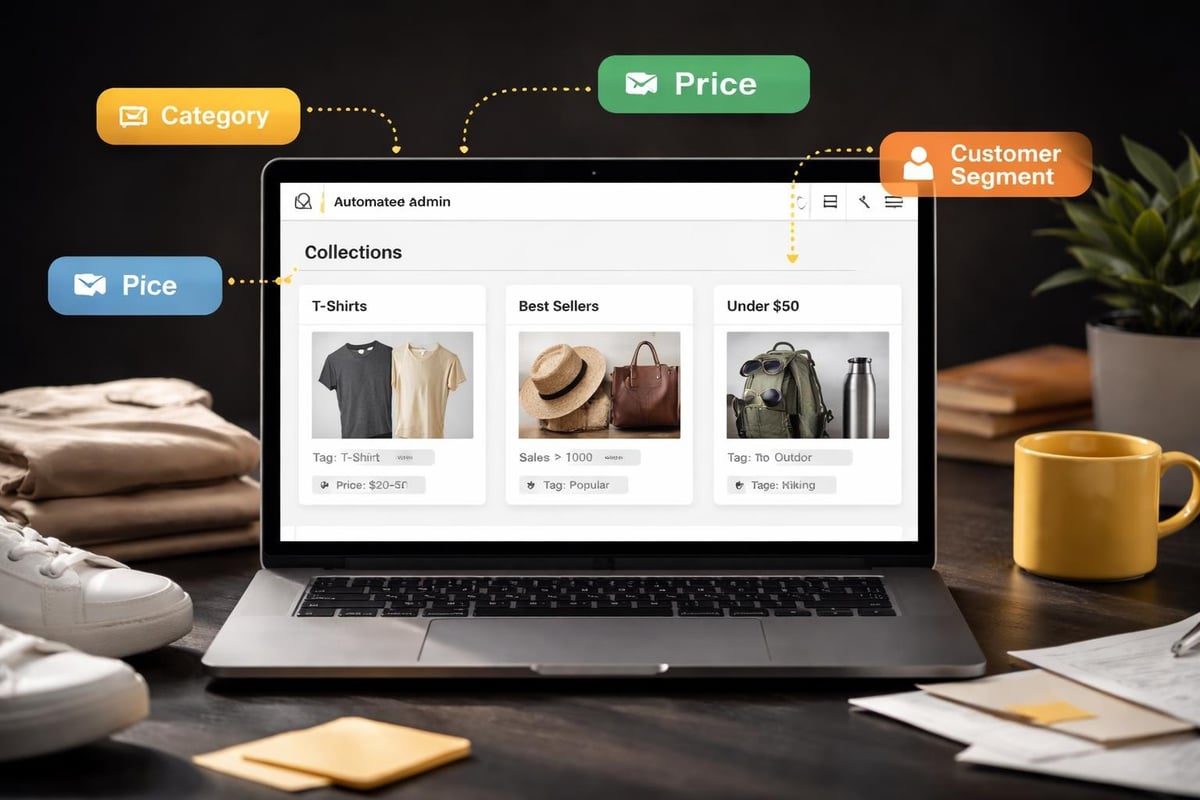
Think about search intent. A customer looking for "running shoes" shouldn't land on a page showing dress shoes, sandals, and boots mixed together. Your web Shopify collections need to match how people actually shop your category.
For a Brisbane-based activewear brand:
- Shop by Activity (Running, Yoga, Gym, Cycling)
- Shop by Gender (Women's, Men's, Unisex)
- Shop by Feature (Sustainable, High Support, Quick Dry)
- Shop by Price (Under $50, $50-$100, Premium)
Create automated collections using product tags so new products automatically appear in relevant categories. This saves hours of manual collection management as your catalogue grows. The upcoming Shopify design trends emphasize intuitive navigation and AI-driven personalization, making smart collection structure even more valuable.
Theme Selection and Customization
Free themes work perfectly well for most small businesses.
Shopify's default themes in 2026 are mobile-responsive, fast-loading, and conversion-optimized. Dawn, the flagship free theme, outperforms many premium themes in speed tests. Unless you have specific functionality needs that free themes don't support, save your money for product photography and marketing.
Premium themes ($180-$350) make sense when you need:
- Advanced filtering for large catalogues (100+ products)
- Built-in mega menus for complex navigation
- Industry-specific layouts (fashion lookbooks, ingredient showcases)
- Unique animation or interaction patterns
Customization should enhance usability, not showcase design skills. A common mistake is adding sliders, pop-ups, and animations that slow page load and distract from products. Shopify website design trends for 2025 prioritize mobile-first experiences and minimalist layouts because they convert better than busy, feature-heavy designs.
Essential Apps for Australian Web Shopify Stores
The Shopify App Store contains over 8,000 apps.
You need about five of them.
More apps mean slower load times, higher monthly costs, and more things that can break. Focus on apps that directly impact revenue or save significant time. Here's what most Australian small businesses actually need:
| App Category | Purpose | Cost Range |
|---|---|---|
| Reviews | Social proof and SEO content | $0-$15/month |
| Email Marketing | Customer retention and automation | $0-$45/month |
| Australian Shipping | Sendle or Australia Post integration | Free-$10/month |
| Inventory Management | Stock tracking and low stock alerts | $0-$30/month |
| SEO Optimization | Meta fields and structured data | $0-$20/month |
Judge.me handles product reviews for free up to 50 reviews monthly. Klaviyo offers free email marketing up to 250 contacts. Sendle integrates Australian shipping with competitive rates for small businesses. You can launch with zero app costs and add paid tools as revenue justifies them.
Avoid installing apps "just in case" you need them later. Every app adds code to your store, even when not actively used on a page. Install apps based on current needs, not hypothetical future scenarios.
Payment Gateways and Transaction Fees
Shopify Payments is the default option for Australian stores.
It processes credit cards with no additional transaction fees beyond the standard payment processing rates (1.6% + 30¢ for online transactions on the Basic plan). If you use third-party gateways like PayPal or Stripe, Shopify adds transaction fees on top of the gateway's processing fees.
For a store processing $10,000 monthly in sales, those extra transaction fees cost $200-$300 annually. That might not sound significant, but it compounds. Shopify Payments also enables Shop Pay, which shows 1.72x higher conversion rates than standard checkout according to Shopify's 2025 data.
The catch: Shopify Payments isn't available for every business type. High-risk categories (supplements, CBD products, digital services) often need alternative gateways. Research your category's compatibility before committing to a payment strategy.
Web Shopify SEO Fundamentals
Your store won't rank by accident.
Google doesn't care that you sell handmade leather bags or organic dog treats unless your site clearly communicates that through proper SEO structure. SEO optimization for Shopify product pages requires understanding how search engines read your content and how customers search for your products.
Product Page Optimization
Every product page needs unique, descriptive content.
Copying manufacturer descriptions guarantees you'll never outrank the manufacturer or the hundreds of other retailers using the same text. Write your own descriptions focused on benefits and use cases.
For a "Stainless Steel Coffee Tumbler":
Weak: "This 500ml tumbler keeps drinks hot or cold."
Strong: "Keep your morning flat white hot for 6 hours during your commute from Bondi to the CBD. Double-walled stainless steel insulation prevents condensation on your desk and fits standard car cup holders."
Include your target keyword in:
- Page title (H1)
- First 100 words of description
- Image alt text
- URL slug
- At least one subheading
But write for humans first. Keyword stuffing kills conversions faster than it improves rankings. Optimizing Shopify code for performance also impacts SEO, as page speed became a more significant ranking factor in Google's 2025 algorithm updates.
Collection and Blog Content
Collection pages and blog posts capture broader search terms.
A customer searching "best yoga mats for hot yoga" isn't ready to buy a specific product. They're researching options. Your collection page or blog post can intercept that search, provide valuable comparison information, then guide them to your products.
For web Shopify stores with limited time for content creation:
- Optimize collection descriptions with 150-300 words covering category keywords and buyer intent
- Create buying guides for your top 3-5 product categories
- Answer common questions as blog posts targeting "how to" and "what is" searches
- Repurpose customer service questions into helpful content
A Melbourne furniture retailer increased organic traffic by 156% in six months by creating simple buying guides for "apartment-sized sofas," "pet-friendly fabrics," and "furniture for rental properties." Each guide targeted search terms their customers actually used and linked to relevant products.
Mobile Experience on Web Shopify
Mobile drives 71% of eCommerce traffic in Australia as of 2026.
Your desktop design doesn't matter if the mobile experience frustrates users. Web Shopify themes are responsive by default, but responsive doesn't automatically mean optimized. Test your store on actual devices, not just browser developer tools.
Common mobile conversion killers:
- Tiny tap targets: Buttons and links need minimum 44×44 pixel touch areas
- Aggressive pop-ups: Email capture modals that cover content immediately on mobile
- Slow image loading: High-resolution images that weren't compressed for mobile
- Hidden navigation: Menus requiring multiple taps to access categories
- Form friction: Checkout forms requiring extensive typing on small keyboards
The spring 2025 design trends for fashion brands emphasize visual size guides and mobile-first experiences because these elements directly address mobile shopping friction. A visual size guide reduces returns and improves customer confidence on small screens where traditional size charts are difficult to read.
Mobile Checkout Optimization
Most cart abandonment happens on mobile devices.
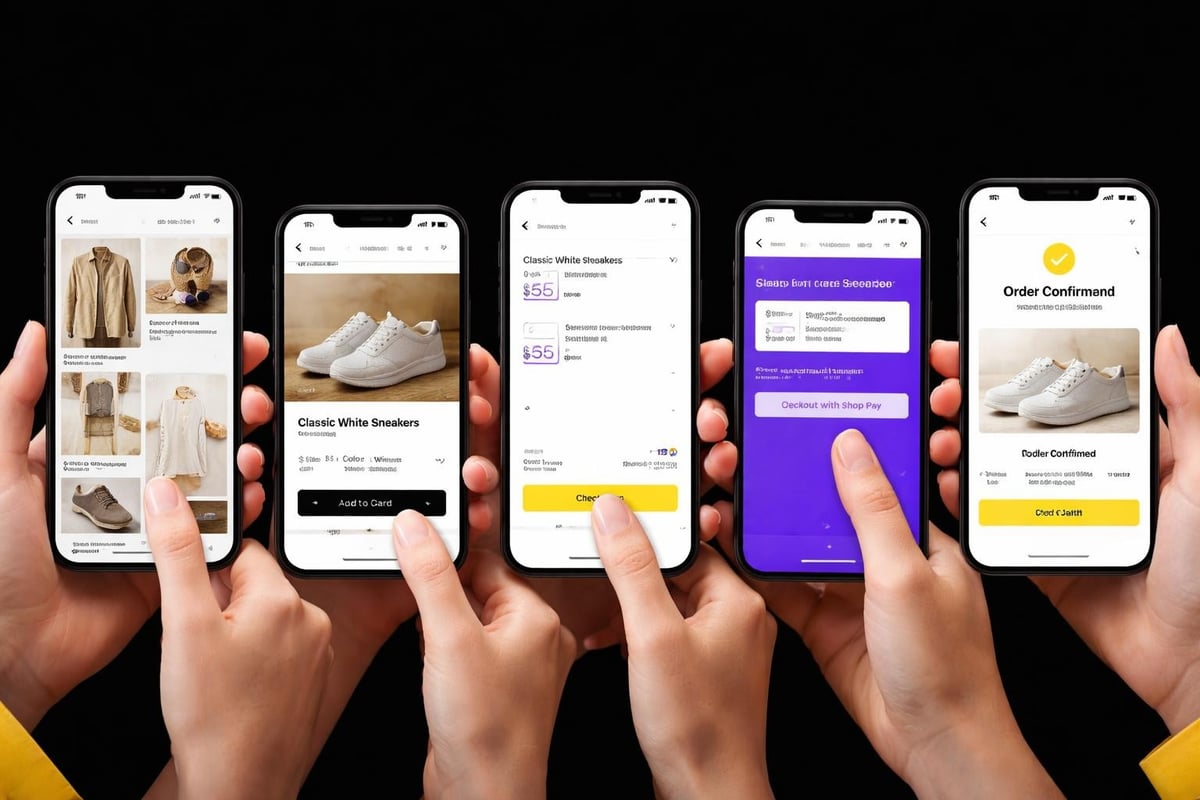
Reduce friction by enabling express checkout options. Shop Pay allows returning customers to complete purchases with a single tap using saved payment and shipping information. Apple Pay and Google Pay provide similar convenience without requiring customers to enter card details.
For stores shipping physical products:
- Display shipping estimates before checkout
- Save cart contents for at least 7 days
- Enable guest checkout without forced account creation
- Minimize form fields to essential information only
- Show progress indicators for multi-step checkouts
A Gold Coast swimwear brand reduced mobile cart abandonment from 76% to 58% by implementing these changes and enabling Shop Pay. The conversion rate improvement generated an additional $3,400 monthly revenue without increasing traffic.
Marketing Your Web Shopify Store
Building the store is step one.
Getting customers to it is the ongoing work. Australian small businesses often launch their web Shopify store expecting immediate sales, then get discouraged when traffic doesn't materialize. Ecommerce success requires consistent marketing across multiple channels.
Email Marketing Foundation
Email generates $42 for every $1 spent according to Litmus research.
That return makes it the highest-ROI marketing channel for eCommerce. Your web Shopify store needs email capture and automation from day one. Start with three essential flows:
- Welcome series for new subscribers (3-4 emails over 7-10 days)
- Abandoned cart recovery triggering 1 hour, 24 hours, and 3 days after abandonment
- Post-purchase follow-up requesting reviews and suggesting complementary products
A Brisbane candle maker generated $8,000 in recovered revenue during their first three months using just abandoned cart emails. The setup took 90 minutes and runs automatically. Their welcome series converts 12% of new subscribers into first-time customers within two weeks.
Social Media Strategy for Small Businesses
You don't need to be on every platform.
Choose one or two channels where your customers actually spend time. For Australian small businesses in 2026, that's typically Instagram, Facebook, or TikTok depending on your demographic.
Post frequency matters less than consistency. Three quality posts weekly beats daily low-effort content. Focus on:
- Product photography showing items in use, not just white background shots
- Customer content reposting reviews, unboxing videos, and styling photos
- Behind-the-scenes content humanizing your business and building connection
- Educational content teaching customers how to use, style, or care for products
Track link clicks and conversion rates, not just likes and followers. A post with 50 likes that drives zero store visits has less value than a post with 10 likes that generates 5 sales.
Managing Web Shopify Store Operations
Sales are exciting until you need to fulfill 30 orders daily.
Operations scale determines whether your web Shopify store remains a side project or becomes a sustainable business. Australian small businesses hit operational bottlenecks around $10,000-$15,000 monthly revenue when manual processes become unmanageable.
Inventory and Fulfillment Systems
Track inventory accurately or prepare for disappointed customers.
Shopify's built-in inventory management works well up to about 50-100 SKUs. Beyond that, consider dedicated inventory apps that sync across sales channels and prevent overselling. For businesses shipping from home, establish systems before they're needed:
- Designated packing area with supplies organized and accessible
- Batch processing by shipping method to improve efficiency
- Tracking number automation updating customers without manual emails
- Stock level alerts triggering reorders before sellouts
A Sydney-based tea retailer processes 40-60 orders daily with a two-hour packing routine by batching Australia Post shipments separately from express deliveries. Their system involves printed packing slips, pre-sized boxes, and a label printer that eliminated handwriting addresses.
Customer Service Expectations
Response time impacts repeat purchase rates.
Australian customers expect replies within 24 hours for email inquiries and under 2 hours for social media messages during business hours. Set clear response time expectations and stick to them. Your web Shopify store's FAQ page should answer:
- Shipping costs and timeframes by state
- Return and exchange policies
- Product care instructions
- Sizing information
- Payment security questions
Every question answered proactively is one less customer service inquiry. A comprehensive FAQ reduces support volume by 30-40% for most Australian eCommerce businesses.
When to Upgrade or Redesign
Your web Shopify store won't stay optimal forever.
Customer expectations change, platform features evolve, and your product range grows. Most successful Australian eCommerce businesses do minor updates quarterly and major refreshes every 18-24 months. Signs you've outgrown your current setup:
- Page load times exceeding 3 seconds on mobile
- Conversion rates declining despite consistent traffic
- Checkout abandonment increasing without clear cause
- Mobile bounce rates above 60%
- Customer complaints about navigation or search functionality
Why agencies charge $10k for Shopify sites often relates to comprehensive redesigns addressing multiple issues simultaneously. But you don't always need a full rebuild. Sometimes optimizing product pages, simplifying navigation, or upgrading your theme solves the problem.
Performance monitoring through Shopify's built-in analytics and Google Analytics reveals what's actually broken versus what feels broken. Make data-informed decisions about updates rather than redesigning based on gut feelings or competitor envy.
Getting a web Shopify store live is straightforward. Making it profitable requires strategy, testing, and ongoing optimization. Australian small businesses have a clear advantage in 2026 with platforms like Shopify removing technical barriers and focusing competition on product quality and customer service rather than development budgets. If you're ready to launch without the agency price tag or DIY confusion, Kida Digital builds conversion-focused Shopify stores for Australian small businesses in four weeks with everything you need to start selling confidently online.


Be the first to comment