

Building an online store in 2026 isn't what it was five years ago. The barrier to entry has dropped, but the bar for quality has risen. Small Australian businesses now compete with global brands on customer experience, site speed, and trust signals from day one. eCommerce website development has become less about custom code and more about smart decisions around platform, structure, and conversion fundamentals. You don't need a six-month timeline or a $50,000 budget to launch something that works. You need clarity on what matters and what doesn't.
What Makes eCommerce Website Development Different in 2026
The landscape has shifted dramatically. According to Statista, global ecommerce sales reached $6.3 trillion in 2024 and are projected to exceed $8.1 trillion by 2026. Australian consumers now expect the same frictionless experience they get from international giants, regardless of business size.
Speed is no longer negotiable. Google's Core Web Vitals directly impact search rankings, and a one-second delay in mobile load time can reduce conversions by up to 20%. Your product pages need to load in under three seconds, or potential customers are gone.
Security expectations have also intensified. After multiple high-profile data breaches, shoppers actively look for trust signals before entering payment details. Secure ecommerce practices like SSL certificates and PCI compliance aren't optional extras anymore.
The Core Components That Actually Matter
Every ecommerce website development project needs to cover specific ground. Miss one element, and you're building on unstable foundations.
Platform selection comes first. Shopify dominates the Australian market for small businesses because it handles security, hosting, and payment processing out of the box. WooCommerce offers more control but demands technical maintenance. Custom builds sound appealing until you're managing server updates at midnight.
Payment integration needs multiple options. Australian customers expect Afterpay, Zip, Apple Pay, and Google Pay alongside traditional cards. Offering only one payment method can cost you 30% of potential sales.
Mobile responsiveness isn't a feature, it's the foundation. Over 70% of Australian ecommerce traffic comes from mobile devices in 2026. Your entire site must work flawlessly on a phone screen, not just be viewable.

Planning Your eCommerce Store Before Development Starts
Most failed ecommerce projects fail before a single line of code is written. They skip the planning phase and jump straight to design, then discover fundamental problems months later.
Start with product taxonomy. How will customers navigate your catalogue? By category, by use case, by price point? Map this structure on paper before touching any platform. A clothing store needs different organisation than a supplement retailer or a homewares business.
Define your customer journey with ruthless specificity. What happens when someone lands on your homepage? How many clicks to purchase? Where do they get stuck? Best practices for ecommerce web design emphasise removing friction at every step, not adding fancy features.
Technical Requirements You Can't Ignore
Your ecommerce website development checklist needs these items ticked before launch:
- SSL certificate installed and configured properly
- Payment gateway tested with real transactions
- Shipping calculations accurate for all Australian zones
- Tax calculations matching current GST requirements
- Inventory management system integrated
- Email notifications working for orders and shipping
- Mobile checkout tested on iOS and Android devices
Security deserves its own attention. Implementing HTTPS and SSL encryption protects customer data and signals trustworthiness to both shoppers and search engines. PCI DSS compliance isn't optional if you're handling credit card information, even through a third-party processor.
Budget for ongoing costs beyond the build. Payment processing fees, platform subscriptions, security monitoring, and backup systems all require monthly investment. A store processing $20,000 monthly might spend $800-1,200 on these operational costs.
Design Principles That Drive Conversions
Pretty doesn't equal profitable. eCommerce website development needs to prioritise conversion over aesthetics, though the two aren't mutually exclusive.
Whitespace improves comprehension and reduces cognitive load. Cramming information into every pixel creates decision paralysis. Product pages need breathing room around images, prices, and action buttons.
Clear calls-to-action remove ambiguity. "Add to Cart" buttons should be immediately visible, consistently positioned, and unmistakably clickable. Colour contrast matters more than colour choice.
Product photography quality directly impacts conversion rates. Blurry or poorly lit images tank sales faster than any other factor. Invest in proper photography or high-quality supplier images before spending money on animations or video backgrounds.
Navigation Structure for Australian Shoppers
Australian online shoppers tend toward practical browsing patterns. They want to find products quickly, compare options efficiently, and checkout without friction.
Main navigation should contain 5-7 top-level categories maximum. Beyond that, decision fatigue sets in. Use mega menus for stores with deep catalogues, but keep the primary choices simple.
Search functionality needs to handle Australian spelling variations and common product nicknames. If you sell "sneakers," your search should also find them when someone types "runners" or "trainers."
Filters and sorting options become critical once you exceed 20 products. Price range, colour, size, and availability filters should be immediately accessible, not buried in dropdown menus.
| Navigation Element | Best Practice | Common Mistake |
|---|---|---|
| Main Menu | 5-7 categories | 12+ overwhelming options |
| Search Bar | Prominent, predictive | Hidden in hamburger menu |
| Filters | Visible on category pages | Requiring extra clicks |
| Breadcrumbs | Always present | Missing or broken |
Speed Optimisation Throughout Development
Page speed isn't something you fix after launch. It needs to be baked into your ecommerce website development process from day one.
Image optimisation is the biggest lever most stores ignore. Every product image should be compressed, properly sized, and served in modern formats like WebP. A 2MB product image might look identical to a 200KB version, but the smaller file loads ten times faster.
Mobile load time optimisation requires specific attention beyond responsive design. Lazy loading images, deferring non-critical JavaScript, and minimising third-party scripts all contribute to faster mobile experiences.
Code bloat kills performance. Every app, plugin, or custom feature adds weight. Audit ruthlessly and remove anything that doesn't directly serve customer needs or business goals. That fancy Instagram feed widget might be costing you thousands in lost conversions.
Measuring What Matters
Track Core Web Vitals from launch. Largest Contentful Paint (LCP) should be under 2.5 seconds, First Input Delay (FID) under 100 milliseconds, and Cumulative Layout Shift (CLS) under 0.1. These metrics directly correlate with both user experience and search rankings.
Real user monitoring reveals issues synthetic tests miss. Tools like Google Analytics 4 and Hotjar show exactly where customers drop off, which pages load slowly, and what devices struggle most.
Run regular speed tests from Australian servers. International testing tools might show decent scores while your local customers experience lag. Test from Sydney, Melbourne, and Brisbane to cover your primary market.

Security and Trust Elements
Trust is currency in ecommerce. Every element of your website development needs to reinforce credibility and protect customer data.
SSL certificates are table stakes, but implementation matters. Mixed content warnings (where some elements load over HTTP while others use HTTPS) destroy trust instantly. Every image, script, and resource must load securely.
Web security best practices for ecommerce include regular security audits, two-factor authentication for admin access, and automatic malware scanning. These aren't one-time setups but ongoing commitments.
Display trust badges strategically. Secure payment icons near checkout buttons, shipping guarantees on product pages, and customer review counts where decision-making happens. Don't cluster all badges in the footer where nobody looks.
Privacy policies and terms of service need to be current and accessible. Australian Consumer Law has specific requirements around refunds, returns, and data handling. Generic templates from US websites won't cut it.
Payment and Checkout Optimisation
The checkout process is where ecommerce website development succeeds or fails. You can drive unlimited traffic with perfect SEO and lose it all to a clunky payment flow.
Guest checkout should be default, not optional. Forcing account creation before purchase increases cart abandonment by roughly 25%. Let customers buy first, then offer account benefits afterward.
Form fields need radical simplification. Every field you remove increases completion rates. Name, email, shipping address, and payment details are mandatory. Phone number, company name, and special instructions are often unnecessary friction.
Multiple payment options matter more than most businesses realise. In 2026, Australian consumers expect:
- Credit and debit cards (Visa, Mastercard, Amex)
- Digital wallets (Apple Pay, Google Pay)
- Buy now, pay later (Afterpay, Zip, Klarna)
- PayPal for perceived security
Progress indicators reduce abandonment. Show customers exactly where they are in the checkout process and how many steps remain. Mystery creates anxiety, which kills conversions.
Cart Recovery Systems
Abandoned cart recovery should be built into your ecommerce website development from launch. Roughly 70% of online shopping carts are abandoned before purchase completion.
Email sequences work. A simple three-email sequence (1 hour, 24 hours, 72 hours after abandonment) can recover 10-15% of lost sales. Include a direct cart link, product images, and compelling reason to complete purchase.
Exit-intent popups catch customers before they leave. Offer a small discount, free shipping threshold reminder, or simply ask what's stopping them. The feedback alone is valuable.
Content Structure for Product Pages
Product pages carry the entire weight of ecommerce website development success. Homepage design is nice, but product pages convert.
Product titles need strategic construction. Include the brand, product type, and key differentiator. "Organic Cotton Baby Onesie – Blue Stripes – 3-6 Months" beats "Baby Clothing Item #4782" in both search and conversion.
Descriptions should answer questions before they're asked. Size specifications, material composition, care instructions, and use cases all belong above the fold or immediately accessible. Burying critical information in tabs or accordions creates unnecessary friction.
High-quality images from multiple angles are non-negotiable. Include at least 4-6 images per product: front, back, detail shots, and contextual lifestyle images. Add zoom functionality for texture and detail inspection.
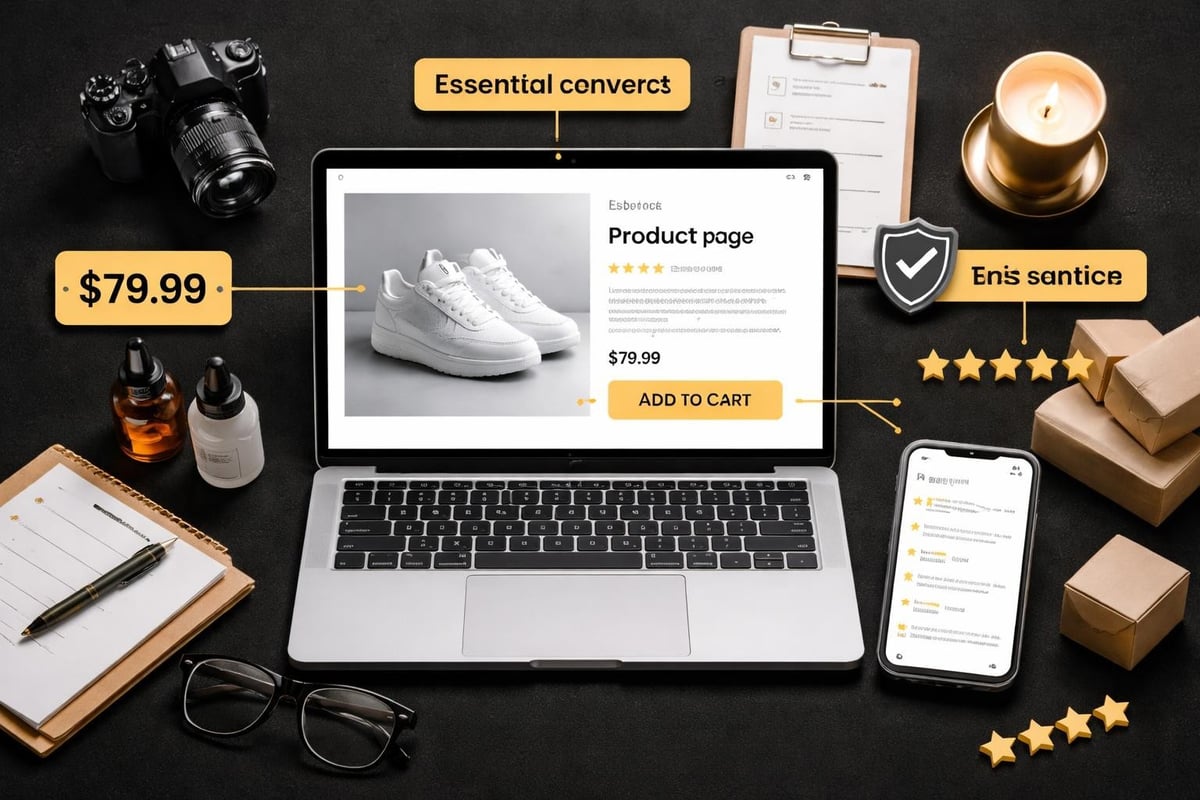
Customer reviews and ratings provide social proof that no marketing copy can match. Display them prominently, respond to negative reviews professionally, and make leaving reviews frictionless. Reviews improve conversion rates by 15-20% on average and boost SEO performance for product pages significantly.
Shipping and Fulfilment Integration
Shipping calculations need to be accurate from day one. Nothing kills trust faster than surprise shipping costs at checkout or delayed delivery that wasn't communicated upfront.
Australia Post integration is standard for most small businesses, but consider alternatives like Sendle, Aramex, or CouriersPlease depending on product type and volume. Each carrier has API documentation for real-time shipping quotes.
Free shipping thresholds drive average order value. Setting the threshold 20-30% above your current average order value encourages customers to add more items. Display progress toward free shipping directly in the cart.
Shipping time expectations must be crystal clear. "2-3 business days" means different things for metro Sydney versus regional Queensland. Set realistic expectations and communicate them at every stage.
Returns and Refunds
Your returns policy impacts purchase decisions more than most businesses realise. Clear, generous return policies increase conversion by reducing purchase anxiety.
Australian Consumer Law guarantees certain rights regardless of your policy. Build your ecommerce website development with returns management in mind, not as an afterthought. Automated return labels, tracking systems, and refund processing all need infrastructure.
Communicate the returns process clearly on product pages, in cart, and post-purchase. Customers who understand the safety net are more likely to complete first purchases.
Post-Launch Optimisation Strategy
eCommerce website development doesn't end at launch. The first version of your store is a foundation, not a finished product.
A/B testing should begin immediately. Test button colours, product page layouts, checkout flows, and pricing displays. Small changes compound into significant conversion improvements over time.
Heat mapping shows exactly where customers click, scroll, and hesitate. Tools like Hotjar or Microsoft Clarity reveal problems you'd never spot in analytics alone. Watch session recordings to understand real user behaviour.
Analytics setup needs to be comprehensive from day one. Track not just sales but micro-conversions: email signups, cart additions, product page visits, and search queries. Understanding the full funnel reveals optimisation opportunities.
Scaling Infrastructure for Growth
Your ecommerce website development needs to accommodate growth without requiring complete rebuilds every year.
Choose a platform that scales with transaction volume. Shopify handles this automatically, charging based on sales rather than requiring server upgrades. Self-hosted solutions need capacity planning and infrastructure investment as traffic grows.
International expansion might seem distant but plan for it architecturally. Multi-currency support, international shipping calculations, and tax handling for different jurisdictions are easier to build in early than retrofit later.
App ecosystem matters. As your business grows, you'll need inventory management, accounting integration, email marketing automation, and customer service tools. Platform choice determines available integrations and future flexibility.
For small Australian businesses launching their first online store, done-for-you Shopify builds can eliminate the guesswork around platform selection, security setup, and conversion fundamentals. A structured four-week process covers everything from payment integration to mobile optimisation without agency bloat or missing fundamentals.
Managing Ongoing Development Costs
Budget planning needs to extend beyond initial ecommerce website development. Monthly operational costs accumulate quickly without proper planning.
Platform fees vary significantly. Shopify Basic starts around $39 AUD monthly, while enterprise solutions can exceed $2,000 monthly before processing fees. Choose based on current needs with room to grow, not aspirational feature lists.
Payment processing typically costs 1.4-2.9% plus transaction fees depending on volume and provider. This becomes your largest ongoing expense as sales increase. Negotiate better rates once you exceed $10,000 monthly processing.
App subscriptions add up faster than expected. Email marketing, review collection, abandoned cart recovery, and analytics tools might cost $100-300 monthly combined. Audit quarterly and remove tools that aren't delivering measurable value.
Security and backup services warrant dedicated budget. While platforms like Shopify include basic security, additional monitoring, malware scanning, and comprehensive backups provide peace of mind worth the investment.
| Cost Category | Typical Range (AUD/month) | Scales With |
|---|---|---|
| Platform Subscription | $39-$399 | Features needed |
| Payment Processing | 1.4-2.9% of sales | Transaction volume |
| Apps & Integrations | $100-$400 | Functionality required |
| Security & Backups | $30-$150 | Site complexity |
The Reality of DIY vs Professional Development
The promise of build-it-yourself platforms is tempting. Shopify, WooCommerce, and Wix all advertise easy setup and beautiful templates. The reality is more nuanced.
DIY works when you have significant time, technical comfort, and willingness to learn through trial and error. Expect 60-100 hours minimum to research, configure, test, and launch even a simple store properly. Hidden complexity emerges around payment gateway setup, tax configuration, and mobile optimisation.
Template limitations become apparent quickly. Free themes lack conversion optimisation, speed performance, and flexibility for brand customisation. Premium themes solve some issues but still require configuration expertise.
Professional development accelerates timelines and reduces costly mistakes. Understanding why agencies charge premium prices helps evaluate whether their services match your needs or if streamlined alternatives make more sense.
The middle ground between DIY struggle and agency expense exists. Focused, specialised developers who work specifically with small businesses on proven platforms deliver faster results at sustainable prices. They've solved the common problems repeatedly and built efficient processes around them.
eCommerce website development in 2026 demands strategic platform selection, conversion-focused design, and security-first implementation from day one. Speed, mobile experience, and trust signals aren't optional extras but fundamental requirements for competing in the Australian market. If you're a small Australian business ready to launch or rebuild your online store without agency bloat or DIY overwhelm, Kida Digital specialises in conversion-led Shopify development that gets you from concept to launch in four weeks with all the fundamentals covered.


Be the first to comment