

The Australian retail landscape has fundamentally changed. Small businesses that once relied entirely on foot traffic now face a simple reality: going digital isn't optional anymore. Digital businesses have become the standard operating model across nearly every industry, and eCommerce retailers are leading this transformation. For small Australian business owners, understanding what separates successful digital businesses from struggling ones can mean the difference between growth and closure.
What Actually Defines Digital Businesses in 2026
Digital businesses operate primarily through online channels, but that definition barely scratches the surface.
The real distinction lies in how these businesses function.
A digital business integrates technology into every aspect of operations, from customer acquisition to fulfillment to support. It's not just about having a website or social media presence.
Core Characteristics That Matter
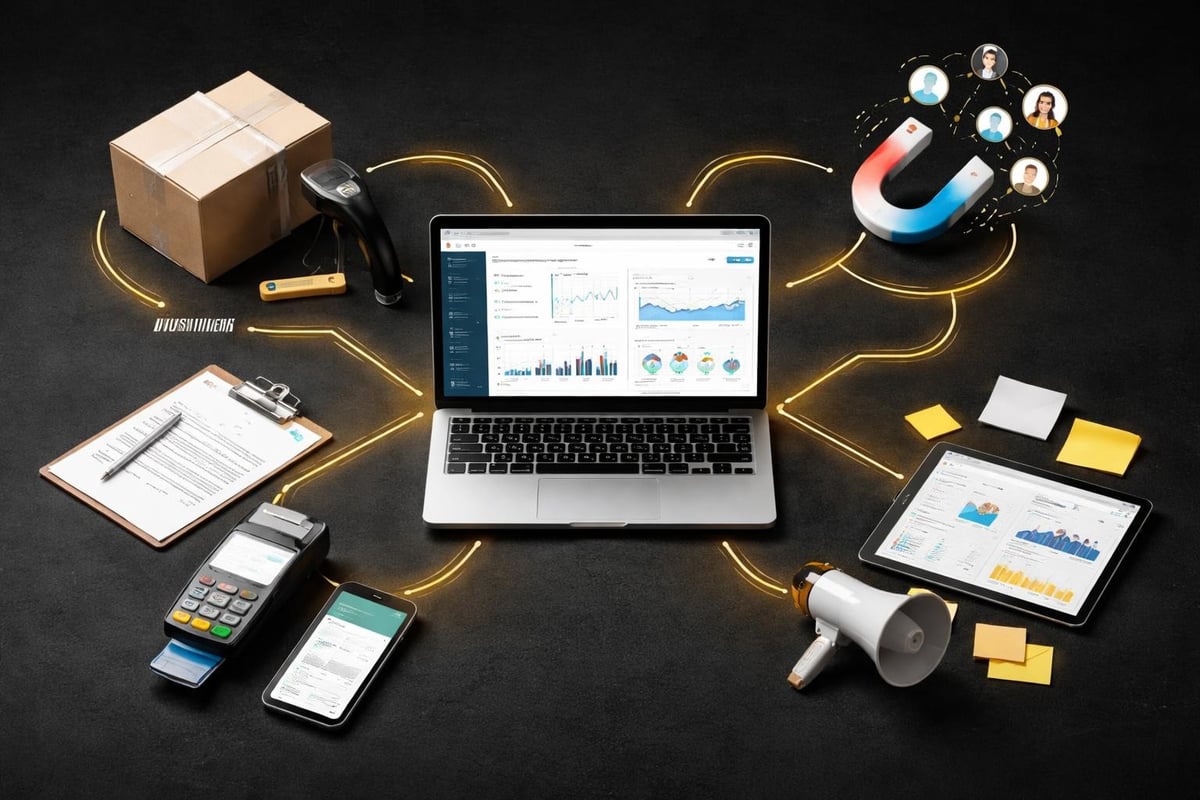
System Integration: Digital businesses connect their inventory management, payment processing, customer relationship management, and marketing automation into a cohesive ecosystem.
Data-Driven Decision Making: Every action generates data that informs the next decision.
Scalable Infrastructure: Growth doesn't require proportional increases in overhead or staffing.
According to IBM’s research on digital transformation, businesses that successfully integrate digital technologies across their operations see 23% higher revenue growth compared to their competitors. That's not a marginal improvement.
The shift toward digital businesses has accelerated dramatically since 2020, but many Australian small business owners still approach digital transformation as a side project rather than a fundamental business model change.
Why Traditional Retailers Struggle With Digital Transitions
The jump from physical retail to digital operations exposes gaps most business owners didn't know existed.
Inventory visibility becomes critical when customers can't physically see or touch products.
Customer service shifts from face-to-face interactions to chat, email, and phone support across different time zones.
Marketing transforms from local signage and word-of-mouth to SEO, paid advertising, email campaigns, and social media management.
Most small retailers underestimate the complexity involved. They believe setting up a Shopify store or listing products on marketplaces solves the problem. It doesn't.
Common Mistakes That Kill Momentum
- Treating the website as a brochure rather than a sales channel
- Ignoring mobile optimization when 65% of Australian online shopping happens on mobile devices
- Neglecting product photography and descriptions that compensate for the inability to touch items
- Launching without a traffic strategy and expecting customers to magically appear
- Underestimating fulfillment complexity and customer service requirements
Digital businesses succeed when they build systems that work without constant manual intervention. The difference between a digital storefront and a digital business is automation and integration.
KPMG’s analysis of digital business strategy emphasizes that alignment between digital initiatives and overall business objectives determines success more than the technology itself. You can have the most sophisticated tech stack and still fail if it doesn't serve your actual business goals.
Building Profitable Digital Businesses From Physical Foundations
Small Australian retailers already possess significant advantages when transitioning online.
They understand their customers deeply.
They know their products intimately.
They've refined their value proposition through real-world feedback.
The challenge lies in translating these strengths into digital formats.
Product Selection and Positioning
Not every product from a physical store belongs in a digital catalog.
High-margin items should lead your digital product range. Shipping costs eat into profits quickly, so focus on products where the margin can absorb logistics.
Visually distinctive products photograph well and communicate value without physical interaction.
Complementary product bundles increase average order values and justify shipping costs.
One Melbourne-based homewares retailer discovered their digital business took off when they focused on premium cushion covers and throws rather than their full physical range. Lower shipping costs, higher margins, and products that photographed beautifully created a profitable formula.
Platform Selection and Setup
Choosing the right platform determines your operational efficiency for years.
For small Australian eCommerce businesses launching their first digital business, Shopify dominates because it balances power with usability. The core Shopify package designed for new businesses covers everything needed to launch within four weeks, providing the tools and integrations required to sell physical products, digital products, subscriptions, collect reviews, or run dropshipping operations.
Platform decisions should prioritize:
- Payment gateway compatibility with Australian banks and customer preferences
- Shipping integration with Australia Post, CouriersPlease, and other local carriers
- Tax calculation that handles GST correctly
- Scalability as your digital business grows beyond initial projections

Marketing Digital Businesses Without Burning Cash
Traffic doesn't just appear.
Digital businesses need deliberate marketing strategies that acquire customers profitably.
The Australian eCommerce market grew 12% in 2025, but customer acquisition costs increased 18% during the same period. That squeeze means inefficient marketing kills digital businesses quickly.
SEO as Foundation
Search engine optimization delivers the highest long-term return for digital businesses.
Product page optimization converts browsers into buyers when done properly. Understanding SEO optimization for Shopify product pages provides the foundation for sustainable organic traffic.
Category structure helps Google understand your offerings while helping customers navigate efficiently.
Blog content targeting buyer questions builds authority and captures traffic throughout the purchase journey.
Unlike paid advertising, SEO compounds over time. The work you do in month three continues delivering results in month thirty-three.
Paid Advertising That Actually Works
Google Shopping and Meta ads dominate Australian digital business advertising.
The key lies in proper segmentation and remarketing.
Cold traffic campaigns should target high-intent keywords and interests with clear value propositions.
Remarketing campaigns target previous visitors with specific products they viewed, offering incentives to complete purchase.
Lookalike audiences expand reach based on existing customer data.
A Sydney-based activewear brand cut their customer acquisition cost by 40% when they stopped treating all traffic the same and built separate campaigns for cold, warm, and hot audiences.
Email Marketing and Retention
Acquiring a new customer costs five times more than retaining an existing one.
Digital businesses that build email lists and nurture them properly outperform competitors who chase new customers exclusively.
Welcome sequences introduce new subscribers to your brand story and best-selling products.
Abandoned cart sequences recover 15-30% of abandoned purchases with properly timed reminders.
Post-purchase sequences build loyalty, encourage reviews, and introduce complementary products.
Operational Excellence for Digital Businesses
Backend operations make or break digital businesses.
You can market brilliantly and still fail if fulfillment disappoints.
Inventory Management
Real-time inventory visibility prevents overselling and customer disappointment.
Safety stock levels account for lead times and demand variability.
Automated reorder points trigger purchase orders before stockouts occur.
SKU rationalization eliminates slow-moving products that tie up capital and warehouse space.
Digital businesses operating across multiple channels (website, marketplaces, wholesale) need centralized inventory management. Selling the same product twice creates customer service nightmares.
Fulfillment Strategy
| Fulfillment Model | Best For | Pros | Cons |
|---|---|---|---|
| Self-Fulfillment | Low volume, high touch | Complete control, personal packaging | Time intensive, hard to scale |
| 3PL Partnership | Growing volume | Scalable, professional | Less control, minimum volumes |
| Dropshipping | Testing products | No inventory risk | Lower margins, quality control issues |
Most successful digital businesses start with self-fulfillment and transition to 3PL partners as volume justifies it.
Customer Service Systems
Digital businesses can't rely on in-person problem-solving.
Live chat handles quick questions and increases conversion rates by 12-15%.
Email support manages detailed inquiries and provides documentation.
Phone support builds trust for high-value purchases and complex issues.
Response time expectations have compressed dramatically. Customers expect responses within hours, not days. Automated responses acknowledging receipt buy time, but actual resolution needs to happen quickly.
Financial Realities of Running Digital Businesses
Profitability looks different for digital businesses compared to physical retail.
Cost Structure Changes
Rent disappears or drastically reduces.
Staffing shifts from floor staff to digital marketing, customer service, and fulfillment roles.
Marketing becomes the largest variable expense, often 15-25% of revenue for growing digital businesses.
Technology and platforms add monthly subscriptions that physical stores never faced.
According to Forrester’s state of digital business research, successful digital businesses maintain gross margins 8-12 percentage points higher than traditional retail but face higher customer acquisition costs that require careful management.
Cash Flow Management
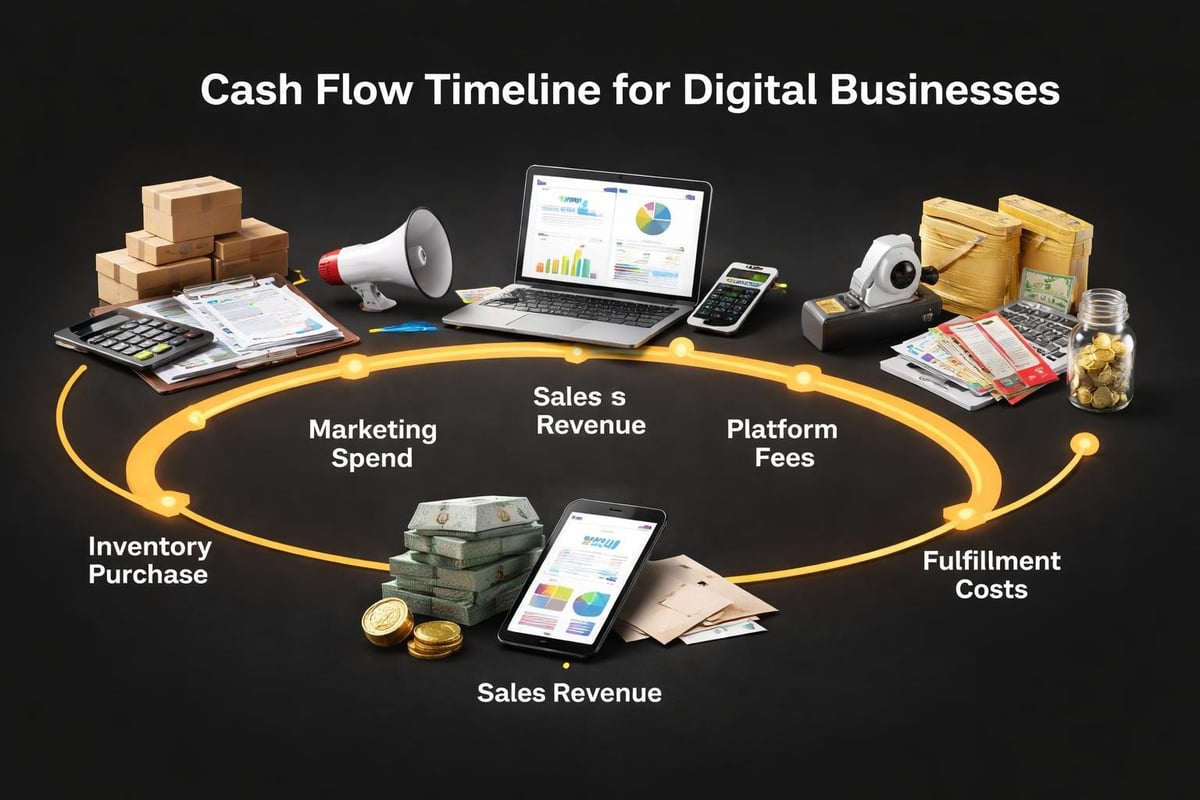
Digital businesses often experience cash flow timing challenges.
Inventory purchases happen weeks or months before sales.
Platform fees and transaction costs come out of each sale immediately.
Marketing spend precedes revenue generation.
Returns and refunds create temporary revenue reversals.
Understanding these timing differences prevents cash crunches that kill otherwise viable digital businesses.
Scaling Digital Businesses Beyond Launch
Launch is just the beginning.
Sustainable digital businesses build systems that support growth without breaking.
Product Range Expansion
Data-driven selection based on existing customer purchase patterns and search behavior guides new product additions.
Supplier relationship development provides better terms and exclusive products as order volumes increase.
Private label opportunities emerge once you understand what customers want and current offerings fall short.
Growing your catalog strategically beats random expansion every time.
Channel Diversification
Starting with your own Shopify store provides control and customer data ownership.
Marketplace expansion to Amazon, eBay, or Catch adds volume but reduces margins.
Wholesale partnerships with complementary retailers expand reach without marketing costs.
International expansion taps larger markets once domestic operations run smoothly.
The businesses featured in Kida Digital’s portfolio demonstrate how focused execution on a single channel before expansion creates stronger foundations than trying to be everywhere immediately.
Team Building
Digital businesses eventually outgrow solo operations.
Freelance specialists for photography, copywriting, and design keep costs variable while maintaining quality.
Virtual assistants handle customer service and administrative tasks.
Marketing specialists manage paid advertising and SEO more effectively than generalists.
Part-time or full-time hires make sense when workload consistently exceeds capacity and revenue supports fixed costs.
Technology Stack Decisions for Long-Term Success
The platforms and tools you choose compound over time.
Switching later becomes expensive and disruptive.
Essential Categories
eCommerce platform: Shopify, WooCommerce, or BigCommerce form your foundation.
Email marketing: Klaviyo, Mailchimp, or Campaign Monitor nurture customer relationships.
Accounting software: Xero or QuickBooks track financial performance and integrate with Shopify.
Inventory management: Depending on complexity, native Shopify tools or dedicated systems like Cin7 or TradeGecko.
Customer service: Zendesk, Gorgias, or integrated help desk solutions centralize communications.
Integration Over Individual Excellence
The best individual tool means nothing if it doesn't connect with your other systems.
API connections automate data flow between platforms.
Zapier or similar automation tools connect platforms without native integrations.
Regular audits ensure your stack still serves your current needs rather than legacy decisions.
Many digital businesses succeed with simpler stacks than they initially planned. Start lean and add complexity only when clear needs emerge.
Common Pitfalls That Sink Digital Businesses
Knowing what to avoid matters as much as knowing what to pursue.
Overcomplicating at launch: Trying to build the perfect store delays revenue generation and burns capital.
Underpricing to compete: Racing to the bottom on price creates unsustainable business models.
Ignoring unit economics: Growing revenue while losing money on each sale just accelerates failure.
Neglecting customer feedback: Digital businesses can't see customer reactions, so actively seeking feedback becomes critical.
Chasing trends over fundamentals: The basics of good products, clear communication, and reliable service never go out of style.
The blog resources at Kida Digital cover many of these challenges in detail for Australian small businesses navigating eCommerce specifically.
Real Performance Metrics for Digital Businesses
Vanity metrics feel good but don't pay bills.
What Actually Matters
Customer acquisition cost (CAC): How much you spend to acquire each customer.
Customer lifetime value (CLV): How much profit each customer generates over their relationship with your business.
CLV to CAC ratio: Sustainable digital businesses maintain ratios above 3:1.
Conversion rate: The percentage of visitors who become customers, typically 1-3% for eCommerce.
Average order value (AOV): Higher AOV improves profitability and justifies higher acquisition costs.
Return rate: Excessive returns destroy profitability and indicate product-market fit issues.
Net promoter score (NPS): Measures customer satisfaction and predicts organic growth through referrals.
Tracking these consistently reveals trends before they become crises.
Benchmark Expectations for Australian Digital Businesses
| Metric | Starter (0-12 months) | Growing (1-3 years) | Established (3+ years) |
|---|---|---|---|
| Conversion Rate | 0.5-1.5% | 1.5-2.5% | 2.5-4% |
| Average Order Value | $60-$100 | $100-$150 | $150-$250 |
| Return Rate | 8-15% | 5-10% | 3-8% |
| Email Open Rate | 15-20% | 20-25% | 25-35% |
These benchmarks vary significantly by product category and price point, but provide general guidance for performance evaluation.
The Future of Digital Businesses in Australia
The digital economy continues accelerating.
Small businesses that establish strong digital foundations now position themselves for sustained growth.
Voice commerce and smart home integration will change how customers discover and purchase products.
Augmented reality product visualization reduces return rates and increases confidence for home goods, fashion, and furniture purchases.
Subscription models continue growing across product categories previously sold one-time.
Sustainability and transparency become competitive advantages as customers demand ethical production and supply chain visibility.
Digital businesses built on solid fundamentals adapt to these trends more easily than those cobbled together without strategy. The platform choices, system integrations, and operational processes you establish today either enable or constrain your future options.
Building digital businesses from physical retail foundations requires more than uploading products to a website. It demands strategic thinking about platforms, marketing, operations, and finance. Small Australian retailers transitioning online face real challenges, but the opportunity for scalable growth rewards those who execute properly. If you're ready to build a conversion-focused Shopify store without agency bloat or DIY confusion, Kida Digital provides a streamlined four-week process specifically designed for small Australian eCommerce businesses launching their first digital business with clarity and momentum.


Be the first to comment