

Running a successful ecommerce store in 2026 means navigating a landscape that's both more accessible and more competitive than ever before. Small Australian businesses launching online today face different challenges than those who started five years ago. Consumer expectations have shifted. Platform capabilities have expanded. The DIY approach that worked in 2019 often leaves gaps that cost sales in 2026. This guide cuts through the noise to help you build an ecommerce store that converts browsers into buyers without burning through your budget or your sanity.
The Current State of Ecommerce in Australia
The Australian ecommerce market continues its upward trajectory in 2026.
More than 24 million ecommerce stores exist worldwide, with Australian businesses claiming a growing share of that pie.
The numbers tell a clear story. Online shopping statistics for 2026 reveal that 79% of Australians now shop online at least once per month. That's not just metropolitan shoppers either. Regional Australia has closed the digital divide significantly.
But here's the reality check.
Having an ecommerce store doesn't guarantee success. The market is saturated with half-finished Shopify stores and abandoned WooCommerce sites that never gained traction. The difference between stores that thrive and those that fade comes down to execution, not just presence.
Australian consumers expect fast loading times, mobile-first design, and checkout processes that don't require a university degree to navigate. They'll abandon a cart faster than you can say "conversion rate" if your site feels clunky or untrustworthy.
Why Platform Choice Matters More Than You Think
Your ecommerce store platform shapes everything that comes after.
Choose wrong, and you'll spend months fighting technical limitations instead of selling products.
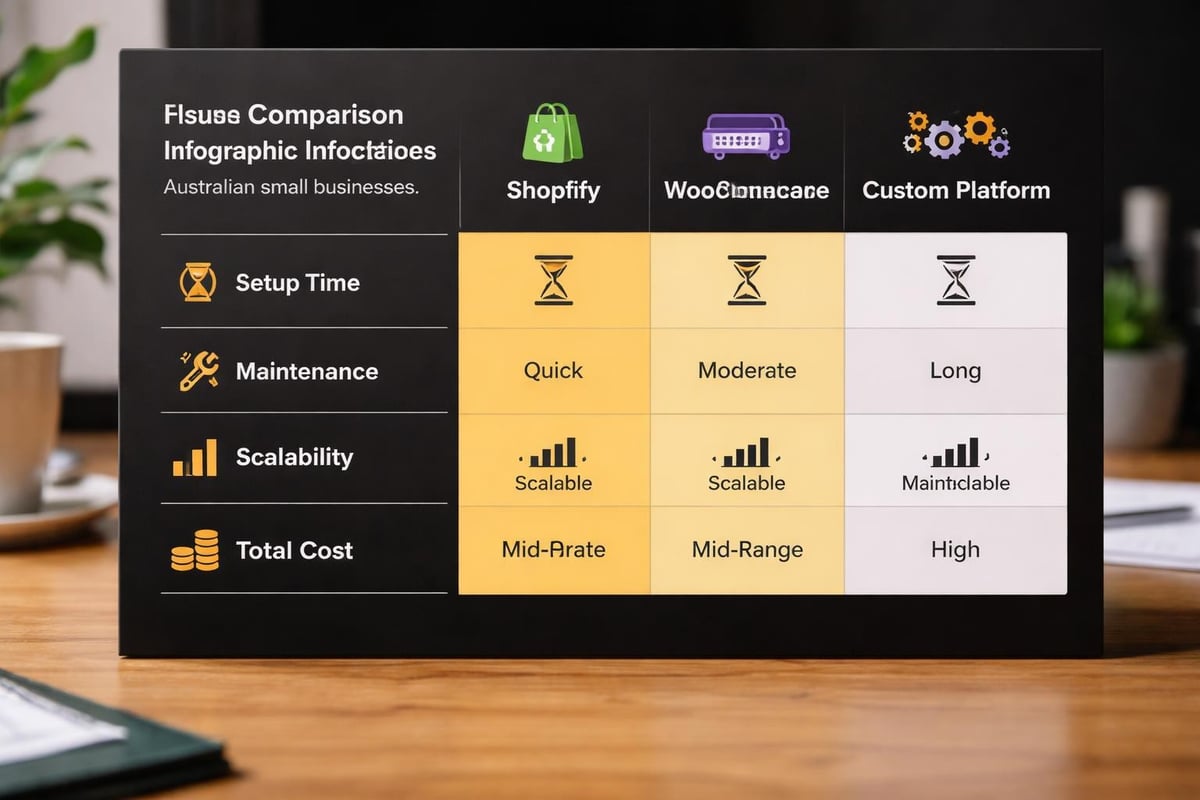
Shopify dominates the Australian ecommerce landscape for good reason:
- Hosted infrastructure that handles traffic spikes during sale periods
- Built-in payment processing designed for Australian businesses
- App ecosystem that extends functionality without custom development
- Regular security updates that happen automatically
WooCommerce appeals to businesses already invested in WordPress, but it demands more technical knowledge and ongoing maintenance. Magento offers enterprise-level features at enterprise-level complexity and cost.
For most small Australian businesses launching their first ecommerce store, Shopify provides the sweet spot between capability and usability. It's not the cheapest option upfront, but the total cost of ownership often works out lower when you factor in developer hours and hosting headaches.
Building an Ecommerce Store That Actually Converts
Conversion rates separate profitable stores from expensive hobbies.
Global ecommerce conversion rates average around 2.5% to 3% in 2026, but Australian stores often see higher rates when they nail the fundamentals.
Getting to a 4% or 5% conversion rate isn't about luck. It's about removing friction at every step of the customer journey.
Start with your product pages. Each one needs high-quality images that show products from multiple angles. Not phone photos. Not grainy supplier images. Proper product photography that builds confidence.
Your product descriptions should answer questions before customers ask them. Dimensions, materials, care instructions, shipping timeframes. All there. All clear.
The Checkout Process Makes or Breaks Sales
Seventy percent of shopping carts get abandoned before checkout completion.
That's not unique to your ecommerce store. It's an industry-wide problem with industry-tested solutions.
Reduce checkout friction through:
- Guest checkout options that don't force account creation
- Multiple payment methods including digital wallets
- Clear shipping costs displayed before the final step
- Progress indicators showing customers where they are in the process
- Mobile-optimized forms that work with Australian phone keyboards
Express checkout options like Shop Pay or Apple Pay can boost conversion rates by 10% or more. They eliminate form-filling entirely for returning customers or those with saved payment details.
Free shipping thresholds work particularly well for Australian ecommerce stores. Set your threshold 15% to 20% above your average order value to encourage larger purchases while maintaining margin.
Technical Foundations That Support Growth
Your ecommerce store needs solid technical foundations from day one.
Trying to retrofit these later costs more time and money than building them in upfront.
Site speed directly impacts revenue. A one-second delay in page load time can reduce conversions by 7%. For an ecommerce store doing $10,000 per month, that's $700 left on the table.
Shopify handles most speed optimization automatically, but you still need to optimize images, minimize app bloat, and choose a fast theme. Understanding how to build Shopify stores efficiently means knowing which shortcuts save time without sacrificing performance.
Mobile responsiveness isn't optional in 2026. More than 60% of ecommerce traffic comes from mobile devices. Your store needs to work flawlessly on screens from 320px to 2560px wide.
Security and Trust Signals
Australian consumers are savvier about online security than ever before.
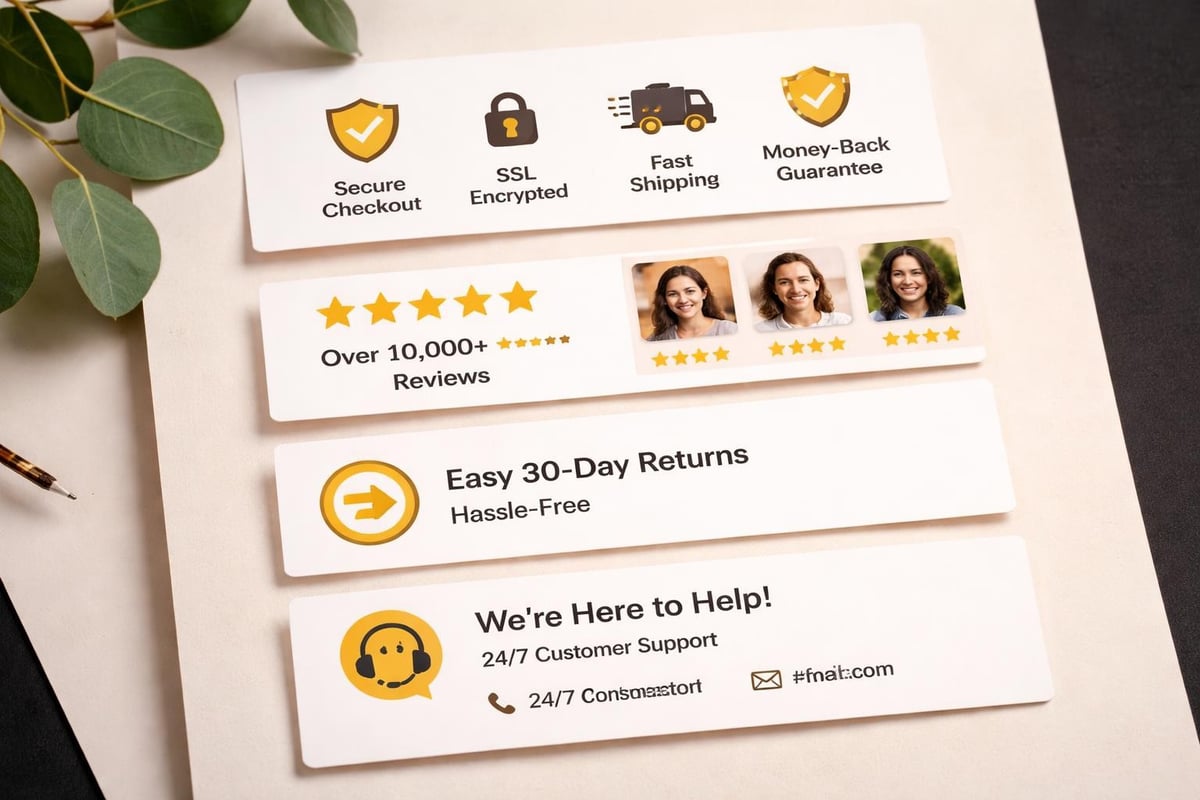
Your ecommerce store needs visible trust signals throughout the buying journey.
SSL certificates (the padlock in the browser bar) are table stakes. Every modern platform includes them, but customers still check. Display security badges near checkout buttons. Show accepted payment methods. Include customer reviews on product pages.
Trust elements that boost conversions:
- Customer reviews with photos from real buyers
- Clear return and refund policies linked in the footer
- Contact information including an Australian phone number
- About page that tells your business story
- Social proof through Instagram feeds or testimonial sections
Privacy policies and terms of service aren't just legal requirements. They're conversion tools when written in plain Australian English instead of copied American legalese.
Inventory and Fulfillment Strategy
Product availability makes or breaks customer satisfaction.
Your ecommerce store needs systems that track stock levels accurately and update in real time.
Running out of stock on popular items frustrates customers. Overselling creates even worse problems when you can't fulfill orders.
Inventory management approaches for small businesses:
- Manual tracking works for stores with fewer than 50 SKUs
- Inventory apps like Stocky integrate with Shopify for automated reordering
- Dropshipping eliminates inventory entirely but reduces margin control
- Print-on-demand suits custom products without upfront inventory costs
Australian fulfillment logistics present unique challenges. Distances are vast. Shipping costs are high. Customer expectations for delivery speed continue rising.
Most small ecommerce stores start by handling fulfillment in-house. Pack orders in the evening. Drop them at Australia Post in the morning. It works until volume makes it unworkable.
Third-party fulfillment becomes cost-effective around 100 orders per month. Companies like Shippit and Sendle offer Australian-focused logistics that integrate with Shopify. They handle the physical work while you focus on growing sales.
Marketing Your Ecommerce Store Without Burning Cash
Building your ecommerce store is step one.
Getting customers to visit is where most small businesses struggle.
Recent ecommerce statistics show that customer acquisition costs have risen 60% since 2022. Paid advertising works, but it's expensive and requires ongoing investment.
Organic traffic strategies deliver better long-term ROI:
- SEO-optimized product pages targeting specific Australian search terms
- Content marketing that answers customer questions before purchase
- Email marketing to convert browsers and re-engage past customers
- Social media presence on platforms where your customers already spend time
Your ecommerce store needs an email list from day one. Offer a small discount for first-time subscribers. Send helpful content, not just promotional emails. Segment your list based on purchase history and browsing behavior.
Optimizing Shopify product pages for SEO involves more than stuffing keywords into descriptions. It requires understanding search intent and creating content that matches what Australian customers actually search for.
Paid Advertising That Actually Works
Meta ads (Facebook and Instagram) remain the primary paid channel for Australian ecommerce stores in 2026.
Start small. Test different audiences. Scale what works.
Budget $300 to $500 for initial testing. Split that between three to five audience segments. Monitor cost per acquisition closely. If you're spending $50 to acquire a customer for a $40 product, the math doesn't work.
Google Shopping ads convert well for product searches with high purchase intent. Someone searching "buy organic coffee beans online Australia" is closer to purchase than someone scrolling Instagram.
Retargeting campaigns capture people who visited your ecommerce store but didn't buy. These campaigns typically deliver 2x to 3x better conversion rates than cold traffic campaigns.
Common Mistakes That Kill Ecommerce Stores
Launching an ecommerce store is easier in 2026 than ever before.
That doesn't mean it's easy to do well.
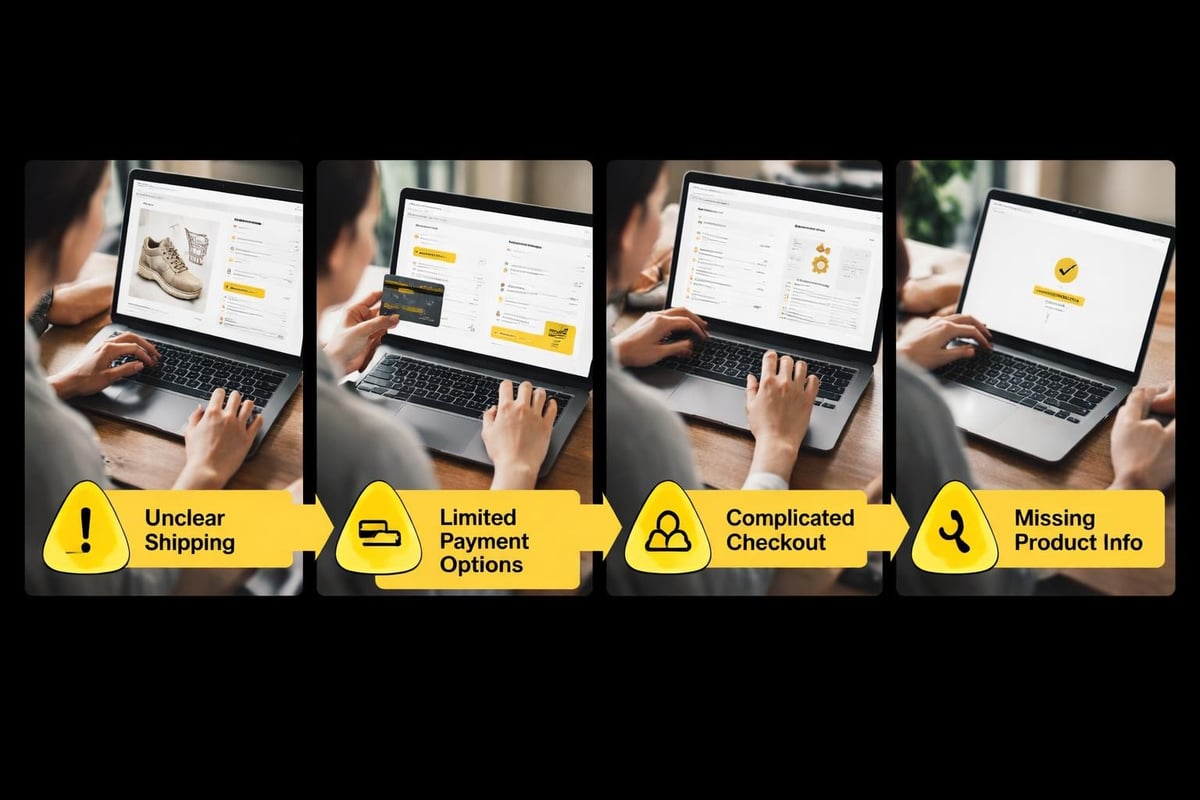
Mistakes that tank conversion rates:
- Unclear shipping costs that surprise customers at checkout
- Limited payment options that exclude customer preferences
- Poor product photography that fails to showcase items properly
- Complicated navigation that hides products from browsers
- Missing size guides or product specifications
- Slow loading times that frustrate mobile shoppers
Many Australian businesses choose between expensive agency builds at $10,000 plus or DIY approaches using page builders and free themes. Understanding why agencies charge premium prices helps evaluate whether that investment makes sense for your business stage.
The middle ground often delivers the best outcomes for small businesses launching their first ecommerce store. Professional setup that covers the fundamentals without agency bloat or DIY gaps. For small Australian businesses launching their first Shopify store, structured packages designed to cover everything needed to launch within four weeks at Kida Digital provide clarity and momentum without missing fundamentals or unnecessary complexity.
Measuring Success Beyond Revenue
Revenue matters, but it's not the only metric worth tracking.
Your ecommerce store generates data that reveals how customers interact with your site.
Key metrics to monitor weekly:
| Metric | Good Benchmark | What It Reveals |
|---|---|---|
| Conversion Rate | 3% to 5% | How well your store turns visitors into buyers |
| Average Order Value | Varies by niche | Whether upsells and bundles work |
| Cart Abandonment Rate | Under 70% | Checkout friction and pricing concerns |
| Customer Lifetime Value | 3x acquisition cost | Long-term profitability and repeat purchase rate |
Google Analytics 4 tracks these metrics automatically when properly configured. Shopify's built-in analytics cover the basics but lack the depth for detailed analysis.
Traffic sources tell you where customers find your ecommerce store. If 80% comes from paid ads, you have a customer acquisition problem when budget runs out. Organic traffic through SEO provides more sustainable growth.
Return customer rate indicates product quality and brand loyalty. First-time buyers cost more to acquire than repeat customers. A healthy ecommerce store sees 25% to 30% of monthly revenue from returning customers by month six.
Scaling Operations as Sales Grow
Success creates new challenges for your ecommerce store.
What worked at 50 orders per month breaks at 500.
Automation becomes essential as volume increases. Order confirmation emails, shipping notifications, review requests. All should happen automatically without manual intervention.
Systems that scale with your business:
- Automated inventory alerts when stock runs low
- Email sequences triggered by customer behavior
- Chatbots that handle common customer questions
- Automated social media posting for product updates
Customer service demands grow alongside sales. One person can handle support at lower volumes. Beyond 100 orders per month, you need systems that help customers help themselves.
Detailed FAQs prevent repetitive questions. Self-service return portals reduce email volume. Order tracking that updates automatically eliminates "where's my order" messages.
International Expansion Considerations
Many Australian ecommerce stores eventually consider international sales.
The opportunity is real. The complexity is also real.
Shipping to New Zealand is relatively straightforward. Similar regulations, reasonable shipping costs, cultural alignment. It's often the natural first step for Australian businesses testing international waters.
Expanding to the United States or United Kingdom requires more planning. Customs documentation, international shipping costs, different consumer protection laws. Currency conversion, international payment processing fees, returns management across continents.
U.S. ecommerce statistics show a massive market, but also massive competition. Australian businesses need clear differentiation to succeed there.
Start domestic. Perfect your operations. Build profitability. Then consider international expansion from a position of strength rather than desperation for growth.
The Reality of Running an Ecommerce Store in 2026
Building an ecommerce store takes weeks.
Running one successfully takes years of consistent effort.
The platform you choose matters. The design decisions you make matter. But what matters most is showing up consistently to improve conversion rates, test new marketing channels, and serve customers well.
Small Australian businesses succeeding in ecommerce today share common traits. They focus on specific niches rather than trying to compete with Amazon. They build relationships with customers through email and social media. They optimize relentlessly based on data, not assumptions.
Your ecommerce store won't look the same in six months as it does at launch. Products will change. Pricing will evolve. Marketing channels will shift. That's normal. That's growth.
The stores that fail are the ones that launch and then stop iterating. The ones that succeed treat launch day as day one of an ongoing optimization process.
Building a profitable ecommerce store in 2026 requires balancing technical fundamentals with conversion optimization and sustainable marketing. Small Australian businesses need solutions that deliver professional results without agency prices or DIY gaps. Kida Digital specializes in conversion-led Shopify development that gets small Australian ecommerce businesses from concept to launch in four weeks with all the fundamentals in place. Ready to build a store that actually converts?


Be the first to comment