
Finding the right people to build your online store isn't just about technical skills. It's about finding someone who understands eCommerce fundamentals, can solve real problems, and won't disappear after launch. Expert Shopify developers bring a combination of platform knowledge, conversion strategy, and business sense that generalist web developers simply can't match. For small Australian eCommerce businesses, choosing the wrong developer can mean months of delays, thousands in wasted budget, and a store that looks good but doesn't sell. This guide cuts through the noise to help you identify genuine expertise and avoid costly mistakes.
What Actually Makes a Shopify Developer an Expert
Technical competency is table stakes. Any developer worth their rate can install apps and tweak templates.
Expert Shopify developers go deeper. They understand Liquid templating, theme architecture, and the platform's API limitations. More importantly, they know when custom code is needed and when it's unnecessary complexity.
According to Shopify's 2025 merchant survey, stores built by experienced developers convert 37% better on average than DIY builds. That gap exists because experts focus on the commercial outcome, not just the technical delivery.
The Technical Foundation
True expertise shows up in how developers approach problems.
They can build custom sections without breaking theme updates. They understand metafields, variant limits, and checkout extensibility. They know the difference between server-side rendering and client-side JavaScript, and when each matters for performance.
Key technical indicators include:
- Proficiency in Liquid, HTML, CSS, and JavaScript
- Experience with Shopify's GraphQL and REST APIs
- Understanding of theme development best practices
- Knowledge of app integration and third-party services
- Familiarity with headless commerce architectures
But technical skills alone don't make someone an expert. A developer can code brilliantly and still build a store that bleeds customers at checkout.
The Commercial Perspective
Expert Shopify developers think like merchants. They ask about your margins, your customer acquisition costs, and your average order value before they touch a line of code.
They recommend apps based on ROI, not commission rates. They design checkout flows that reduce friction. They understand that mobile conversion rates matter more than desktop parallax effects.
This commercial awareness separates platform specialists from general web developers. When someone has built 50+ Shopify stores, they've seen what actually drives sales versus what just looks impressive in screenshots.

Red Flags When Hiring Shopify Developers
Some warning signs appear immediately. Others take weeks to surface.
Portfolio websites that all look identical suggest template dependence, not custom expertise. Developers who can't explain their decision-making process in plain language often lack strategic depth.
Communication and Process Issues
Expert developers ask questions before proposing solutions. They want to understand your business model, your customers, and your growth plans.
Red flags include:
- Providing quotes without discovery calls
- Promising unrealistic timelines
- Unable to explain technical decisions
- No post-launch support offerings
- Reluctance to share previous client references
Price can also signal problems. Developers charging $50/hour typically lack Shopify-specific expertise. Those charging $300/hour might have enterprise experience that doesn't translate to small business needs.
The sweet spot for expert Shopify developers in Australia sits between $120-200/hour in 2026, depending on complexity and scope.
Technical Warning Signs
Some developers hide behind jargon. Others oversimplify to the point of uselessness.
Watch for developers who immediately suggest custom apps for standard features. Or those who claim Shopify "can't do" something that's actually built-in functionality. These gaps suggest surface-level platform knowledge.
Similarly, be wary of developers who dismiss analytics, tracking, and conversion optimization as "not their job." Expert Shopify developers know that a beautiful store with poor conversion rates is a failed project.
Where Expert Shopify Developers Build Their Skills
Formal certification matters less than practical experience, but it's still a useful signal. The Shopify Partner Program offers training resources and badges that indicate platform commitment.
Learning Paths and Specializations
Most expert developers started elsewhere. They might have backgrounds in PHP, Ruby, or frontend development before specializing in Shopify.
The best ones never stop learning. Shopify releases major updates quarterly. New APIs, features, and best practices emerge constantly. Developers who rely on three-year-old knowledge quickly fall behind.
Many maintain active involvement in Shopify communities. They contribute to forums, write technical articles, or build open-source tools. This public knowledge-sharing often correlates with deeper expertise.
Some specialize further into niches like Shopify Plus development, headless commerce, or subscription models. These specializations can be valuable if they align with your business needs, but they're not essential for most small Australian stores.
Real-World Experience Beats Certifications
The merchant who's launched 100 stores has encountered more edge cases than any certification program covers. They've debugged payment gateway failures at 2am. They've rebuilt corrupted themes. They've migrated from dying platforms under tight deadlines.
This battle-tested experience creates pattern recognition. Expert Shopify developers spot potential problems in project scopes that less experienced developers miss entirely.
What Expert Shopify Developers Actually Deliver
Deliverables vary by project, but certain elements appear in every quality build. Theme customization forms the foundation. Product setup, collection organization, and navigation structure follow.
Expert developers also configure essential apps, set up tracking and analytics, optimize for mobile performance, and implement conversion best practices.
The Four-Week Build Standard
Speed matters, but not at the expense of quality. Projects that drag for months lose momentum and increase costs. Rushed projects launched in days often require expensive fixes.
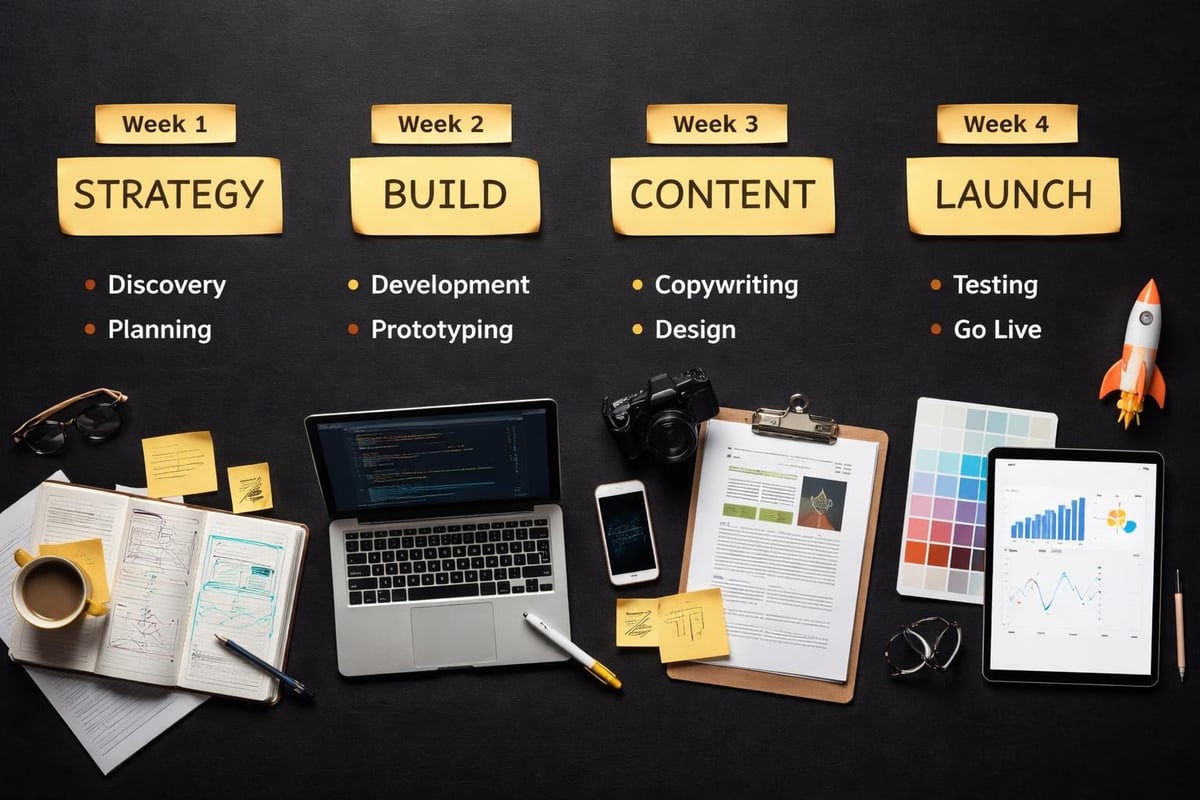
Four weeks has emerged as the optimal timeline for small to medium Shopify stores. Week one covers strategy, planning, and design direction. Week two handles build and integration. Week three focuses on content, products, and testing. Week four manages refinement, training, and launch.
This compressed but thorough timeline works when developers have systems, templates, and processes refined through repetition. For small Australian eCommerce businesses launching their first store, this structured approach provides clarity and momentum without the agency bloat or DIY guesswork.
Post-Launch Support Structures
Launch day isn't finish line. It's the starting line. Expert Shopify developers understand this distinction and build ongoing relationships with clients.
Support models vary. Some offer monthly retainers. Others provide ad-hoc support with guaranteed response times. The worst simply disappear after final payment.
Common post-launch support includes:
- Bug fixes and troubleshooting
- Performance monitoring and optimization
- App updates and compatibility checks
- Feature additions as business grows
- Conversion rate analysis and improvements
This ongoing relationship often proves more valuable than the initial build. A developer who understands your business, your customers, and your technical setup can implement changes in hours that would take new developers days to figure out.
Cost Structures and Investment Expectations
Pricing models confuse many small business owners. Hourly rates, fixed quotes, value-based pricing, and retainers all serve different purposes. Understanding these models helps you evaluate proposals properly.
| Pricing Model | Best For | Typical Range (AUD) | Pros | Cons |
|---|---|---|---|---|
| Fixed Project | New store builds | $5,000-$25,000 | Predictable budget | Scope creep issues |
| Hourly Rate | Ongoing support | $120-$200/hour | Flexible for changes | Unpredictable costs |
| Monthly Retainer | Active stores | $800-$3,000/month | Consistent support | Minimum commitments |
| Value-Based | Complex projects | Negotiated | Aligned incentives | Hard to evaluate |
The cheapest option rarely delivers the best outcome. A $3,000 Shopify build from an inexperienced developer often costs $8,000 to fix later. Understanding why pricing varies so dramatically helps you make informed decisions.
Hidden Costs to Consider
Developer fees represent just one component of your total investment. App subscriptions typically run $50-300 monthly. Premium themes cost $180-400 upfront. Payment gateway fees, transaction costs, and Shopify's monthly platform fee add ongoing expenses.
Expert Shopify developers help you understand these costs upfront. They recommend apps that justify their cost through functionality or conversion improvements. They avoid unnecessary premium tools when free alternatives work just as well.
Photography, copywriting, and brand assets also impact budget. Some developers include content creation. Others expect you to provide finished assets. Clarifying these expectations prevents budget surprises mid-project.
Evaluating Developer Portfolios and Case Studies
Every developer has a portfolio. Not every portfolio demonstrates expertise. Learning to read between the lines separates impressive screenshots from impressive results.
What to Look for in Previous Work
Visual polish matters, but conversion performance matters more. Ask developers about metrics, not just aesthetics. What was the bounce rate? How did checkout completion improve? What revenue growth did clients achieve?
Expert Shopify developers can discuss specific challenges they solved. They'll explain why they chose certain apps over alternatives. They'll show before-and-after performance data.
Portfolio evaluation checklist:
- Variety of industries and business models
- Mobile responsiveness across all examples
- Page speed scores (check yourself using PageSpeed Insights)
- Clear explanation of project scope and timeline
- Client testimonials with specific outcomes
Be suspicious of portfolios showing only enterprise brands or only tiny startups. The best developers work across the spectrum and can adapt their approach to different scales.
Generic "powered by Shopify" stores aren't portfolio pieces. Anyone can install a theme. Look for customization, problem-solving, and strategic thinking made visible through the work.
Questions to Ask About Past Projects
Don't just admire pretty websites. Dig into the process and outcomes. Ask what problems arose during development and how they were solved. Find out how long builds typically take from kickoff to launch.
Request client references and actually contact them. Ask about communication style, deadline adherence, and post-launch support. Most importantly, ask if they'd hire the developer again.
Expert Shopify developers welcome these questions. They're proud of their process and confident in their client relationships. Defensive responses or vague answers suggest deeper issues.

The Partnership Approach vs. Transactional Builds
Some developers build sites and move on. Expert Shopify developers build relationships that grow with your business.
This partnership mindset shows up in small ways. They proactively suggest improvements. They monitor your store's performance even between paid projects. They celebrate your wins and help troubleshoot challenges.
Long-Term Value Creation
Your eCommerce needs evolve. You'll want to add products, create new collections, launch marketing campaigns, and optimize underperforming pages. Having a developer who knows your store intimately makes these changes faster and cheaper.
Partnership developers also stay current on platform updates. When Shopify releases new features, they evaluate whether you should adopt them. They keep your theme and apps updated, preventing security vulnerabilities and compatibility issues.
This ongoing relationship often delivers more value than the initial build. A developer invested in your success becomes a strategic advisor, not just a technical service provider.
Finding Developers Who Think Like Business Partners
Look for developers who ask about your business goals before discussing technical requirements. They should understand your customer lifetime value, your acquisition channels, and your competitive positioning.
Expert developers might push back on requests that don't serve your business objectives. If you want a feature that will hurt conversion rates or slow down your site, they'll explain why it's a bad idea and suggest alternatives.
This willingness to challenge your assumptions indicates strategic thinking. Yes-men developers who build whatever you request might seem easier to work with, but they rarely deliver better outcomes.
Platform-Specific Knowledge That Matters
Shopify isn't just another CMS. It has unique constraints, capabilities, and quirks that require specific expertise. Developers coming from WordPress or custom platforms often miss these nuances.
Understanding Shopify's Architecture
The platform's section-based theme structure changed how stores are built. Expert Shopify developers leverage this system to create flexible, client-editable designs without custom code.
They understand Shopify's 100-variant limit per product and design around it. They know how to structure collections for optimal performance. They're familiar with Shopify's CDN and how to maximize its benefits.
Critical platform knowledge includes:
- Theme liquid templating and filters
- Checkout customization limitations and options
- App integration best practices
- SEO configurations specific to Shopify
- Multi-currency and international selling features
Generalist web developers often struggle with these platform-specific elements. They might build beautiful custom features that break when Shopify updates. Or they'll miss built-in functionality and waste time recreating it.
Staying Current with Platform Evolution
Shopify releases hundreds of updates annually. Some are minor. Others fundamentally change how stores should be built. Expert developers track these changes through the Shopify Partners Blog and implement relevant updates proactively.
The shift to Online Store 2.0 themes is a recent example. Developers who understood this transition early helped clients migrate smoothly. Those who ignored it left clients on deprecated architecture.
Similarly, changes to checkout extensibility, metafields, and variant options created new possibilities for customization. Expert Shopify developers learned these systems and applied them to solve client problems more elegantly.
Making Your Final Decision
You've reviewed portfolios, checked references, and compared proposals. Now comes the actual decision. Trust your gut, but verify it with data.
Decision Framework
Create a simple scoring system across key criteria. Weight technical expertise, communication quality, portfolio strength, pricing fairness, and cultural fit according to your priorities.
The cheapest option rarely wins. The most expensive doesn't guarantee success. Look for the best combination of expertise, approach, and value for your specific situation.
Consider timeline as well. Can they start when you need them? Do their availability and your launch goals align? Rushing a developer creates problems. So does waiting months for them to become available.
Trial Projects and Pilot Phases
If you're uncertain, propose a smaller initial project. Many expert Shopify developers offer audits, optimization reviews, or single-feature builds that let you evaluate their work before committing to a full build.
This approach works particularly well if you've already launched a DIY store and need professional refinement. An optimization package can demonstrate a developer's strategic thinking and technical skills before you invest in a complete rebuild.
The Importance of Clear Agreements
Once you've chosen a developer, get everything in writing. Scope, timeline, deliverables, payment terms, revision limits, and post-launch support should all appear in a clear contract.
Expert Shopify developers provide detailed proposals because they protect both parties. Ambiguous agreements lead to scope creep, timeline disputes, and relationship breakdowns.
Don't skip this step to move faster. A few hours spent clarifying expectations prevents weeks of frustration later. Make sure you understand what's included, what's extra, and how changes are handled.
Regional Considerations for Australian Businesses
Working with local expert Shopify developers offers distinct advantages. Time zone alignment means real-time communication. Cultural understanding helps with market positioning. Local payment gateway expertise avoids integration headaches.
Australian eCommerce Specifics
GST configuration, Australia Post integration, and Afterpay setup are second nature to Australian developers. International developers often miss these local requirements or implement them incorrectly.
Consumer law compliance, particularly around returns and refunds, varies by country. Australian expert Shopify developers build stores that meet local legal requirements from day one. This prevents compliance issues that could cost thousands to fix later.
Local developers also understand the Australian eCommerce landscape. They know which apps work well for Australian shipping rates. They're familiar with local payment preferences and checkout behaviors.
Remote vs. Local Collaboration
Geography matters less in 2026 than it did five years ago. Screen sharing, project management tools, and video calls enable smooth remote collaboration. Many expert Shopify developers work with clients across Australia without meeting face-to-face.
What matters more is communication style and availability overlap. A developer in Perth might be easier to work with than one in Sydney if they're more responsive and clearer in their communication.
However, some business owners prefer the option of in-person meetings, particularly during strategy and planning phases. If this matters to you, factor location into your decision criteria.
Resources for Ongoing Learning
Your developer should be your primary resource, but understanding Shopify basics helps you make better decisions and communicate more effectively. The Shopify Partners resources offer valuable insights, even for non-technical store owners.
Industry publications, eCommerce podcasts, and Shopify's own content help you stay current on platform capabilities and best practices. This knowledge helps you evaluate developer recommendations and identify opportunities for improvement.
Consider joining Shopify merchant communities. Other store owners share their experiences with developers, apps, and strategies. These peer insights often reveal what actually works versus what sounds good in marketing materials.
Understanding the fundamentals of Shopify websites helps you ask better questions and make more informed decisions throughout your store's lifecycle.
Finding expert Shopify developers requires looking beyond technical skills to strategic thinking, commercial awareness, and partnership potential. The right developer becomes a long-term asset to your business, not just a one-time service provider. If you're ready to build a conversion-focused Shopify store without agency bloat or DIY guesswork, Kida Digital specializes in streamlined four-week builds for small Australian eCommerce businesses. We bring the expertise and systems that turn your concept into a revenue-generating online store.


Be the first to comment