
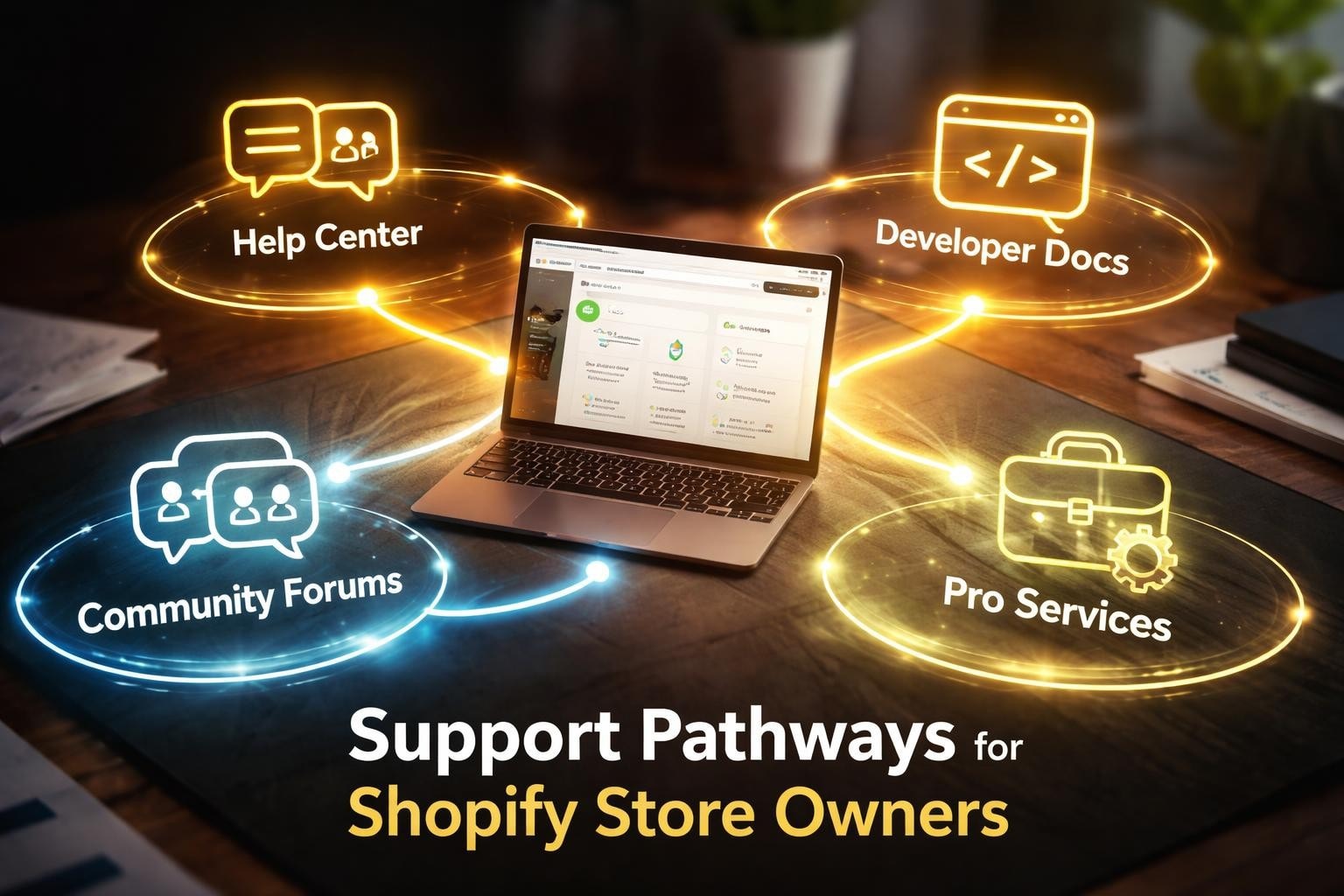
Running a Shopify store in Australia comes with its own set of challenges. Time zones don't always align with support hours. Local payment gateways need specific setup. Shipping logistics differ from overseas examples. When you need help with Shopify, knowing where to turn and what resources actually solve problems makes the difference between losing a day and moving forward. Most small business owners waste hours searching for answers that either don't apply to Australian contexts or assume technical knowledge they don't have. This guide cuts through the noise to show you what actually works when you need help shopify provides and when you need to look elsewhere.
Where Official Shopify Support Actually Helps
Shopify's native support channels handle specific problems well. Their help center covers billing issues, account access, and basic platform questions with reasonable turnaround times. Email support typically responds within 24 hours for most queries. Live chat connects faster during business hours, though Australian time zones mean you're often dealing with offshore teams.
The official Shopify Help Center documentation has improved significantly in recent years. Search functionality works better than it used to. Articles now include more visual guides and step-by-step instructions. But here's what official support struggles with: complex customizations, theme-specific issues, app conflicts, and conversion optimization.
When you contact Shopify support about why your checkout isn't converting, they'll check technical functionality. They won't analyze your user experience. They'll confirm the button works but won't tell you why customers abandon carts. That's not their role.
What Shopify Support Handles Well
Account and billing issues get resolved quickly. Subscription changes, payment failures, and plan upgrades happen through straightforward processes. If you're locked out or need to transfer ownership, support walks you through it.
Core platform functionality receives solid support. Questions about adding products, managing inventory, or processing orders connect you with agents who know the system. They troubleshoot shipping settings, configure tax rules, and explain how features work.
App troubleshooting reaches its limits when third-party tools interact. Shopify can confirm their platform works correctly. They can't fix bugs in apps you've installed. You'll get redirected to app developers for anything beyond basic integration.

Developer Documentation When You Need Technical Answers
For anyone building custom functionality or working with code, Shopify’s developer support connects you with technical resources. The developer community includes thousands of experienced builders who've solved similar problems. Response quality varies, but specific technical questions usually receive accurate answers.
Developer documentation covers API usage, theme development, and app building. The changelog system tracks platform updates that affect custom code. Understanding when Shopify changes core functionality prevents mysterious bugs from appearing in your store.
Most Australian small business owners won't need developer documentation directly. But knowing it exists helps when you're hiring developers or trying to understand what's possible. A developer who references official documentation and follows Shopify development standards generally produces more reliable work.
When Developer Resources Matter for Non-Developers
You don't need to read API documentation to benefit from it. When discussing customization with developers, asking whether they follow Shopify's official guidelines filters out cowboys. Developers who stay current with platform changes build more stable solutions.
Theme customization often requires code knowledge beyond Shopify's visual editor. Simple changes seem possible until you try them. Colors and fonts adjust easily. Layout modifications and functional changes need developer skills.
App integration sometimes needs custom coding to work properly. Two apps might conflict. Data might not sync the way you expect. Official documentation helps developers troubleshoot these issues faster than guessing.
Community Forums and Third-Party Resources
Beyond official channels, community forums provide peer support. Other store owners share what worked for them. You'll find workarounds, plugin recommendations, and honest assessments of what's worth the money.
The quality of community advice ranges dramatically. Some contributors run successful multimillion-dollar stores. Others confidently share information that's outdated or wrong. Cross-reference recommendations before implementing them. What worked for a store selling digital downloads might not apply to physical products.
Resources like How Commerce offer structured learning paths. They bridge the gap between official documentation and real-world application. Their tutorials cover common scenarios with practical examples. For business owners wanting to understand their platform better without becoming developers, these resources hit the right level.
The Risk of Following Outdated Advice
Shopify changes frequently. Features appear and disappear. Best practices evolve. Forum posts from 2023 might recommend solutions that no longer exist or suggest workarounds for problems Shopify has since fixed.
Always check the date on advice you're following. A five-year-old tutorial about SEO optimization likely misses current best practices. Payment gateway setup instructions from before 2024 won't account for recent compliance changes.
The Shopify Collective documentation demonstrates how quickly the platform evolves. New features roll out regularly. Integration options expand. What wasn't possible last year might now be built into the platform.

When You Need Professional Help Shopify Can't Provide
Here's the reality most store owners discover eventually. Shopify provides the platform. They don't build your business strategy. They won't optimize your conversion rate. They can't tell you why your Google Ads aren't working or how to structure your product collections for maximum sales.
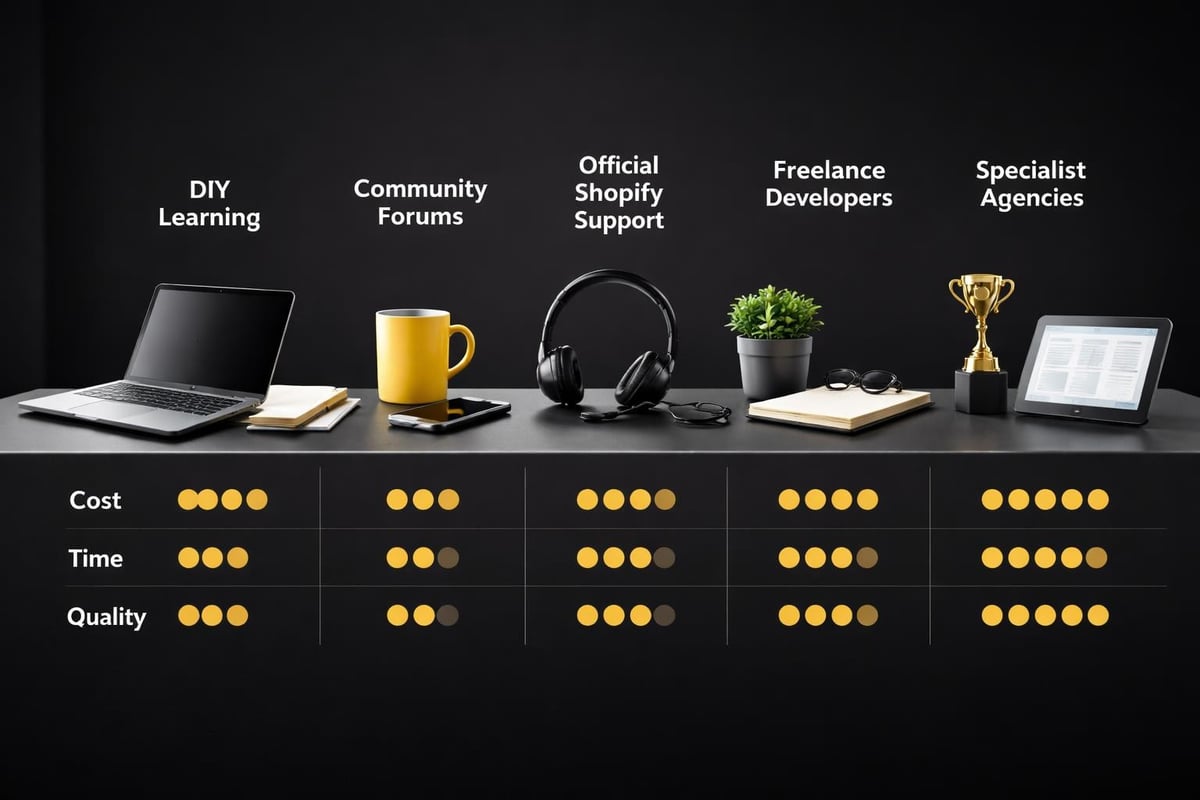
Professional help comes in several forms. Freelance developers handle one-off customizations. Marketing agencies manage advertising and SEO. Shopify development specialists focus specifically on building and optimizing stores.
Conversion optimization requires understanding customer behavior, testing variations, and implementing changes based on data. Official support won't analyze your heat maps or recommend layout changes. That's specialist work.
Strategic planning helps you make decisions about product positioning, pricing strategy, and market approach. Technical support answers technical questions. Business questions need business expertise.
What Small Australian Businesses Actually Need
Most Australian eCommerce businesses don't need enterprise-level support. They need practical answers to specific problems. They need someone who understands Australian shipping, payment gateways, and tax requirements. They need solutions that work within their budget and timeline.
A 2024 study by the Australian Retailers Association found 67% of small online retailers struggled with technical implementation. Not understanding what to do, but executing it correctly. The gap between knowing and doing creates most problems.
When you're launching your first store, the help shopify provides covers basics. Setting up products works fine. Choosing a theme presents hundreds of options. But connecting everything into a cohesive customer experience needs strategic thinking.
For businesses launching their first store, done-for-you Shopify builds eliminate the guesswork. Rather than piecing together tutorials and hoping everything works together, you get a complete system built correctly from the start. No missing integrations. No conversion-killing mistakes. Just a store ready to sell within four weeks.
Finding the Right Support Level for Your Stage
Different business stages need different support. A brand-new store needs foundational setup. An established store needs optimization and scaling. Understanding what you actually need prevents overpaying for unnecessary services or struggling with inadequate support.
Launch phase businesses benefit from structured implementation. Following a proven process prevents common mistakes. Getting the foundation right matters more than perfecting every detail.
Growth phase stores need optimization focused on conversion and efficiency. Adding features makes sense when you know what's holding back growth. Random improvements waste money and create complexity.
Scale phase businesses require robust infrastructure and integration with other systems. Inventory management becomes critical. Automation saves time and reduces errors.
| Business Stage | Primary Need | Best Support Source |
|---|---|---|
| Pre-launch | Strategy and setup | Specialist developer or agency |
| Just launched | Technical troubleshooting | Official Shopify support + documentation |
| Growing steadily | Conversion optimization | Marketing specialist + developer |
| Scaling rapidly | Infrastructure and automation | Developer + systems consultant |
The Cost of Wrong Support Choices
Choosing the wrong support path costs more than money. It costs time, momentum, and confidence. Spending weeks trying to figure out something a professional could solve in hours keeps you from focusing on actual business growth.
DIY approaches work when you enjoy learning and have time to spare. Most business owners don't. They have products to source, customers to serve, and marketing to manage. Wrestling with checkout customization isn't the best use of their time.
Conversely, hiring expensive agencies for simple problems wastes budget. Platform support can reset your password. You don't need a $200/hour developer for that. Matching the problem to the right solution level matters.
Calculating Your Time Value
If you make $50 per hour in your business and spend eight hours solving a technical problem, that's $400 of your time. Paying someone $150 to solve it in one hour saves you $250 and seven hours. Simple math that business owners forget when they're determined to figure it out themselves.
Australian small business owners average 52 hours per week according to 2025 ABS data. Every hour spent on technical problems instead of business development has opportunity cost. Choose support that maximizes your time effectiveness.
Support for Specific Shopify Challenges
Certain problems appear repeatedly for Australian stores. Understanding which support channel solves each one saves frustration and searching time.
Payment Gateway Issues
Australian stores typically use Shopify Payments, Stripe, or local options like POLi. Setup requires specific documentation and verification. Official support helps with account approval and technical connection. They won't advise on which gateway minimizes fees for your situation.
Shipping Configuration
Australia Post integration works differently than international options. Zone-based pricing needs careful setup. Free shipping thresholds affect conversion but require strategy decisions. Shopify support explains how to configure settings. They won't tell you what shipping strategy works best for your products.
Theme Customization
Official themes come with support for built-in features. Custom changes void that support. Third-party themes include varying levels of developer assistance. Complex customization always needs professional help. The Shopify template development process involves much more than changing colors and fonts.
SEO and Visibility
Shopify provides SEO fields and basic tools. Using them effectively requires understanding search optimization. Official support confirms fields work correctly. They don't audit your strategy or recommend improvements to product page optimization.
Making Support Decisions That Serve Your Business
The best support strategy combines multiple resources strategically. Use official channels for platform issues. Tap community knowledge for common questions. Bring in professionals for strategy and complex implementation.
Track what you're spending time on. If the same types of problems appear repeatedly, you need either better training or better initial setup. Most technical issues in established stores trace back to foundation mistakes during launch.
Document solutions when you find them. Create a simple reference for common tasks. Password reset procedures, backup processes, and routine maintenance tasks shouldn't require searching every time. Build your own knowledge base for recurring needs.
Budget for professional help before you need it. Knowing you have access to expert guidance reduces stress. Trying to DIY everything until you're desperate leads to expensive emergency fixes.
Many Australian businesses discover they'd save money overall by investing in proper setup initially. A well-built store needs less ongoing support. Features work correctly. Integrations don't break. Customers complete purchases smoothly.
Building Support into Your Store Foundation
The way your store is built determines how much support you'll need ongoing. Stores constructed with best practices require less troubleshooting. Clean code breaks less often. Proper documentation makes changes easier. Strategic feature selection prevents conflicting plugins.
When launching quickly matters, cutting corners creates technical debt. That debt compounds. Each workaround makes the next change harder. Soon you're afraid to update anything because you don't know what might break.
Professional builds include documentation and structure that makes future changes manageable. You understand how your store works. You know where to look when issues arise. You have clear paths for growth without rebuilding everything.
The difference between a $500 template setup and a proper development process isn't just what you see initially. It's how easily the store adapts as your business evolves. Support needs decrease when foundation quality increases.
Support Resources for Ongoing Learning
Beyond solving immediate problems, understanding Shopify better reduces future support needs. Strategic learning pays dividends. You make better decisions. You spot problems earlier. You communicate more effectively with developers when you do need help.
Shopify’s tutorial resources cover various business scenarios. They're free, comprehensive, and regularly updated. Investing a few hours in structured learning prevents days of frustrated troubleshooting later.
Platform literacy doesn't mean becoming a developer. It means understanding what's possible, what's difficult, and what's impossible. That knowledge guides realistic planning and prevents pursuing solutions that can't work.
Strategic thinking about eCommerce separates successful stores from struggling ones. Technical perfection matters less than understanding customer behavior. Support helps most when it improves outcomes, not just fixes errors.
The goal isn't eliminating all need for help. It's getting the right help at the right time for the right problems. That combination accelerates growth while controlling costs.
Getting help with Shopify works best when you match the problem to the appropriate resource and understand what different support channels actually provide. Official support handles platform issues well but can't build your business strategy or optimize for conversions. For Australian eCommerce businesses that want stores built right from the start, Kida Digital delivers conversion-focused Shopify development with everything needed to launch successfully in four weeks. No agency bloat, no missing fundamentals, just a complete store ready to grow your business.


Be the first to comment