

Selling in Shopify isn't just about uploading products and hoping for the best. It's about understanding how the platform works, how customers behave, and how to turn browsers into buyers. For small Australian eCommerce businesses, this means getting the fundamentals right from day one. No fluff, no guesswork, just practical systems that drive revenue. Whether you're launching your first store or looking to improve what you've already built, the strategies that matter haven't changed. They've just become more refined.
Getting Your Product Foundation Right
Before you worry about fancy apps or advanced tactics, your product setup needs to work. This means accurate descriptions, proper categorization, and pricing that makes sense for your market.
Start with your product titles. They need to be clear, specific, and searchable. "Men's Black Running Shoes Size 10" beats "Cool Shoes" every time. Your customers aren't mind readers, and neither is Google.
Product descriptions should answer questions before they're asked:
- What problem does this solve?
- Who is this for?
- What makes it different?
- What are the exact specifications?
Images matter more than most people think. According to TechRadar’s 2026 Shopify review, stores with high-quality product photography see conversion rates up to 40% higher than those with basic snapshots. That's not a small difference.

Inventory Management That Actually Works
Selling in Shopify requires you to stay on top of stock levels. The platform's inventory system is straightforward, but you need to use it properly.
Set up low-stock alerts before you run out. Nothing kills momentum faster than marking items as sold out when a customer is ready to buy. If you're managing multiple locations or warehouses, Shopify's multi-location inventory becomes essential.
Track your SKUs properly from the start. Even if you only have ten products now, you'll thank yourself later when you have fifty. Use a consistent naming system that makes sense to you and your team.
Merchandising Strategies That Drive Sales
Product pages don't exist in isolation. How you organize and present your catalog shapes the entire shopping experience. Effective Shopify merchandising focuses on three key areas: homepage impact, collection organization, and product detail optimization.
Your homepage needs to do more than look pretty. It should guide customers toward their next action. Featured collections work better than random product grids. Seasonal promotions need prominent placement. Navigation should be obvious, not clever.
Collection pages are where most buying decisions start. Group products in ways that match how people actually shop. "Summer Dresses Under $100" works better than just "Dresses." Filter options should reduce choice paralysis, not add to it.
Product Page Elements That Convert
Once someone lands on a product page, everything needs to support the sale. Reviews build trust, but only if they're genuine and recent. Size guides reduce returns, especially for apparel. According to reviews of the CSC Size Chart app, stores implementing proper sizing information see return rates drop by up to 25%.
Variant selection should be simple. If you sell t-shirts in five colors and four sizes, present that clearly. Don't make people hunt for their option. Stock indicators ("Only 3 left!") work when they're true, but overuse kills credibility.
Your add-to-cart button needs to stand out without being obnoxious. Make it a different color from the rest of your page. Place it above the fold. Test it on mobile, where most of your traffic actually comes from.
Pricing and Profit Strategies
Selling in Shopify means understanding your numbers. You need to know your costs, your margins, and what the market will actually pay.
Cost of goods sold (COGS) is your starting point. Add in shipping, payment processing fees (Shopify Payments takes 1.75% + 30 cents for Australian businesses), packaging, and any other direct costs. That's your baseline.
Your pricing structure should account for:
- Product cost and direct expenses
- Marketing and customer acquisition
- Platform fees and transaction costs
- Desired profit margin
- Competitive positioning
Compare yourself to the market, but don't race to the bottom. Competing on price alone is a losing game for small businesses. You'll never beat Amazon on cost, so don't try. Compete on service, speed, expertise, or product quality instead.
Psychological pricing still works. $49 performs differently than $50 in testing. Bundle pricing can increase average order value significantly. Tiered pricing ("Buy 2, save 10%") encourages larger purchases without devaluing single items.
Upselling and Cross-Selling Without Being Pushy
Done right, upselling and cross-selling on Shopify increases revenue while improving customer experience. Done wrong, it feels desperate and annoying.
Upsells work when they genuinely offer more value. If someone's buying a basic camera, showing them the pro version with better specs makes sense. Showing them an unrelated product doesn't. The key is relevance.
Cross-sells should solve related problems. Someone buying running shoes might need socks or a gym bag. They probably don't need a kitchen blender. Keep recommendations logical and limited. Three related items perform better than ten random ones.
| Strategy Type | Best Placement | Average AOV Increase | Customer Reception |
|---|---|---|---|
| Product page upsells | Below main product | 15-25% | High when relevant |
| Cart cross-sells | In-cart or drawer | 10-18% | Medium, avoid overload |
| Post-purchase | Thank you page | 8-12% | Low resistance, high impulse |
| Bundles | Collection pages | 20-30% | Very high when priced right |
According to Shopify upselling best practices research, stores that implement strategic product recommendations see average order values increase by 15-30% within the first quarter. That's real money for small businesses operating on tight margins.
Payment and Checkout Optimization
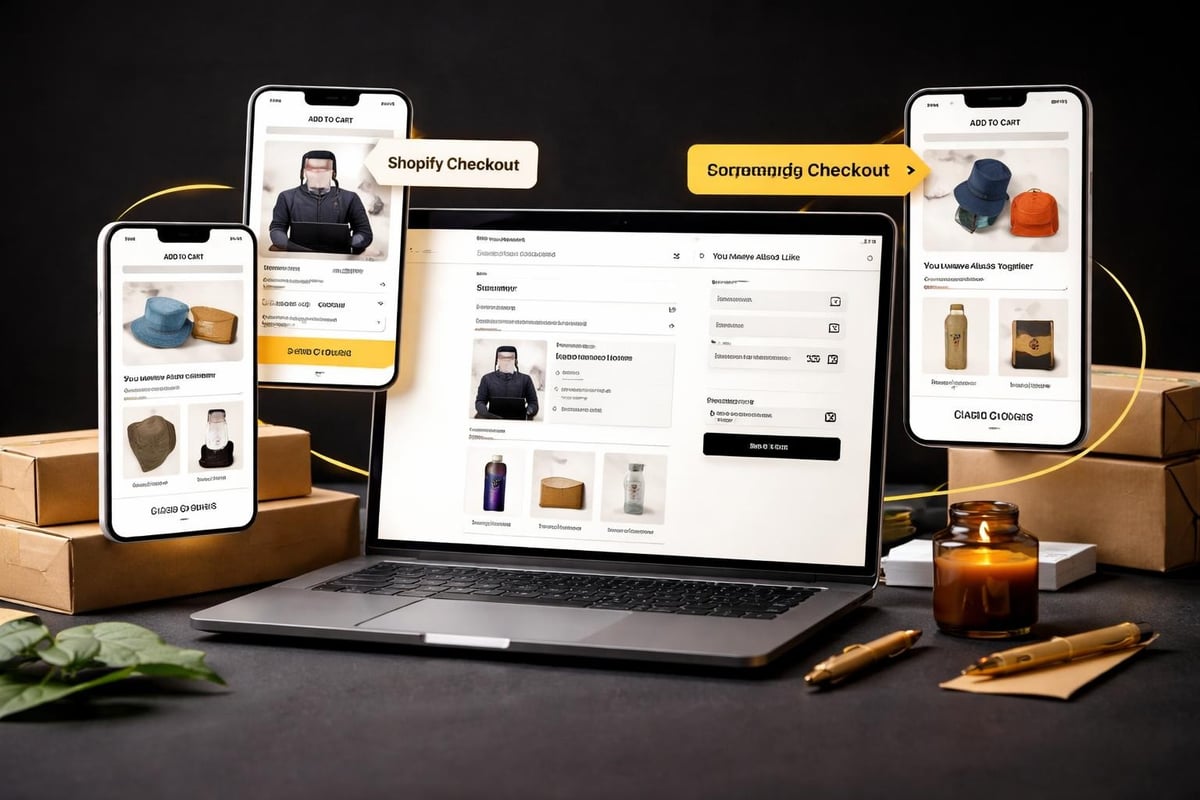
Selling in Shopify means removing every possible barrier between someone wanting to buy and actually completing the purchase. Your checkout process is where good traffic turns into revenue or evaporates into abandoned carts.
Shopify's checkout is already optimized, but you can still mess it up. Don't add unnecessary form fields. Don't require account creation before purchase. Don't surprise people with shipping costs at the last second.
Express checkout options like Shop Pay, Apple Pay, and Google Pay reduce friction significantly. In 2026, mobile commerce represents over 70% of Australian eCommerce traffic. If your checkout isn't mobile-optimized, you're losing sales every single day.
Payment options matter more than you might think. Afterpay and other buy-now-pay-later services aren't just trendy. For products over $100, offering installment options can increase conversion rates by 20-30%. The fees cut into margin, but converting more sales usually makes up for it.
Abandoned Cart Recovery
Not everyone who adds items to cart will complete the purchase. That's normal. According to recent eCommerce data, the average cart abandonment rate sits around 70% across all platforms. Your job is to bring some of those people back.
Effective abandoned cart strategies include:
- Email sequences triggered 1 hour, 24 hours, and 72 hours after abandonment
- Exit-intent popups offering last-minute incentives (use sparingly)
- Retargeting ads on Facebook and Google
- SMS recovery for high-value carts (with permission)
The first email should be simple. Remind them what they left behind. The second can introduce urgency or scarcity if genuine. The third might include a small discount, but only if your margins allow it. Never train customers to abandon carts just to get discounts.
Marketing Integration for Consistent Sales
Your Shopify store needs traffic to make sales. Outcome-based selling focuses on the results customers want, not just product features, which shapes how you approach marketing across all channels.
Email marketing remains one of the highest-ROI channels for eCommerce. Build your list from day one. Offer something valuable in exchange for sign-ups. Actually use the list instead of letting it gather dust. Abandoned cart emails, new product launches, and seasonal promotions all belong in your email strategy.
Social media works when you're strategic about platform choice. If you sell visually appealing products, Instagram and Pinterest make sense. B2B products might perform better on LinkedIn. Don't spread yourself thin trying to be everywhere. Focus on where your actual customers spend time.
Google Shopping ads convert well for product-based businesses. They show your products directly in search results when people are actively looking to buy. The setup takes work, but the return usually justifies the effort. Facebook and Instagram ads work for building awareness and reaching cold audiences.
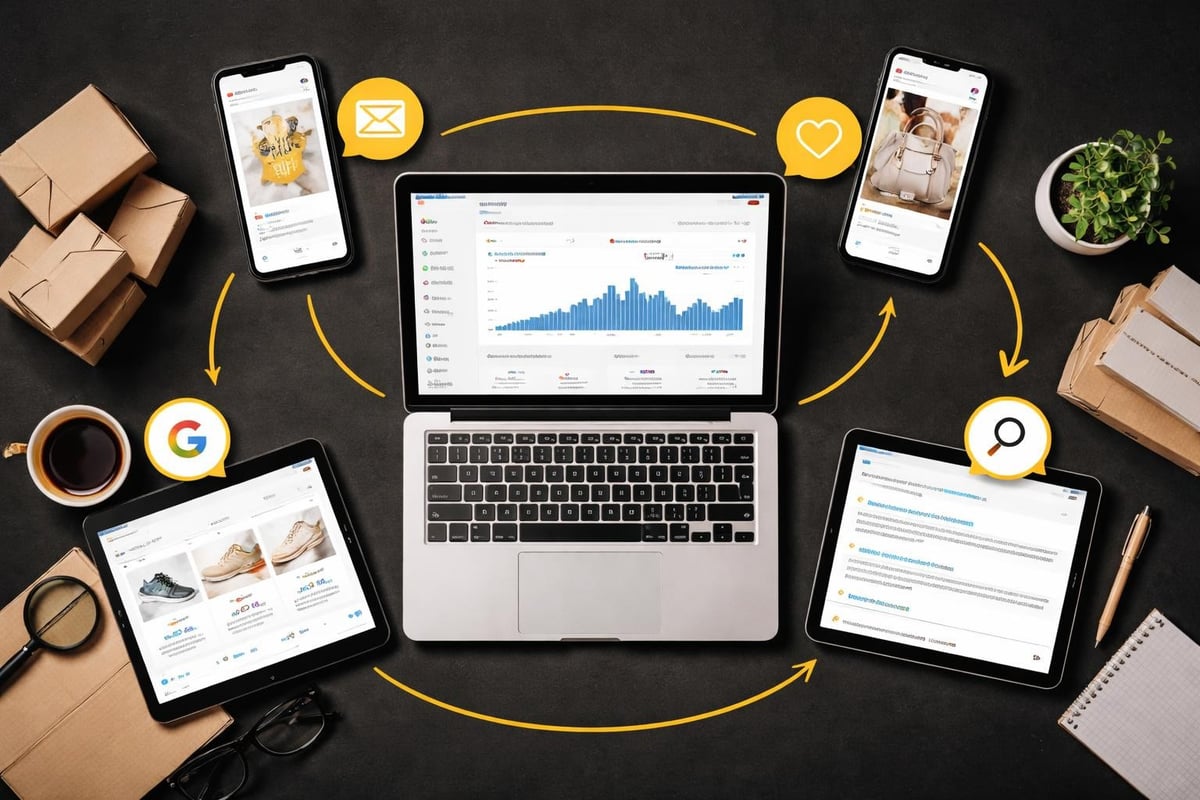
SEO matters for long-term growth. Optimizing product pages for search isn't complicated, but it requires consistency. Use descriptive URLs, write unique product descriptions, optimize image alt text, and build internal links between related products.
Apps and Tools That Actually Add Value
The Shopify App Store contains thousands of options. Most of them are unnecessary distractions. Focus on apps that solve specific problems you actually have.
Essential app categories for most stores:
- Email marketing (Klaviyo, Omnisend)
- Product reviews (Judge.me, Loox)
- Inventory management if selling across channels
- Analytics beyond Shopify's built-in reports
- Customer service (Gorgias, Zendesk)
Every app you install adds load time to your store. Every subscription adds to your monthly costs. Be ruthless about what you actually need versus what looks interesting. Start minimal and add tools as specific needs arise.
For stores selling both digital and physical products, managing that mix effectively requires thought about inventory tracking, shipping logic, and customer communication. The technical setup isn't difficult, but the operational side needs planning.
Shipping and Fulfillment Fundamentals
Shipping can make or break your selling success in Shopify. Customers have expectations shaped by Amazon and other major retailers. You don't need to match their speed, but you do need to be transparent and reliable.
Offer multiple shipping options when possible. Some customers want the cheapest option and will wait. Others need it fast and will pay extra. Both groups deserve choice. Calculate your shipping costs accurately. Undercharging hurts margins. Overcharging loses sales.
Australia Post's integration with Shopify makes domestic shipping straightforward. International shipping requires more consideration. Factor in customs, duties, and longer transit times. Be clear about who pays import fees before someone orders.
Free shipping thresholds encourage larger orders. If your average order value is $60, setting free shipping at $80 can push customers to add one more item. Make sure your margins support it though. Free shipping that loses you money on every order isn't sustainable.
Analytics and Performance Tracking
Selling in Shopify generates data. Use it. Shopify's built-in analytics show what's working and what isn't, but you need to actually look at the reports regularly.
Key metrics to track weekly:
- Conversion rate by traffic source
- Average order value trends
- Best-selling products and categories
- Cart abandonment rate
- Customer acquisition cost
- Return customer rate
Google Analytics adds depth to Shopify's reports. Set up enhanced eCommerce tracking to see the full customer journey. Where do people drop off? Which products get viewed but never purchased? What traffic sources convert best?
Don't just collect data. Act on it. If a product gets tons of views but few sales, the price might be wrong or the description might be unclear. If mobile conversion rates lag desktop, your mobile experience needs work. The numbers tell stories if you pay attention.
Product Bundling and Special Offers
Creating effective product bundles increases average order value while helping customers discover products they might not have found otherwise. Bundles work best when they solve complete problems or create complete experiences.
A skincare bundle might include cleanser, toner, and moisturizer at a slight discount compared to buying separately. A coffee bundle could pair beans with filters and a mug. The products should make sense together and offer genuine value.
Buy-one-get-one (BOGO) offers move inventory and feel generous to customers. Mix-and-match bundles work well for products with multiple varieties. "Build your own 6-pack" for beverages or "Choose 3 soaps" for bath products give customers control while encouraging larger purchases.
Quantity breaks reward bulk purchases without the complexity of wholesale pricing. "Buy 3, get 15% off" is simple to understand and easy to implement. It works particularly well for consumable products people buy repeatedly.
Building Customer Loyalty Beyond the First Sale
Getting a customer is expensive. Keeping them is cheaper and more profitable. Understanding eCommerce business fundamentals includes recognizing that repeat customers typically spend more per order and cost less to convert.
Email remains the most effective channel for customer retention. Segment your list based on purchase behavior. Someone who bought once six months ago needs different messaging than someone who orders monthly. Treat them accordingly.
Loyalty programs work when they're simple and valuable. Points that expire too quickly or rewards that require unrealistic spending don't build loyalty. They build resentment. Keep the math simple and the rewards attainable.
Post-purchase communication builds relationships. Order confirmations should be clear and helpful. Shipping notifications should include tracking. Delivery confirmations can include care instructions or usage tips. These touchpoints cost nothing extra but create positive impressions.
Specialized Selling Scenarios
Some products require extra consideration. Marketing health-related products on Shopify comes with regulatory requirements and advertising restrictions that don't apply to other categories. Understanding these limitations before you launch saves headaches later.
Digital products eliminate shipping concerns but introduce different challenges. Delivery needs to be instant and reliable. Piracy protection matters for some digital goods. Customer support shifts from "where's my order" to technical troubleshooting.
Subscription products create predictable revenue but require careful execution. Customers need easy ways to modify subscriptions, skip deliveries, or cancel. Make it difficult and they'll dispute charges instead. Keep it simple and transparent.
For small Australian businesses launching their first online store, working with experts who understand the platform makes sense. Done-for-you Shopify builds that cover everything from initial setup through launch eliminate the guesswork and technical barriers that slow many businesses down. The right foundation from the start means less rebuilding later.
Platform Capabilities and Future Growth
Shopify continues evolving as a platform. In 2026, comparing eCommerce platforms shows Shopify maintaining its position as a leader for small to medium businesses. The balance between ease of use and powerful features remains its core strength.
The platform handles growth well. You can start on the basic plan and scale up as revenue increases. Migration to Shopify Plus makes sense for businesses doing serious volume, but most Australian small businesses never need it. Standard plans handle millions in annual sales without issue.
New features roll out regularly. Markets Pro for international expansion, improved B2B functionality, and enhanced inventory management all launched recently. You don't need to use everything Shopify offers. Focus on what drives your specific business forward.
Integration capabilities continue expanding. Whether you're connecting accounting software, warehouse management systems, or customer service platforms, the ecosystem supports it. This flexibility matters as your operations become more sophisticated.
Selling in Shopify successfully comes down to getting the fundamentals right and consistently executing on them. Product pages need to convert. Checkout needs to be frictionless. Marketing needs to drive qualified traffic. Every piece works together to turn browsers into buyers and first-time customers into repeat purchasers. If you're ready to launch your Australian eCommerce business with a solid foundation built specifically for conversion, Kida Digital specializes in building Shopify stores that are ready to sell from day one, with everything you need and nothing you don't.


Be the first to comment