

Running a Shopify store means dealing with technical hiccups, payment questions, and platform updates at the worst possible times. When your checkout breaks on a Friday night or a customer can't complete their purchase, knowing how to reach Shopify contact support becomes critical. But not all support channels are created equal, and understanding which path gets you the fastest resolution can save hours of downtime and lost revenue. This guide breaks down every way to reach Shopify's support team, what to expect from each channel, and how Australian store owners can get help when they need it most.
Understanding Shopify's Support Structure
Shopify operates a tiered support system that varies significantly based on your subscription plan.
Basic Shopify plans get email and chat support during business hours. Shopify and Advanced plans unlock 24/7 support access. Shopify Plus merchants receive dedicated support managers and priority response times.
The official Shopify Contact page serves as the central hub for all support options. This is where you'll find links to the help centre, community forums, and direct contact methods.
Australian store owners need to consider time zone differences when planning support requests. Shopify's support team operates globally, but response times can vary during Australian evenings when North American teams are offline.
What Your Plan Includes
| Plan Level | Email Support | Live Chat | Phone Support | Response Time |
|---|---|---|---|---|
| Basic | Yes (limited hours) | Yes (limited hours) | No | 24-48 hours |
| Shopify | 24/7 | 24/7 | Yes | 12-24 hours |
| Advanced | 24/7 | 24/7 | Yes | 6-12 hours |
| Plus | Priority 24/7 | Priority 24/7 | Priority | 1-4 hours |
These timeframes represent typical responses, not guarantees. Complex technical issues always take longer than billing questions.

Direct Contact Methods for Shopify Support
The fastest way to reach Shopify contact support depends on your issue type and urgency level.
Live chat remains the most popular option for immediate problems. You'll find the chat widget in your Shopify admin dashboard under the help icon. This method connects you with a support agent in real-time, typically within 2-5 minutes during peak hours.
Email support works better for complex issues requiring screenshots or detailed explanations. Send requests through your admin panel's help section rather than random email addresses. This ensures your ticket gets properly categorized and routed.
Phone support exists but isn't advertised prominently. Shopify prefers chat and email because they create documentation trails. However, Plus merchants and those with urgent payment issues can request callback options.
The help center should always be your first stop. Shopify's documentation covers roughly 80% of common questions, and searching here before contacting support saves significant time.
Getting Faster Responses
Support agents prioritize tickets based on business impact. A broken checkout gets faster attention than a theme customization question.
When you contact Shopify support, include these details upfront:
- Your store URL
- Specific error messages (screenshots help)
- Steps you've already tried
- Browser and device information
- Whether the issue affects customers or just admin
This information prevents the back-and-forth that extends resolution times. According to Shopify's 2025 merchant survey, tickets with complete information resolve 60% faster than vague requests.
Alternative Support Channels Worth Using
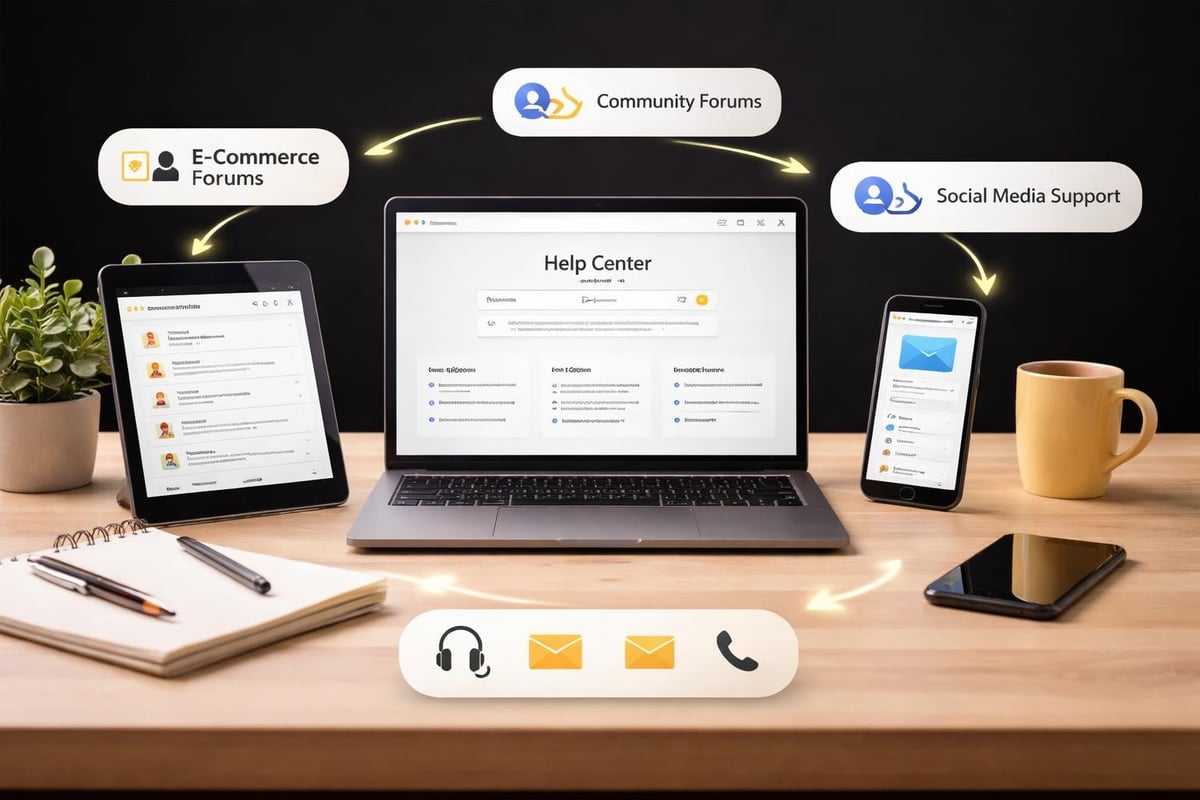
Beyond direct Shopify contact support, several alternative channels provide valuable help.
The Shopify Community Forums connect you with other merchants facing similar challenges. Real store owners share practical solutions that support agents might not mention. Search existing threads before posting new questions.
Twitter support (@ShopifySupport) handles public-facing issues and can escalate urgent problems. This works particularly well for service outages or widespread technical problems affecting multiple merchants.
Shopify's YouTube channel offers video tutorials for common tasks. Sometimes watching a walkthrough beats reading documentation. The platform also links helpful third-party creators who explain complex features in plain language.
For Australian businesses specifically, connecting with local Shopify experts often provides faster, more relevant guidance than global support teams. The challenges of GST compliance, Australia Post integration, and local payment gateways require regional knowledge that offshore support may lack.
When you're building or optimizing your store, working with specialists who understand the Australian market can prevent issues before they require support intervention. Shopify development experts familiar with local requirements help you avoid common configuration mistakes.
What Issues Shopify Support Actually Handles
Understanding Shopify's support boundaries saves frustration and wasted time.
Shopify handles:
- Platform technical issues
- Billing and subscription questions
- Core feature functionality
- Security and SSL certificate problems
- Domain connection issues
- Official Shopify payment processing
Shopify doesn't handle:
- Third-party app troubleshooting
- Custom code debugging
- Theme customization requests
- Marketing strategy advice
- SEO optimization guidance
- Product photography or content creation
This distinction matters because many store owners contact Shopify support for issues outside their scope. If you've installed a review app that's breaking your product pages, Shopify will refer you to the app developer.
The Grey Areas
Some issues fall into grey zones where responsibility becomes unclear.
Theme problems represent the most common confusion. Shopify supports their free themes but directs paid theme issues to the theme developer. However, if a free theme breaks after a Shopify platform update, that's on them.
Improving customer service often requires tools beyond Shopify's core features. The platform provides basic email notifications, but sophisticated support workflows need third-party apps.
Integration issues between Shopify and other platforms create finger-pointing scenarios. If your accounting software won't sync properly, both companies might claim it's the other's problem. Documentation proving where the connection fails becomes essential.
Common Support Scenarios and Solutions
Real-world problems help illustrate when to use Shopify contact support versus other solutions.
Payment Processing Issues
A Melbourne-based homewares store lost AU$3,000 in sales when Shopify Payments suddenly stopped processing cards. Their chat support session lasted 45 minutes, eventually revealing a verification document had expired. The resolution required uploading a new business registration certificate.
This scenario needed official support. No forum post or help article solves account-specific payment holds.
Theme Conflicts After Updates
A Sydney fashion retailer's navigation menu disappeared after updating their theme. Before contacting support, they checked the Shopify status page (no outages), tested in incognito mode (same problem), and switched to the default theme (menu worked).
This troubleshooting proved the paid theme was at fault. Contacting the theme developer, not Shopify, solved the issue in 24 hours.
Inventory Sync Problems
A Brisbane supplement brand struggled with inventory counts dropping to zero randomly. Three support tickets over two weeks went nowhere. Eventually, they discovered a third-party inventory app was overriding Shopify's counts.
The lesson: Support agents can't fix what they can't see. App conflicts require methodical testing, not just support tickets.
When Support Isn't Enough
Some situations expose the limitations of Shopify contact support entirely.
Complex technical requirements often exceed what support agents can help with. Building custom checkout experiences, creating advanced product bundles, or integrating wholesale B2B functionality requires development expertise, not support tickets.
Strategic questions about store architecture fall outside support's scope completely. Should you use collections or tags for product organization? Which apps create the least site speed impact? How do you structure your catalog for better SEO? These questions need strategic guidance, not platform troubleshooting.
Australian compliance requirements represent another gap. Shopify's global support team understands the platform deeply but may not grasp Australian Consumer Law nuances, GST edge cases, or TGA regulations for supplements and cosmetics.
For businesses launching their first Shopify store, avoiding these support-intensive situations entirely makes more sense than learning through trial and error. A structured four-week Shopify build that follows eCommerce best practices reduces your support dependency from day one.
Decision framework showing when to use Shopify support, when to seek specialized help, and when to invest in professional development for complex store requirements
Maximizing Support Efficiency
Getting value from Shopify contact support requires preparation and realistic expectations.
Before contacting support:
- Search the help center thoroughly
- Check the Shopify status page for known issues
- Test in incognito mode to rule out browser cache
- Try disabling apps one by one if issues started recently
- Document your problem with screenshots and specific error messages
During the support conversation:
- Stay factual about what's happening
- Avoid speculation about causes
- Follow troubleshooting steps even if you've tried them before
- Ask for ticket numbers to reference later
- Request escalation if the agent seems uncertain
After support resolves your issue:
- Document the solution in your own notes
- Update any team members who might encounter the same problem
- Consider whether a process change prevents recurrence
Research from Shopify's 2025 merchant experience report shows that merchants who document common issues resolve them 70% faster on subsequent occurrences.
Support Resources Beyond Shopify Official Channels
Relying exclusively on Shopify contact support limits your problem-solving capacity.
Shopify Plus partners offer specialized support for enterprise merchants. These agencies provide strategic guidance beyond platform troubleshooting. However, they typically work with brands doing AU$5 million plus annually.
Certified Shopify experts fill the gap for smaller businesses needing more than support tickets but less than full agency relationships. These specialists understand both the platform and eCommerce strategy.
Developer communities like the Shopify Partners Slack or Discord groups provide peer support for technical challenges. Other developers share code snippets, debugging approaches, and workaround solutions.
Australian eCommerce groups on Facebook and LinkedIn connect local store owners facing similar challenges. These communities discuss Australia-specific issues like shipping costs, payment gateway preferences, and marketing approaches that work for the local market.
The Shopify Partner ecosystem extends platform capabilities significantly. Many problems that seem like Shopify limitations actually have app-based solutions.
Building Your Support Stack
Smart Shopify merchants create layered support systems rather than depending on single channels.
Layer 1: Self-service resources
- Bookmarked help articles for common tasks
- Saved Loom videos showing team members how to process refunds, add products, or update inventory
- Written procedures for weekly and monthly tasks
Layer 2: Automated monitoring
- Uptime monitoring tools that alert you to site problems
- Inventory alerts for low stock situations
- Automated cart abandonment tracking
Layer 3: Peer networks
- Active participation in merchant communities
- Relationships with non-competing stores for advice
- Following Australian Shopify experts on social media
Layer 4: Professional support
- Shopify contact support for platform issues
- App developer support for third-party tools
- Specialized consultants for strategy and optimization
- Shopify optimization services for conversion improvements
This approach means you're never dependent on one support channel when problems arise. Different issues get routed to the most appropriate resource immediately.
The Real Cost of Support Dependencies
Heavy reliance on Shopify contact support indicates underlying store problems.
If you're submitting multiple tickets weekly, something's wrong with your store setup, team training, or app ecosystem. Support tickets represent lost time, delayed resolutions, and interrupted workflows.
A Perth-based outdoor gear retailer tracked 47 support tickets in their first six months. After analyzing patterns, they discovered three issues:
- Poorly chosen apps requiring constant troubleshooting
- Staff members who hadn't completed Shopify's free training
- A theme with known bugs the developer never fixed
Addressing these root causes dropped their monthly tickets to 3-4, freeing 10+ hours monthly for growth activities instead of support conversations.
Looking Ahead: Support in 2026
Shopify continues evolving its support infrastructure with AI-powered assistance and improved self-service resources.
The Shopify Sidekick AI assistant, expanded in late 2025, now handles roughly 40% of common questions without human agent involvement. This technology works well for straightforward queries but still struggles with complex, multi-factor issues.
Video support options rolled out for Plus merchants in early 2026, allowing screen-sharing sessions for complicated problems. This feature will likely expand to lower-tier plans throughout the year.
Enhanced eCommerce customer service tools within Shopify itself mean store owners can provide better support to their customers, reducing stress on both sides of the merchant-customer relationship.
For Australian businesses, Shopify opened a Sydney support hub in late 2025, improving response times and local market understanding. This investment signals Shopify's commitment to the Australian market beyond just platform access.
Understanding how to effectively use Shopify contact support saves time, reduces stress, and keeps your store running smoothly when issues arise. The key is knowing which problems need official support, which have alternative solutions, and how to prevent recurring issues through better store setup. If you're launching a new Shopify store or struggling with a DIY build that's creating constant support needs, Kida Digital helps Australian eCommerce businesses build conversion-optimized stores that minimize technical problems from day one, letting you focus on growing your business instead of managing support tickets.


Be the first to comment