

Building a website ecommerce presence in 2026 requires more than just listing products on a template. Small Australian businesses face a distinct challenge: how to create a professional online store that converts visitors into customers without spending tens of thousands on agency fees or getting lost in endless DIY tutorials. The path forward combines strategic design choices, conversion-focused features, and a realistic understanding of what actually drives sales in the current digital landscape.
The Foundation of Modern Website Ecommerce
Your website ecommerce strategy starts with understanding what customers expect before they even click "add to cart."
Speed matters more than most business owners realize. Research shows that 53% of mobile users abandon sites that take longer than three seconds to load. Every additional second costs you potential revenue.
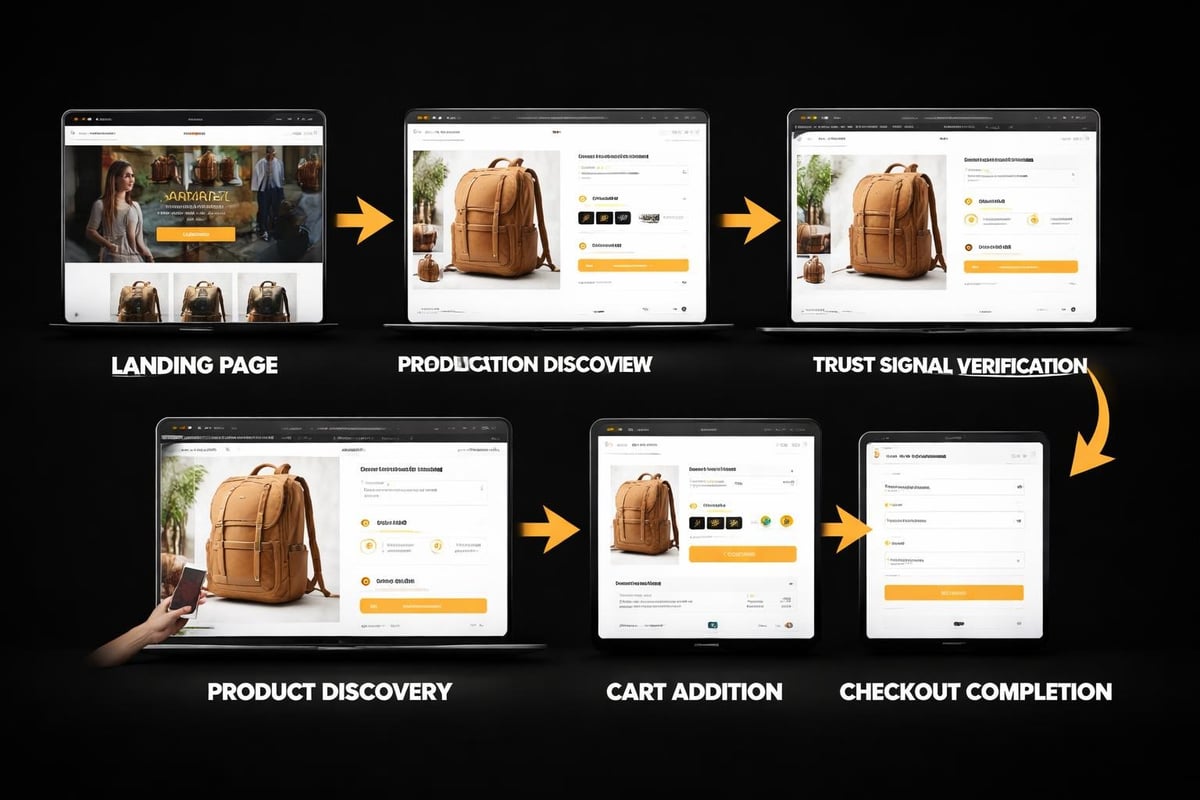
Navigation needs to feel invisible. When customers think about how to find something, you've already lost them. The best website ecommerce platforms guide users naturally through product discovery to checkout without conscious effort.
Trust signals separate professional stores from amateur attempts. Security badges, customer reviews, clear return policies, and professional photography all contribute to the unconscious decision-making process that determines whether someone buys from you or your competitor.
What Sets Converting Stores Apart
Conversion isn't about tricks or growth hacks. It's about removing friction at every decision point.
Product pages need to answer questions before customers ask them. Detailed descriptions, multiple high-quality images from different angles, sizing information, material specifications, and shipping estimates all reduce purchase anxiety.
Mobile responsiveness isn't optional anymore. Over 70% of ecommerce traffic now comes from mobile devices in Australia. Your website ecommerce experience must work flawlessly on a phone screen or you're turning away the majority of potential customers.
Checkout simplicity directly impacts your bottom line. The average cart abandonment rate sits around 70%, with complicated checkout processes being the leading cause. Optimising your Shopify product pages reduces this friction significantly.
Design Trends That Actually Drive Sales
Design trends come and go, but certain principles remain constant for website ecommerce success.
Minimalism continues to dominate because it works. Cluttered pages overwhelm customers and reduce conversion rates. Clean layouts with plenty of white space help products stand out and guide attention to key actions.
Dark mode has moved from novelty to expectation for many users. Offering this option shows attention to user preference and can reduce eye strain during evening shopping sessions. Current design trends highlight this shift toward user-controlled experiences.
Microinteractions add polish without distraction. Small animations when adding items to cart, hover effects on product images, and subtle transitions between pages all contribute to a premium feel. These details separate professional website ecommerce builds from template sites.
Video content transforms product understanding. A 30-second video showing a product in use answers more questions than paragraphs of text. Conversion rates for products with video content are consistently 80% higher than those without.
Interactive Elements That Build Confidence
Augmented reality features let customers visualize products in their own space before purchasing. While this technology seemed futuristic a few years ago, it's now accessible for small businesses through platforms like Shopify.
Chatbots and AI assistants provide instant answers to common questions. This availability outside business hours captures sales that would otherwise be lost to impatient customers.
Size guides with interactive elements reduce return rates dramatically. When customers can input their measurements and receive specific recommendations, they buy with more confidence.
| Design Element | Impact on Conversion | Implementation Difficulty |
|---|---|---|
| Mobile-first responsive design | High | Medium |
| Video product demos | Very High | Low |
| AR product visualization | Medium | High |
| Live chat support | High | Low |
| Interactive size guides | High | Medium |
Technical Requirements You Can't Ignore
Website ecommerce platforms need solid technical foundations to support growth.
Page speed optimization starts with image compression. Large, unoptimized photos are the most common cause of slow load times. Converting images to modern formats like WebP can reduce file sizes by 30-50% without visible quality loss.
Security and SSL certificates aren't negotiable. Customers won't enter payment information on sites showing "not secure" warnings in their browser. This baseline trust requirement affects both conversions and SEO rankings.
Structured data markup helps search engines understand your products. This technical SEO element enables rich snippets in search results, showing prices, availability, and ratings directly in Google.
Payment gateway integration needs to be seamless. Supporting multiple payment methods including digital wallets like Apple Pay and Google Pay reduces checkout friction. Australian customers increasingly expect buy-now-pay-later options like Afterpay.

SEO Foundations for Ecommerce Discovery
Search visibility determines whether potential customers find your website ecommerce store in the first place.
Product page optimization requires unique descriptions for every item. Copying manufacturer descriptions guarantees you'll never outrank competitors for those products. Write original content that addresses customer questions and includes relevant search terms naturally.
Category pages need strategic internal linking. These collection pages should connect related products and guide customers deeper into your catalog while passing SEO value throughout your site.
Site architecture affects both user experience and search rankings. A clear hierarchy with categories no more than three clicks from the homepage helps both customers and search engines navigate your catalog.
Creating fast-loading Shopify stores requires attention to technical details that many business owners overlook until they become problems.
Conversion Optimization Beyond the Basics
Website ecommerce conversion optimization isn't a one-time setup task. It's an ongoing process of testing and refinement.
Exit-intent popups capture abandoning visitors. When implemented thoughtfully, these can recover 10-15% of leaving traffic by offering discounts, free shipping, or valuable content in exchange for email addresses.
Abandoned cart recovery through email sequences brings back 15-20% of abandoned carts on average. These automated sequences remind customers about items left behind and address common objections.
Social proof through reviews and testimonials builds credibility. Stores with customer reviews see conversion rate increases of 18% on average. Displaying recent purchases or "trending now" items leverages FOMO effectively.
Product recommendations based on browsing and purchase history increase average order value. Amazon attributes 35% of its revenue to its recommendation engine. While small businesses won't achieve those numbers, even modest implementation drives measurable results.
Real-World Results From Strategic Implementation
A Melbourne-based homewares business increased conversions by 43% after implementing just three changes: adding video content to top products, simplifying their checkout from five steps to two, and optimizing mobile navigation.
A Sydney fashion retailer reduced cart abandonment by 28% through automated email recovery sequences and clearer shipping cost disclosure earlier in the shopping process.
These results came from focusing on fundamentals rather than chasing every new trend. Understanding why traditional agencies charge premium rates helps small businesses make informed decisions about where to invest.
Platform Selection and Implementation
Choosing the right platform determines your website ecommerce capabilities and limitations for years to come.
Shopify dominates the Australian small business market for good reasons. The platform handles hosting, security, payments, and core ecommerce functionality while remaining accessible to non-technical owners. Monthly costs are predictable and scalable.
WordPress with WooCommerce offers more customization but requires more technical management. Hosting, security, and updates become your responsibility. This flexibility comes with complexity that many small businesses underestimate.
Custom development might seem appealing but rarely makes financial sense for small businesses. Development costs can easily reach $10,000 or more without providing corresponding value over established platforms.
Platform migration later becomes expensive and disruptive. Choosing the right foundation from the start saves significant headaches and costs down the line.
| Platform | Best For | Approximate Starting Cost | Technical Knowledge Required |
|---|---|---|---|
| Shopify | Most small businesses | $39/month + apps | Low |
| WooCommerce | Content-heavy sites | $50/month + hosting | Medium |
| Shopify Plus | High-volume stores | $2000+/month | Low |
| Custom Build | Unique requirements | $10,000+ upfront | High |
Implementation Timeline Reality
Many businesses underestimate the time required to launch a professional website ecommerce store properly.
Product photography and content creation consume more time than technical setup. Writing unique descriptions for 100 products takes longer than building the site structure itself.
Payment processing setup requires business verification and bank integration that can take 1-2 weeks even when everything goes smoothly.
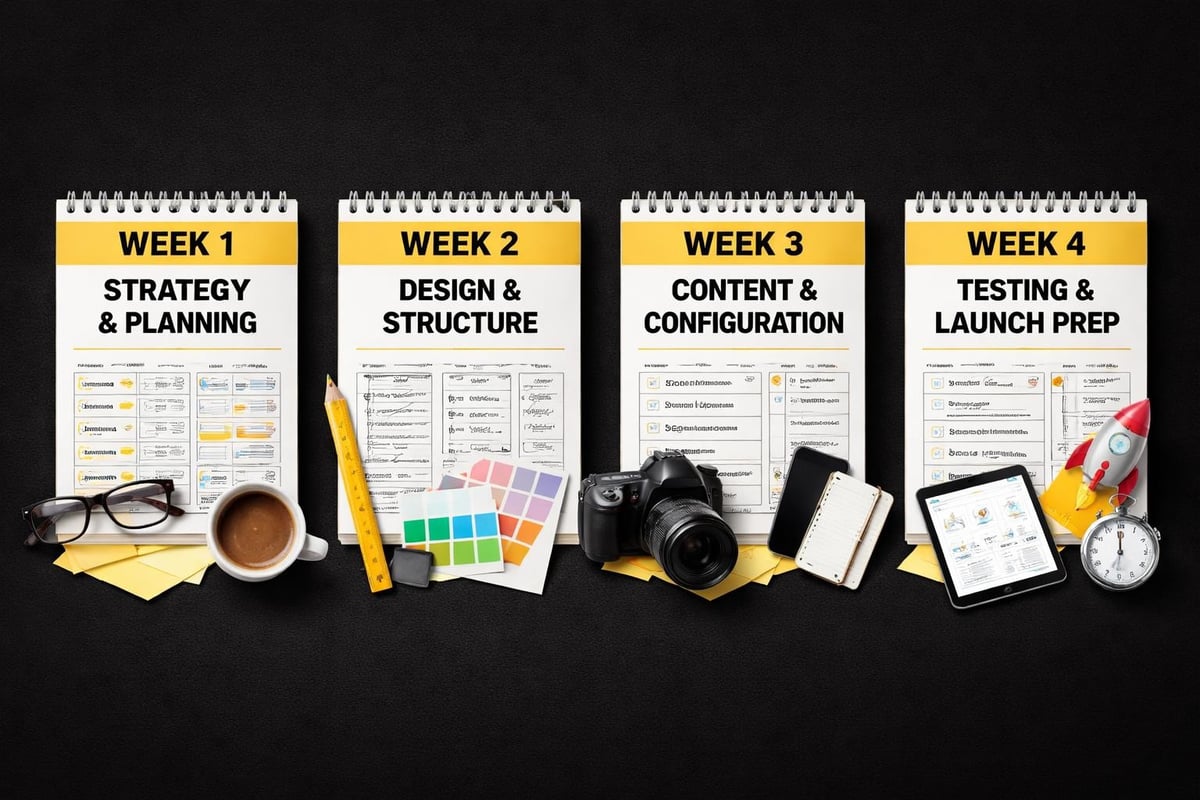
Realistic timelines for complete website ecommerce launches range from four weeks for streamlined approaches to 3-6 months for businesses handling everything in-house without dedicated focus.
Navigation and User Experience Principles
How customers move through your website ecommerce store directly impacts sales outcomes.
Menu structure should reflect customer thinking, not internal organization. Customers search by category, style, or use case rather than by supplier or internal product codes.
Search functionality needs to handle misspellings and variations. If someone searches for "tshirt" instead of "t-shirt," your search should still deliver relevant results.
Filter options help customers narrow large catalogs without overwhelming them. Size, color, price range, and brand filters are table stakes for fashion retailers. Other industries need filters specific to their product attributes.
Breadcrumb navigation helps customers understand where they are in your site hierarchy and easily backtrack without using browser back buttons. Best practices for ecommerce site navigation emphasize these foundational elements.
Mobile-First Design Implementation
Mobile-first design means designing for small screens first, then adapting for desktop rather than the reverse.
Touch targets need adequate spacing. Buttons too close together lead to mis-taps and frustration. Apple's Human Interface Guidelines recommend minimum 44×44 pixel touch targets.
Forms should minimize typing through autofill support, appropriate keyboard types for different fields, and saved information for returning customers.
Images need responsive sizing to load appropriately for different screen resolutions without wasting mobile data on oversized files.
Content Strategy for Product Pages
Product pages carry the conversion weight in website ecommerce. Getting these right matters more than any other single element.
Headlines should communicate core benefits immediately. "Waterproof Running Jacket – Breathable, Lightweight, Reflective" works better than just "Running Jacket – Blue."
Bullet points highlight key features without forcing customers to read paragraphs. Most people scan rather than read, so format content accordingly.
Specifications in table format enable quick comparison and answer technical questions. When customers can find exact dimensions, materials, and compatibility information easily, they buy with confidence.
Story-driven descriptions create emotional connections. The technical specs matter, but the why behind the purchase decision often comes from understanding how a product fits into the customer's life.
Visual Content Standards
Product photography requires consistency across your catalog. Mixed image styles and backgrounds create an unprofessional impression that erodes trust.
Multiple angles show products thoroughly. Front, back, detail shots, and scale references help customers understand exactly what they're buying.
Lifestyle images demonstrate products in use. Seeing a backpack worn by someone rather than floating on a white background helps customers visualize ownership.
Design trends proven to boost engagement show that authentic photography outperforms overly polished stock imagery for building connection with customers.
Payment and Checkout Optimization
The final step to conversion deserves careful attention because this is where most sales are lost.
Guest checkout options reduce abandonment from customers unwilling to create accounts. You can still capture email addresses without forcing registration.
Progress indicators during multi-step checkout help customers understand how much effort remains before completion.
Payment method variety matters to different customer segments. Credit cards, digital wallets, and buy-now-pay-later options should all be available.
Security badges and trust signals near payment fields reduce last-minute anxiety. Display SSL certification, return policy links, and customer service contact information prominently.
Shipping and Cost Transparency
Hidden costs at checkout are the leading cause of cart abandonment. Display shipping costs early in the shopping process.
Free shipping thresholds encourage larger orders. "Free shipping on orders over $75" is more effective than blanket free shipping that erodes margins.
Delivery timeframes set appropriate expectations. Promising next-day delivery when you ship once weekly creates disappointed customers and negative reviews.
Multiple shipping options let customers choose speed versus cost based on their needs. Some customers need items urgently and will pay for express shipping. Others prioritize saving money.
Performance Monitoring and Iteration
Launching your website ecommerce store is just the beginning. Ongoing optimization drives long-term success.
Analytics reveal customer behavior patterns you can't see from the inside. Time on page, scroll depth, and exit pages show where customers lose interest or encounter friction.
Heatmaps and session recordings provide qualitative understanding of how real people interact with your site. Watching someone struggle with navigation reveals problems you'd never identify from analytics alone.
A/B testing removes guesswork from optimization decisions. Test button colors, headline variations, and layout changes with actual customer traffic rather than assumptions.
Conversion rate improvements of even 1-2% compound significantly over time. A store converting at 2% instead of 1.5% makes 33% more revenue from the same traffic.
Metrics That Actually Matter
Traffic volume matters less than traffic quality. 1,000 targeted visitors convert better than 10,000 random ones.
Average order value reveals whether your upselling and cross-selling efforts work. Tracking this metric over time shows if you're maximizing revenue per customer.
Customer lifetime value determines how much you can spend on acquisition. Businesses with strong repeat purchase rates can invest more in bringing new customers because each one generates multiple sales.
Return rate indicates product quality and description accuracy. High returns suggest either quality issues or misleading content that sets wrong expectations.
Website ecommerce success in 2026 requires strategic focus on conversion fundamentals rather than chasing every trend or technology. Small Australian businesses need stores that look professional, load quickly, and guide customers smoothly from discovery to purchase. If you're ready to build a conversion-focused online store without agency price tags or DIY overwhelm, Kida Digital delivers scalable Shopify stores from concept to launch in four weeks. Our streamlined process eliminates the guesswork and gets you selling online faster.


Be the first to comment