

Running a small business in Australia means making every dollar count. When you're ready to sell online, you need a platform that works without burning through your budget or demanding technical expertise you don't have. Shopify for small business has become the default answer for many Australian retailers, but understanding whether it genuinely fits your needs requires looking past the marketing hype. This article breaks down what Shopify actually offers, what it costs, and whether it's the right foundation for your eCommerce operation.
Why Small Businesses Choose Shopify
Shopify dominates the eCommerce platform market for one simple reason: it removes technical barriers. You don't need to understand hosting, security certificates, or payment gateway integrations. The platform handles these elements while you focus on products, customers, and revenue.
NerdWallet’s analysis of Shopify confirms what most small business owners discover quickly. The platform bundles hosting, security, payment processing, and basic marketing tools into one monthly fee. This approach eliminates the need to coordinate multiple service providers or troubleshoot technical issues independently.
Australian businesses benefit from specific features:
- AUD pricing without conversion fees
- Local payment options including Afterpay integration
- Australia Post shipping calculations
- Tax compliance for GST reporting
- Mobile-optimised checkout for smartphone shoppers
The platform processed over $235 billion in gross merchandise volume across 2023. That figure represents real transactions from millions of stores, not theoretical capability. Small businesses contributed a substantial portion of that volume, proving the platform scales from first sale to six-figure months.
Understanding Shopify Costs for Small Operations
Pricing transparency matters when you're bootstrapping a business. Shopify for small business starts at $39 AUD monthly for the Basic plan. That covers unlimited products, two staff accounts, and all core selling features. The monthly fee represents your baseline cost before apps, themes, or transaction fees.
Transaction fees add complexity to the total cost calculation. If you use Shopify Payments, you avoid additional transaction fees and pay only credit card rates starting at 2.4% plus 30 cents per transaction. Using external payment gateways like PayPal adds a 2% fee on top of their processing costs.
Real Cost Breakdown Example
| Cost Component | Monthly Amount | Annual Total |
|---|---|---|
| Basic Plan | $39 | $468 |
| Essential Apps (3-5) | $50 | $600 |
| Premium Theme (one-time) | – | $280 |
| Transaction Fees (estimated) | $120 | $1,440 |
| Total First Year | $209/month | $2,788 |
This calculation assumes $5,000 in monthly sales using Shopify Payments. Your actual costs vary based on sales volume, app requirements, and payment methods.
WebyKing’s pricing breakdown highlights hidden costs that catch new store owners off guard. Apps for email marketing, inventory management, and customer reviews add $20 to $100 monthly. Premium themes cost between $180 and $400 as one-time purchases. These expenses compound quickly if you don't budget strategically.

Setting Up Your Shopify Store Without Technical Skills
The setup process follows a structured path from account creation to first sale. Shopify guides you through domain connection, theme selection, product uploads, and payment configuration. Most small business owners complete basic setup within a week, though building a truly conversion-optimised store takes longer.
Your setup timeline realistically looks like this:
- Days 1-2: Account setup, domain connection, basic settings
- Days 3-5: Theme customisation, navigation structure, policy pages
- Days 6-10: Product uploads with descriptions and images
- Days 11-14: Payment gateway testing, shipping zone configuration
- Week 3: App installation for reviews, email, inventory
- Week 4: Final testing, checkout optimisation, launch preparation
This timeline assumes you have product information, images, and business documentation ready. Starting from scratch extends the process by several weeks as you photograph products, write descriptions, and develop brand messaging.
Understanding what you can accomplish independently versus where you need expertise matters. Uploading products and adjusting basic theme settings requires no technical knowledge. Customising checkout flows, implementing conversion tracking, or building custom product pages demands development skills most small business owners don't possess.
For small Australian eCommerce businesses launching their first Shopify store, Kida Digital’s core Shopify package covers everything needed to launch within four weeks with clarity and strategy, without agency bloat or missing fundamentals. It includes tools for physical products, digital products, subscriptions, reviews, and dropshipping operations.
Features That Actually Matter for Small Retail
Shopify includes hundreds of features, but small businesses rely on a core set daily. Product management, order processing, inventory tracking, and customer communication form the operational foundation. These features work reliably without customisation.
The mobile app deserves specific mention. You can process orders, update inventory, and communicate with customers from your phone. This flexibility matters when you're running a business without dedicated staff or office hours. Australian retailers managing stores alongside other commitments value this accessibility.
Marketing features built into the platform:
- Discount code creation for promotions
- Gift card functionality for customer retention
- Blog for content marketing and SEO
- Social media channel integration
- Email collection and basic automation
- Abandoned cart recovery emails
Shopify’s free business tools extend beyond the core platform. Logo makers, business name generators, and invoice templates help bootstrap operations without hiring designers or purchasing separate software.
The analytics dashboard provides sales data, traffic sources, and customer behaviour insights. While not as comprehensive as Google Analytics, the built-in reporting covers essential metrics: conversion rate, average order value, top products, and customer acquisition sources. Small businesses use this data to identify what's working without drowning in irrelevant statistics.
Comparing Shopify to Alternatives
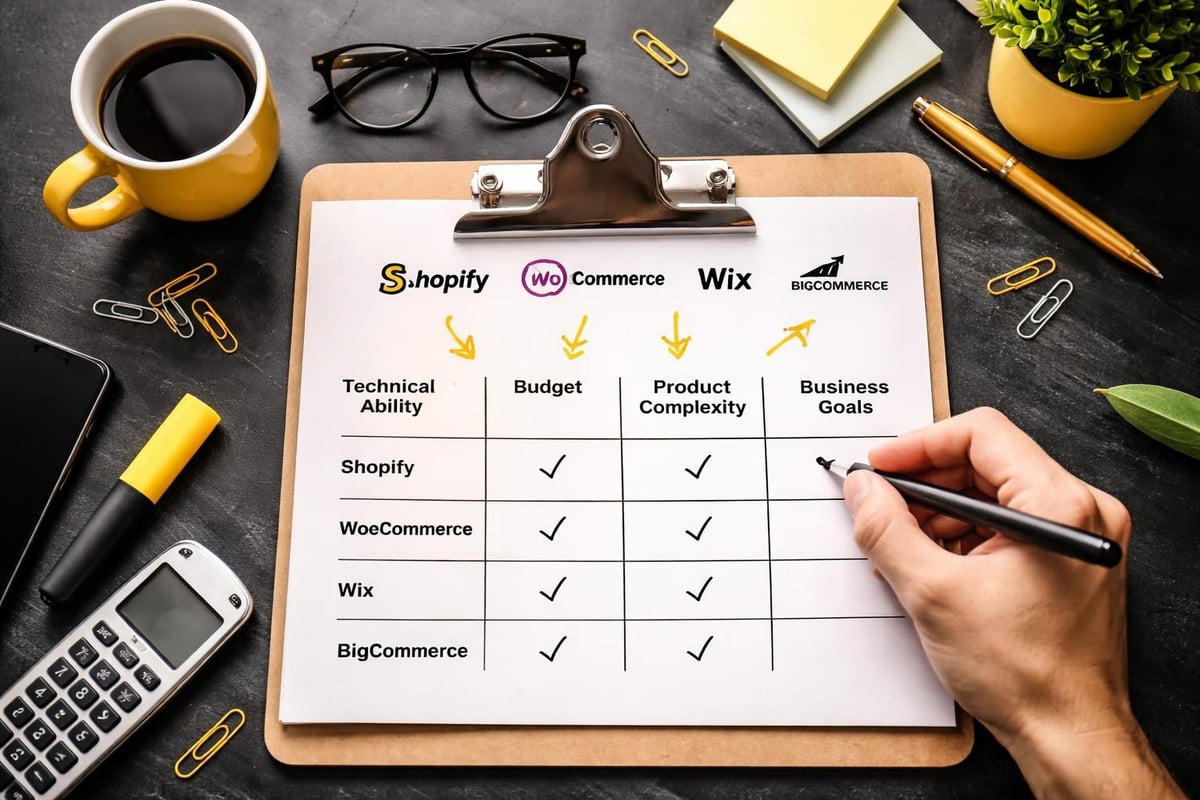
No platform suits every business perfectly. Understanding alternatives helps you make informed decisions rather than following trends. WooCommerce, Wix, BigCommerce, and Squarespace each offer distinct approaches to online selling.
TechRadar’s comparison of Shopify alternatives examines these platforms through different business lenses. WooCommerce offers more customisation for WordPress users willing to manage hosting and security independently. Wix provides simpler drag-and-drop building with less eCommerce depth. BigCommerce targets larger catalogues with complex product variations.
Shopify for small business works best when you prioritise reliability and support over maximum control. The platform constrains certain customisations but provides stability and uptime that self-hosted solutions struggle to match. Australian businesses selling physical products appreciate this trade-off.
| Platform | Monthly Cost | Technical Skill Required | Best For |
|---|---|---|---|
| Shopify | $39+ | Low | Product-focused retailers |
| WooCommerce | $25+ (hosting) | Medium-High | WordPress users |
| Wix | $27+ | Very Low | Simple catalogues |
| BigCommerce | $39+ | Medium | Complex inventories |
Managing Inventory and Fulfillment
Inventory management separates successful online retailers from stressed store owners. Shopify tracks stock levels across variants, sends low-stock alerts, and prevents overselling. The system updates automatically when orders process or you manually adjust quantities.
Australian businesses using multiple sales channels benefit from inventory sync. Selling on your Shopify store, Facebook, Instagram, and markets like Amazon requires unified stock tracking. The platform prevents selling items you don't have, which damages customer relationships and wastes advertising spend.
Shipping integration connects directly to Australia Post, Sendle, and Aramex. You generate labels within Shopify, mark orders as fulfilled, and trigger automated customer notifications. This workflow eliminates manual data entry between systems and reduces fulfillment errors.
Dropshipping functionality:
Shopify supports dropshipping through apps like DSers and Spocket. You list products without holding inventory, orders route to suppliers automatically, and customers receive shipments directly. This model reduces upfront investment but sacrifices margin and control over customer experience.
Print-on-demand services integrate similarly. Printful, Printify, and others connect to your store, fulfill custom products on demand, and ship directly to customers. These services suit businesses testing product ideas without inventory commitments.
SEO and Marketing Capabilities
Driving traffic to your store determines whether your Shopify investment generates returns. The platform includes basic SEO functionality: editable title tags, meta descriptions, URL structures, and automatic sitemap generation. These features provide foundations but don't guarantee rankings.
Understanding SEO optimisation for Shopify product pages reveals the gap between what Shopify enables and what actually drives organic traffic. You need quality product descriptions, strategic keyword use, proper image optimisation, and credible backlinks. The platform facilitates these elements without automating them.
Content marketing through the built-in blog helps attract search traffic. Publishing helpful articles related to your products builds topical authority and provides internal linking opportunities. Australian businesses selling specialised products benefit from educational content that answers customer questions before purchase.
Email marketing starts with Shopify Email, which includes 10,000 free monthly sends. You create campaigns, automate welcome sequences, and segment customers based on purchase behaviour. More sophisticated needs require apps like Klaviyo or Omnisend, which add $20 to $100 monthly depending on list size.
Social commerce integration connects your product catalogue to Facebook, Instagram, and TikTok. Customers browse products within social apps and complete purchases without leaving the platform. This reduces friction for mobile shoppers discovering products through social feeds.
Apps and Integrations for Scaling
The Shopify App Store contains over 8,000 applications extending platform functionality. Small businesses typically install between five and ten apps covering reviews, email, inventory, accounting, and customer service. Each app adds capability but also complexity and cost.
Essential app categories:
- Product reviews (Loox, Judge.me) for social proof
- Email marketing (Klaviyo, Omnisend) for automation
- Inventory management (Stocky, Skubana) for multi-location tracking
- Accounting integration (Xero, QuickBooks) for financial records
- Customer service (Gorgias, Zendesk) for support tickets
Free apps provide basic functionality sufficient for early-stage stores. Paid apps offer advanced features, better support, and fewer limitations. The challenge involves balancing capability needs against monthly recurring costs that accumulate quickly.
Integration quality varies significantly between apps. Well-built applications sync data reliably and update in real-time. Poorly designed apps create data conflicts, slow your store, or require manual reconciliation. Reading reviews and testing free trials before committing prevents expensive mistakes.

Common Mistakes Small Businesses Make
Shopify for small business fails when owners approach it as a magic solution rather than a tool requiring strategy. Launching a store without audience research, competitive analysis, or marketing plans leads to zero sales regardless of platform quality. The technology enables selling; it doesn't create demand.
Underestimating time requirements causes frustration. Building a professional store demands weeks of focused effort. Product photography, description writing, policy creation, and theme customisation consume more hours than anticipated. Australian business owners juggling other responsibilities often abandon stores mid-setup when reality conflicts with expectations.
Technical mistakes that hurt conversions:
- Using low-quality product images
- Writing thin or duplicate product descriptions
- Ignoring mobile optimisation despite 70% mobile traffic
- Complicating checkout with unnecessary form fields
- Failing to install SSL certificates properly
- Neglecting page load speed optimisation
Theme selection represents another common failure point. Choosing themes based on aesthetics rather than conversion structure creates beautiful stores that don't sell. The best themes prioritise product visibility, clear calls-to-action, trust signals, and streamlined navigation over visual complexity.
Relying exclusively on paid advertising without building organic channels creates unsustainable economics. Facebook and Google ads work for customer acquisition, but profitable stores develop email lists, SEO traffic, and repeat purchase systems. Diversification protects against algorithm changes and rising ad costs.
Security, Compliance, and Trust Factors
Australian consumers research businesses before purchasing, especially from unfamiliar brands. Your Shopify store must communicate legitimacy through multiple trust signals. SSL certificates encrypt customer data and display the padlock icon in browser bars. Shopify provides this automatically, but configuration errors sometimes disable it.
Privacy policies, terms of service, and refund policies aren't optional. Australian Consumer Law requires clear communication about customer rights, return processes, and dispute resolution. Shopify's policy generator creates basic templates, but reviewing them with legal guidance ensures compliance.
PCI compliance for credit card processing comes standard with Shopify Payments. The platform handles secure data storage and transmission, removing this burden from small business owners. Using external payment gateways requires understanding their compliance standards and documentation requirements.
Building customer trust:
- Display customer reviews prominently on product pages
- Include clear contact information and business address
- Show trust badges for payment security
- Provide detailed product descriptions with specifications
- Offer transparent shipping timeframes and costs
- Respond quickly to customer enquiries
Australian businesses benefit from highlighting local operations. Mentioning Australian ownership, local stock, and fast domestic shipping differentiates you from international competitors with longer delivery times and uncertain customs processes.
Support Resources and Learning Curve
Shopify provides 24/7 support through chat, email, and phone. Response quality varies based on question complexity and support representative experience. Simple account issues resolve quickly. Technical customisation questions often require escalation or external developer assistance.
The Help Centre contains thousands of articles covering setup, management, and troubleshooting. Video tutorials walk through common tasks. Community forums connect you with other merchants sharing solutions. These free resources answer most operational questions without waiting for support.
ITGeeks explains why Shopify works well for small businesses partly due to accessible learning resources. The platform invests heavily in documentation that non-technical users understand. This education approach reduces dependence on expensive consultants for routine tasks.
The learning curve steepens when moving beyond basic features. Liquid template language customisation, advanced theme editing, and API integrations require development knowledge. Small businesses face decisions about whether to learn these skills, hire developers, or accept platform limitations.
Understanding why agencies charge premium rates for Shopify sites helps contextualise development costs. Professional developers deliver conversion-optimised stores faster than DIY approaches, but at significant expense. Finding middle-ground solutions matters for budget-conscious Australian retailers.
Growth Potential and Scalability
Shopify for small business scales from first product to millions in annual revenue. The platform architecture handles traffic spikes during sales events without crashing or slowing. This reliability matters more as your customer base grows and marketing campaigns drive concentrated traffic.
Plan upgrades unlock features necessary for scaling operations. The Shopify plan at $105 monthly adds professional reports, lower transaction fees, and five staff accounts. Advanced at $399 monthly provides advanced report building and third-party calculated shipping rates. Most small businesses operate successfully on Basic or Shopify plans.
International expansion becomes viable through multi-currency support and international domains. Selling to New Zealand, UK, or US markets requires localised pricing, shipping zones, and payment methods. Shopify facilitates this expansion without rebuilding your entire store.
Product catalogue growth happens organically. The platform handles thousands of products without performance degradation. Adding new collections, variants, and product types requires no technical modifications. This flexibility supports businesses evolving their offerings based on customer feedback and market opportunities.
Exploring eCommerce store development reveals scaling requires strategic planning beyond platform selection. Your fulfilment processes, customer service systems, and marketing automation must scale alongside technology. The platform enables growth; operational excellence sustains it.
Making Your Decision
Choosing Shopify for small business makes sense when you value reliability, support, and proven functionality over maximum customisation. Australian retailers selling physical products benefit most from the platform's strengths: payment processing, inventory management, and mobile optimisation.
The platform doesn't suit every situation. Service-based businesses need booking systems Shopify doesn't provide natively. Highly customised user experiences require platforms offering more theme flexibility. Businesses wanting complete technical control prefer self-hosted solutions despite increased complexity.
Grizify identifies eight specific reasons Shopify works for small operations. These include ease of use, built-in features, reliable hosting, strong security, responsive design, scalability, extensive app ecosystem, and quality support. These advantages matter most when you're building a business, not just a website.
Your decision should consider total investment including time, money, and opportunity cost. DIY store building saves money but demands weeks of learning and implementation. Agency development delivers faster results at premium prices often exceeding $10,000. Understanding how some businesses build Shopify stores efficiently reveals alternative approaches balancing cost and quality.
Testing the platform through the 14-day free trial removes guesswork. You experience the interface, upload products, configure settings, and evaluate whether the workflow suits your needs. This hands-on exploration provides clarity no article can match.
Shopify for small business works when you understand its capabilities and limitations clearly. The platform removes technical barriers but doesn't automate business strategy, product research, or marketing execution. Australian retailers succeeding with Shopify combine the platform's strengths with solid fundamentals: quality products, clear messaging, and customer-focused service. If you need a conversion-optimised Shopify store built properly from the start, Kida Digital specialises in launching small Australian eCommerce businesses in four weeks without agency costs or DIY confusion.


Be the first to comment