

Every week, another small Australian business joins the ecommerce revolution. They're selling handmade candles, boutique fashion, outdoor gear, or specialty foods to customers across the country and beyond. But between choosing a platform, designing a store, and actually making sales, many founders hit a wall. The gap between a basic template and a professional ecommerce website that converts is wider than most people realise.
Why Most Ecommerce Websites Fail Before They Start
The statistics paint a sobering picture. Around 80% of ecommerce websites don't make it past their first year. Not because the products are wrong or the market isn't there, but because the foundation is shaky from day one.
Most small business owners approach building ecommerce websites with one of two extremes.
They either spend $15,000+ with an agency that over-engineers everything, or they grab a free trial and follow YouTube tutorials until they're buried in confusion.
Neither path leads to momentum. The agency route drains the budget before the first sale. The DIY path creates a frankenstore that looks amateur and converts poorly.
The real issue isn't technical skill. It's not knowing what actually matters for an ecommerce website that generates revenue. Features get prioritised over fundamentals. Aesthetics trump strategy. And the store launches with gaps that quietly kill conversion rates.
What Actually Matters in 2026
The landscape of ecommerce websites has shifted dramatically. Mobile traffic now accounts for over 70% of online shopping in Australia. Page speed directly impacts whether someone buys or bounces. And customers expect seamless experiences that match the big players, even from small brands.
Here's what separates successful ecommerce websites from the ones that struggle:
- Mobile-first design that works perfectly on phones, not just desktop
- Fast load times under three seconds (every extra second costs you sales)
- Clear navigation that gets customers to products in two clicks or less
- Trust signals including reviews, security badges, and transparent policies
- Strategic product pages optimised for both search engines and conversions
Emerging design trends for 2026 emphasise minimalist aesthetics and personalised experiences, but small businesses need to focus on fundamentals first.

Choosing the Right Platform for Your Ecommerce Website
Not all ecommerce platforms are created equal. The choice you make here affects everything: how quickly you can launch, what features you'll have access to, and how much you'll pay in ongoing fees.
Shopify dominates the Australian market for good reason. It handles payments, inventory, shipping, and tax calculations out of the box. The learning curve is manageable. And it scales from your first sale to millions in revenue without needing to migrate platforms.
WooCommerce appeals to businesses already invested in WordPress. It's technically free, but once you add hosting, security, plugins, and maintenance, the real cost emerges. More importantly, it requires ongoing technical management that most small business owners don't have time for.
BigCommerce offers robust enterprise features, but expert reviews note it can be overkill for businesses just starting out.
| Platform | Best For | Monthly Cost | Technical Skill Required |
|---|---|---|---|
| Shopify | Most small businesses | $49-$299 AUD | Low to medium |
| WooCommerce | WordPress users | $30-$200+ AUD (hosting + plugins) | Medium to high |
| BigCommerce | Growing enterprises | $39-$399 AUD | Medium |
The platform matters less than execution. A well-built Shopify store will always outperform a poorly executed custom solution, regardless of budget.
For small Australian businesses launching their first online store, our core Shopify package covers everything needed to launch within four weeks with the fundamentals in place, no agency bloat or missing pieces.
Designing Ecommerce Websites That Convert
Design isn't decoration. It's the interface between your products and revenue.
Most ecommerce websites make the same mistakes. They prioritise looking impressive over guiding customers toward purchase. They hide important information. They create friction where flow should exist.
Conversion-led design works differently. Every element serves a purpose. Every click moves the customer closer to checkout. Nothing is there just because it looks good.
The Homepage Strategy
Your homepage has one job: get people to the right product as quickly as possible. That's it.
Clear value proposition in the hero section. Featured collections or bestsellers immediately visible. Search bar prominent for people who know what they want. No walls of text or generic stock photos that say nothing.
The most important considerations when building websites include aligning features with business goals, which for ecommerce means prioritising product discovery and purchase flow above everything else.
Product Pages That Sell
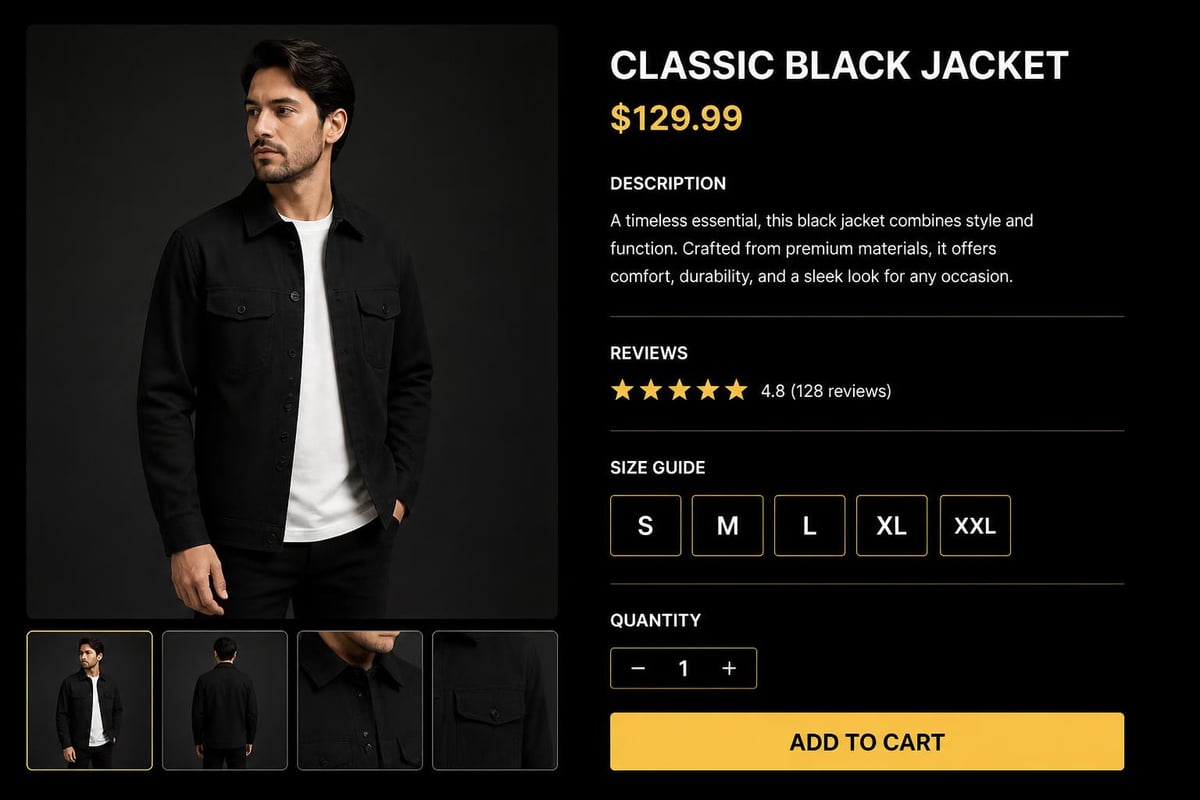
Product pages carry the heaviest weight in ecommerce websites. This is where browsing becomes buying or the customer leaves.
High-quality images from multiple angles. Zoom functionality. Clear pricing with no surprises. Detailed descriptions that answer questions before they're asked. Reviews from real customers. Obvious add-to-cart button. Trust badges near checkout.
Small details create massive differences. A product page missing size guides loses sales. One without reviews converts at half the rate. Images that don't load on mobile send customers straight to competitors.
Navigation and User Experience
If customers can't find products, they can't buy them. Sounds obvious, but countless ecommerce websites bury their inventory behind confusing menus.
Keep your main navigation to 5-7 categories maximum. Use descriptive names, not creative ones. Include a search bar in the header on every page. Add filters and sorting to collection pages. Make the cart accessible from anywhere.
The goal is reducing friction. Every extra click is an opportunity for customers to leave.
Technical Fundamentals You Can't Skip
The invisible infrastructure of ecommerce websites determines whether they succeed or fail. You can't see page speed, security protocols, or SEO structure, but customers and search engines notice immediately.
Speed and Performance
Three seconds. That's how long you have before bounce rates spike. Amazon found that every 100ms delay costs them 1% in sales. For small ecommerce websites, the impact is even more brutal.
Images are usually the culprit. Uncompressed product photos that look fine on desktop destroy mobile performance. Apps and plugins that seemed helpful add bloat that slows everything down.
Optimisation isn't optional. Compress images before uploading. Choose apps carefully and remove ones you don't actively use. Use lazy loading for below-the-fold content. Test regularly on actual mobile devices, not just desktop browsers made small.
Security and Trust
Customers are handing over credit card details. They need to trust your ecommerce website completely.
SSL certificates are mandatory, not optional. Display security badges during checkout. Use trusted payment processors. Have clear privacy policies and terms of service. Show contact information prominently.
Small businesses sometimes skip these elements to launch faster. Big mistake. Lost trust means lost revenue that never comes back.
SEO for Ecommerce Websites
Search traffic is free traffic. But ranking ecommerce websites takes more than hoping Google notices you exist.
Product pages need optimisation from day one. Unique descriptions for every product, not manufacturer copy. Descriptive URLs. Alt text on images. Schema markup for rich results. Internal linking between related products.
SEO optimisation for product pages involves technical elements that many small business owners overlook in the rush to launch.
Collection pages should target category keywords. Blog content can capture informational searches. Category structure should make sense to humans and search engines alike.
Common Mistakes That Kill Ecommerce Websites
After working with dozens of small Australian businesses, patterns emerge. The same mistakes appear again and again, quietly sabotaging stores that could succeed.
Launching Before You're Ready
There's momentum, and there's rushing. Launching an ecommerce website with broken links, missing policies, untested checkout, or placeholder content damages your brand more than delaying a week.
Create a pre-launch checklist. Test every link. Complete every product page. Set up abandoned cart emails. Configure shipping rates correctly. Check mobile display. Process a test order yourself.
Ignoring Mobile Customers
Over 70% of traffic comes from mobile devices. If your ecommerce website doesn't work perfectly on phones, you're turning away most potential customers.
This goes beyond responsive design. Buttons need to be thumb-sized. Forms should be minimal. Images must load quickly. Checkout needs to work flawlessly. Navigation should make sense on small screens.
Treating Ecommerce Websites as Set-and-Forget
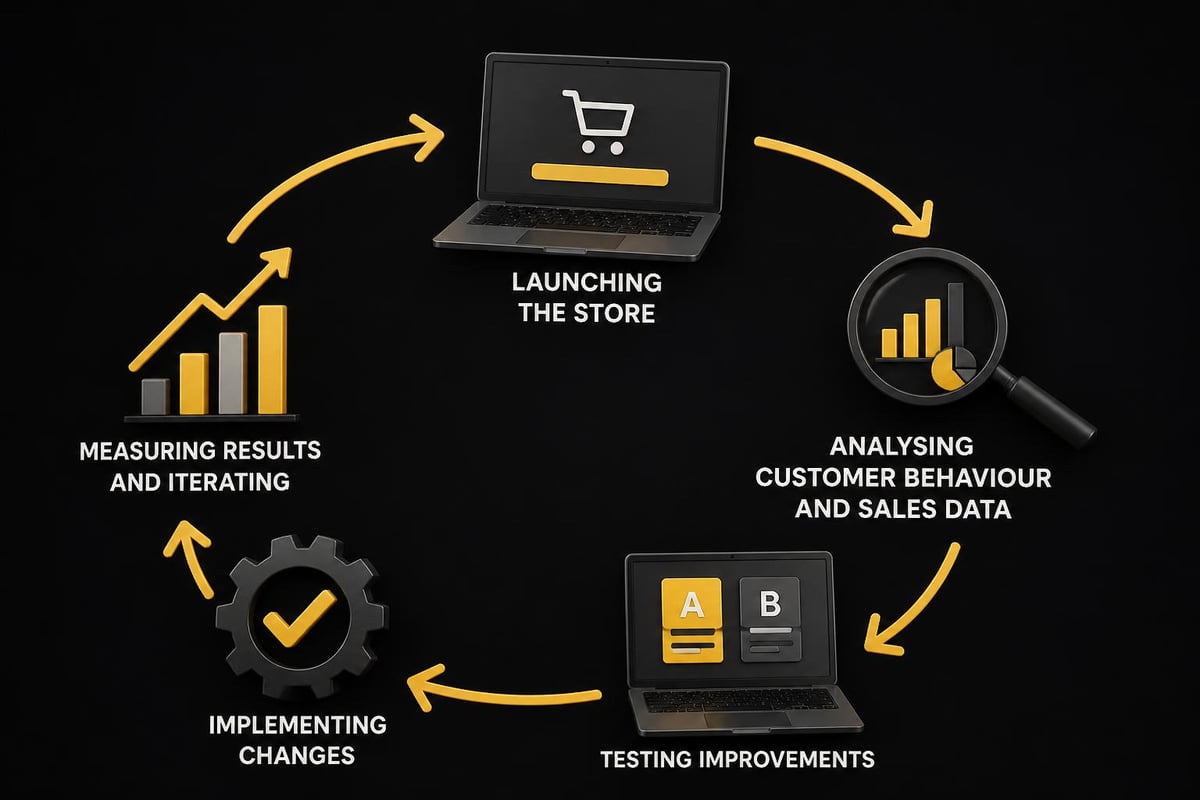
Launch day is the beginning, not the end. Successful ecommerce websites evolve based on customer behaviour, sales data, and market changes.
Review analytics monthly. Test different product images. Update descriptions based on customer questions. Add new products regularly. Refresh content to stay relevant. Monitor what's working and double down on it.
Building Your Ecommerce Website Without Overspending
The question every small business asks: how much should this actually cost?
The honest answer: it depends. But you can build a professional ecommerce website that converts for far less than agencies quote. You just need to know what actually matters and what's negotiable.
The Agency Trap
Full-service agencies charge $10,000 to $30,000+ for ecommerce websites. Sometimes that investment makes sense for established businesses with complex needs. For small businesses launching their first online store, it's overkill.
Much of that cost goes to bloat: discovery phases, multiple revision rounds, features you'll never use, and project management overhead. Understanding why agencies charge premium rates helps you evaluate whether that investment actually serves your business goals.
The DIY Dilemma
Free trials and YouTube tutorials seem like a budget-friendly path. The reality is messier.
You'll spend weeks figuring out what should take days. You'll miss important elements because you don't know they exist. You'll launch with a store that looks amateur and converts poorly. And you'll lose revenue every day you're delayed.
Time is money. The opportunity cost of spending three months building instead of selling often exceeds what you'd pay someone who knows what they're doing.
The Middle Ground
Professional ecommerce websites don't require agency budgets. You need someone who understands conversion fundamentals, knows the platform deeply, and can execute efficiently without unnecessary overhead.
For small Australian businesses, this means working with specialists focused on ecommerce rather than generalist web designers. Someone who builds Shopify stores regularly understands what works and what wastes time.
What Success Actually Looks Like
Metrics matter. But which ones should you track for ecommerce websites?
Revenue is obvious but lagging. By the time it's low, you've already lost opportunities. Leading indicators tell you what's working before sales data confirms it.
Conversion Rate
The percentage of visitors who buy. Industry average sits around 2-3% for ecommerce websites. Anything above 3% is strong. Below 1% signals serious problems with your store.
Low conversion rates usually mean poor product pages, confusing navigation, lack of trust signals, or checkout friction. Fix these systematically and watch the rate climb.
Average Order Value
How much customers spend per transaction. Increasing this by 10% has the same impact as getting 10% more traffic.
Product bundling, upsells, and free shipping thresholds all influence average order value. Test different approaches and track what moves the number.
Cart Abandonment Rate
Around 70% of customers who add products to cart don't complete purchase. That's normal but improvable.
Abandoned cart emails recover 10-15% of those sales. Simplifying checkout, offering multiple payment options, and removing surprise fees all reduce abandonment.
| Metric | Good Performance | Warning Sign | Action Needed |
|---|---|---|---|
| Conversion Rate | Above 3% | Below 1.5% | Review product pages, checkout flow, trust signals |
| Avg Order Value | Trending up | Stagnant or declining | Test bundling, upsells, free shipping thresholds |
| Cart Abandonment | Below 70% | Above 80% | Simplify checkout, add email recovery, remove friction |
| Page Load Time | Under 3 seconds | Over 5 seconds | Optimise images, reduce apps, upgrade hosting |
Getting Your Ecommerce Website Live
The gap between planning and launching separates successful ecommerce websites from ones that never materialise. You need a clear process that maintains momentum without cutting corners.
The Four-Week Framework
Week one focuses on foundation: finalising product selection, writing descriptions, gathering images, and setting up the platform basics. No design yet, just content and structure.
Week two builds the store: installing theme, configuring navigation, creating pages, setting up collections. The store takes shape but isn't polished.
Week three refines everything: optimising images, testing mobile experience, configuring shipping and taxes, setting up payment processing, creating policies. Details matter here.
Week four launches: final testing, processing test orders, fixing any issues, adding tracking and analytics, sending the store live. Then actual selling begins.
This timeline works for businesses ready to commit. If you're still deciding on products or branding, sorting that comes first. But once fundamentals are clear, dragging out the build helps nobody.
Post-Launch Priorities
The first month after launch teaches you more than months of planning. Watch what customers do, not just what they buy.
Which products get viewed most? Where do people drop off? What questions come through customer service? Which traffic sources convert best? This data guides your first optimisations.
Don't change everything at once. Test one element, measure results, then move to the next. Improving ecommerce websites is a process of incremental gains, not dramatic overhauls.
Moving Forward with Your Store
Starting an ecommerce business in 2026 means entering a competitive but accessible market. The barriers to entry have never been lower, but the bar for quality keeps rising.
Small Australian businesses have advantages: local shipping, cultural understanding, niche products that resonate with domestic customers. Your ecommerce website should amplify these strengths, not dilute them trying to compete with international giants.
Focus on your specific customers. Build for their needs, answer their questions, solve their problems. Generic ecommerce websites blend into the background. Focused ones build loyal customer bases that return and refer.
The technical side matters, but it's in service of sales. Every design choice, every feature, every word of copy should move toward that goal. If it doesn't, it's clutter.
You don't need perfection. You need a solid foundation that converts visitors into customers while you learn what your market actually wants. Then you build from there, using real data instead of assumptions.
Building ecommerce websites that actually generate revenue requires more than templates and good intentions. It takes strategic thinking, conversion focus, and execution that prioritises fundamentals over flash. If you're ready to launch your online store without agency bloat or DIY confusion, Kida Digital specialises in conversion-led Shopify development for small Australian businesses. We build scalable stores from concept to launch in four weeks, giving you the foundation to start selling while you're still learning.


Be the first to comment