

If you're a small Australian eCommerce business looking to build or improve your online store, you've probably considered hiring a freelance web designer. It's a logical first step. The pricing seems more approachable than agencies, the personal touch feels reassuring, and the flexibility sounds ideal. But here's what most business owners don't realize until they're already invested: the freelance route comes with trade-offs that can derail your timeline, budget, and ultimately your launch momentum. Understanding what you're actually buying when you hire a freelance web designer in 2026 will save you months of frustration and thousands in hidden costs.
What a Freelance Web Designer Actually Does
A freelance web designer creates the visual and functional elements of your website.
They work independently, usually from home or a co-working space, managing their own schedule and client roster.
Most freelancers specialize in specific platforms. Some focus on WordPress, others on Squarespace, and a growing number work exclusively with Shopify for eCommerce projects.
The Scope Question
The biggest variable with any freelance web designer is scope definition.
One designer might offer full-service builds including strategy, design, development, and launch support. Another might only handle visual mockups, leaving you to find a developer separately.
This inconsistency creates confusion before you even start.
According to research on essential strategies for freelance web designers, clearly defining project scope upfront is the single most important factor in successful freelance engagements. Without it, scope creep becomes inevitable.
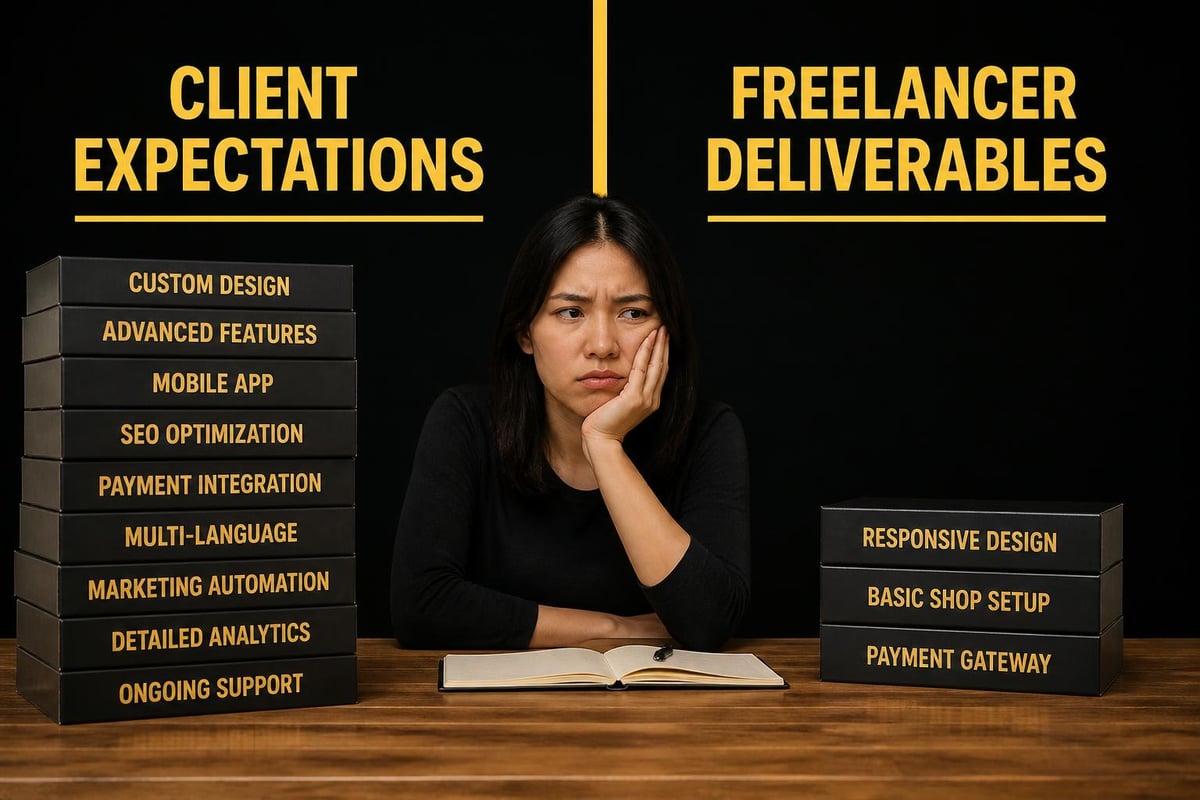
Common services a freelance web designer might include:
- Visual design and branding
- Custom page layouts
- Mobile responsiveness
- Basic SEO setup
- Content upload
- Platform training
Services they typically don't include:
- Ongoing conversion optimization
- Strategic eCommerce planning
- Payment gateway troubleshooting
- App integration configuration
- Performance monitoring
- Post-launch support packages
The gap between what you assume is included and what's actually delivered causes most project failures.
The Real Cost Structure in 2026
Freelance web designer rates in Australia vary dramatically based on experience, location, and platform expertise.
Entry-level designers charge between $50 and $80 per hour. Mid-level professionals range from $80 to $150 per hour. Senior specialists command $150 to $250+ per hour.
But hourly rates tell you almost nothing about total project cost.
Project-Based vs Hourly Billing
Most freelancers offer both options, and each has pitfalls.
Hourly billing gives flexibility but zero cost certainty. A "simple" Shopify store might be quoted at 40 hours, but revisions, scope additions, and communication overhead can push it to 80 hours or more.
Project-based pricing provides a fixed number, but it's often calculated with best-case scenarios. When complexity emerges, you'll face change requests and additional fees.
| Pricing Model | Typical Range (AUD) | Best For | Risk Factor |
|---|---|---|---|
| Hourly | $4,000-$15,000 | Undefined scope | High budget overrun |
| Project-based | $5,000-$20,000 | Clear requirements | Scope limitations |
| Retainer | $2,000-$5,000/month | Ongoing work | Long-term commitment |
A 2025 study on where to hire freelance web designers found that Australian eCommerce projects averaged 30% over initial quotes due to unforeseen requirements.
The hidden costs matter more than the headline price.
Additional expenses to budget for:
- Stock photography or custom graphics ($300-$2,000)
- Premium Shopify apps and plugins ($50-$200 monthly)
- SSL certificates and domain setup ($100-$300)
- Payment gateway integration complexity ($500-$1,500)
- Email marketing platform connection ($200-$800)
- Post-launch bug fixes ($500-$2,000)
Your $6,000 project easily becomes $10,000 once you account for the full picture.
Quality Control and Portfolio Evaluation
Not all freelance web designers are created equal, and their portfolios don't always tell the truth.
What to Actually Look For
A portfolio shows capability, but understanding what you're seeing requires context.
Many designers showcase templates they've customized, not built from scratch. Others display work completed as part of agency teams, not solo projects. Some include student work or personal experiments alongside paid client projects.
Evaluating a freelance web designer’s portfolio requires looking beyond visual appeal to assess strategic thinking and technical execution.
Critical portfolio questions:
- Are these live client sites or concept mockups?
- What was their specific role in each project?
- How many projects are in your industry or platform?
- Can they explain the strategy behind design choices?
- Do the sites still function properly months later?
Ask for direct links to live sites, not just screenshots.
Visit those sites on mobile. Check page load speeds. Test the checkout process. Look for broken elements or outdated content.
The Conversion Blindspot
Most freelance web designers prioritize aesthetics over conversion optimization.
They'll create a beautiful homepage but miss crucial eCommerce fundamentals like trust signals, clear value propositions, streamlined navigation, and friction-free checkout flows.
This gap between "looks good" and "sells well" costs Australian eCommerce businesses thousands in lost revenue after launch. Understanding affordable web design for small business means recognizing that price and visual appeal shouldn't trump strategic effectiveness.

Timeline and Project Management Reality
A freelance web designer will quote you a timeline based on their available hours and optimistic projections.
Reality rarely cooperates.
The Multi-Client Juggle
Freelancers manage multiple projects simultaneously to maintain income stability.
Your project competes for attention with their other clients, personal emergencies, and administrative tasks.
A promised four-week build can easily stretch to eight or twelve weeks when you factor in communication delays, revision rounds, and scheduling conflicts.
Common timeline killers:
- Designer takes on emergency work from existing clients
- Revision feedback loops extend over weeks
- Technical problems require outside specialists
- Content or assets aren't ready when needed
- Platform updates break existing work
- Designer illness or personal situations
One 2024 analysis of costly mistakes freelance web designers make identified poor project management and timeline estimation as the top two client complaints.
Communication Patterns
Freelancers work independently, which means no team backup when they're unavailable.
Email response times vary from same-day to several days. Video calls require advance scheduling. Emergency support might not exist at all.
This communication structure works fine for patient, organized clients with clear requirements. It falls apart when you need rapid iteration, real-time problem-solving, or collaborative strategy development.
Platform Expertise Specifics
Not all freelance web designers understand eCommerce platforms equally.
A designer skilled in WordPress blogs might struggle with Shopify's liquid templating system. A Squarespace specialist might not grasp the complexity of product variants and inventory management.
Shopify-Specific Considerations
Shopify has become the dominant platform for Australian small business eCommerce, but expertise levels vary dramatically among freelancers.
True Shopify expertise includes:
- Theme customization within Shopify's framework
- App ecosystem knowledge and integration
- Checkout optimization within platform limitations
- Collection and product organization strategy
- SEO configuration for Shopify architecture
- Understanding of Shopify's native features vs app needs
Many designers who claim Shopify skills have only worked with pre-built themes and basic customization. They lack deep platform knowledge required for scalable, conversion-optimized stores.
Shopify store development services require understanding both the technical platform and the eCommerce business model it supports.
Platform-specific certifications matter, but hands-on project experience with stores that actually sell products reveals true capability.
The Alternative Path for Australian eCommerce
Freelance web designers serve a purpose for certain project types.
But for Australian eCommerce businesses launching their first Shopify store or scaling from DIY platforms, the freelance model often creates more problems than it solves.
You need conversion strategy, not just visual design. You need reliable timelines, not flexible schedules. You need platform expertise, not generalist skills.
Structured Development Packages
The middle ground between expensive agencies and unpredictable freelancers comes from specialized Shopify developers who've created structured, repeatable processes.
These offerings typically include fixed pricing, defined timelines, and comprehensive scope that covers everything from strategy to launch.
For businesses ready to move beyond experimentation into serious eCommerce, done-for-you Shopify builds provide the clarity and momentum that freelance arrangements often lack. These packages are specifically designed for Australian small businesses launching their first proper store, covering everything needed to go live within four weeks without the scope confusion or budget uncertainty that plagues freelance projects.
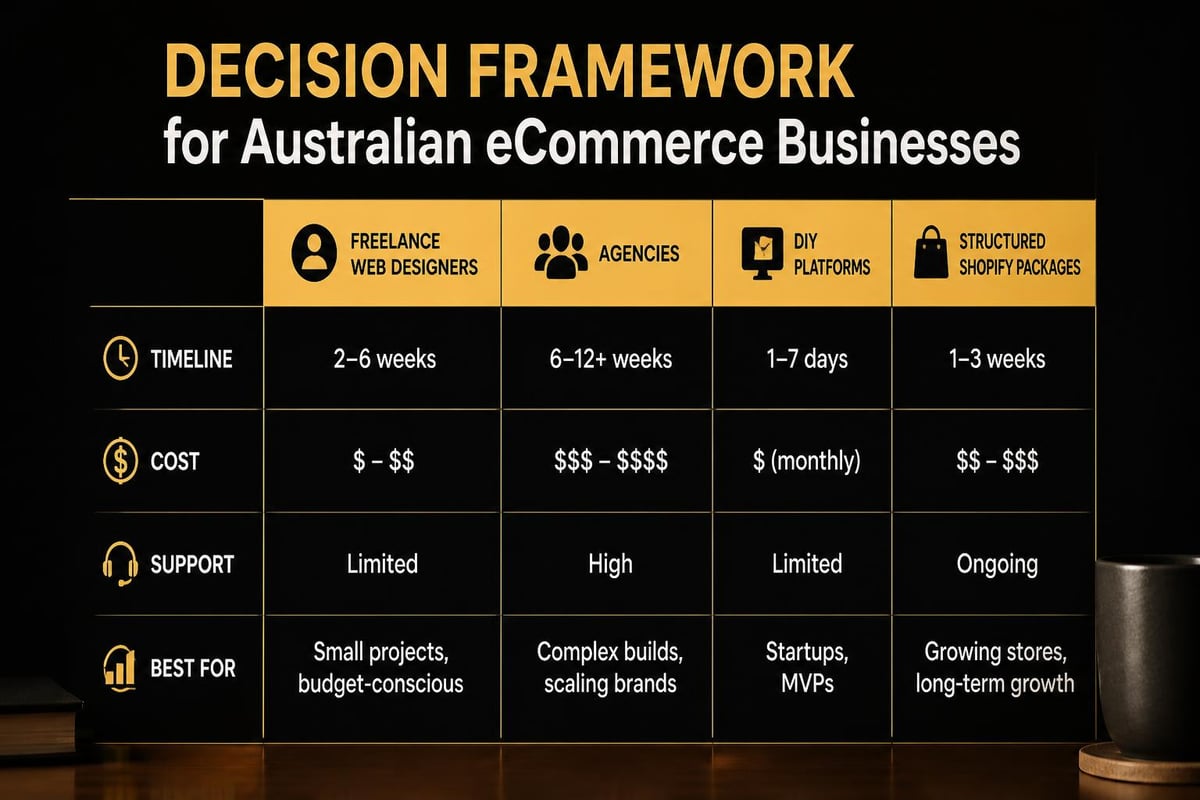
| Approach | Timeline | Cost Range | Best For |
|---|---|---|---|
| Freelance Designer | 6-12 weeks | $5,000-$20,000+ | Unique design needs |
| DIY Platform | 2-6 months | $500-$3,000 | Learning-focused founders |
| Agency | 12-16 weeks | $20,000-$50,000+ | Enterprise budgets |
| Structured Package | 4 weeks | $4,000-$10,000 | Launch-ready businesses |
The right choice depends on your specific situation, but understanding what you're actually buying matters more than the initial price tag.
Vetting and Hiring Process
If you decide to hire a freelance web designer, approach it like a business partnership, not a transaction.
The Interview Framework
Ask strategic questions that reveal working style, not just technical ability.
Essential interview questions:
- How do you handle scope changes mid-project?
- What's your typical response time for client questions?
- Who owns the design files and code after completion?
- What happens if you become unavailable during the project?
- How many projects are you currently managing?
- What's your refund or revision policy?
Pay attention to how they answer, not just what they say.
Vague responses to specific questions signal potential problems. Defensive reactions to reasonable inquiries suggest difficult collaboration ahead.
Contract and Terms
Never start work without a detailed written agreement.
Your contract should specify deliverables, timeline, payment structure, revision limits, ownership rights, and termination conditions.
According to best practices for freelance web developers, clear contractual agreements prevent 80% of client-freelancer disputes.
Non-negotiable contract elements:
- Specific deliverables list with acceptance criteria
- Payment schedule tied to milestones, not time
- Maximum project duration with extension terms
- Ownership transfer of all files and access
- Confidentiality and non-compete clauses
- Dispute resolution process
If a freelance web designer resists detailed contracts, find someone else.
Payment Protection
Avoid paying the full amount upfront, regardless of promises or pressure.
A typical structure splits payments into thirds: deposit at signing, second payment at design approval, final payment at launch.
Some freelancers request 50% upfront, which is acceptable for established professionals with strong portfolios. Anything beyond 50% before work begins creates unnecessary risk.
Post-Launch Support Gap
The most overlooked aspect of hiring a freelance web designer is what happens after your site goes live.
Most freelancers consider the project complete at launch.
Ongoing Needs Reality
Your eCommerce store isn't a static website that can sit unchanged for years.
You'll need product updates, seasonal promotions, bug fixes, performance optimization, and conversion improvements from day one.
Post-launch requirements most clients underestimate:
- Monthly app updates and compatibility checks
- Shopping cart abandonment reduction
- Mobile user experience refinement
- Page load speed optimization
- SEO adjustments based on analytics
- New product page creation
- Promotional banner updates
Some freelancers offer maintenance retainers, but these typically focus on technical updates rather than strategic optimization.
The knowledge transfer problem compounds this. If your designer moves on to other projects or becomes unavailable, you're left managing a store you don't fully understand with no clear documentation.
Building Shopify stores requires thinking beyond launch day to ongoing optimization and growth strategy.
The Skills Integration Challenge
Successful eCommerce requires multiple specialized skills working together.
A freelance web designer typically brings visual design and perhaps front-end development. But modern Shopify stores also need conversion strategy, technical SEO, user experience optimization, copywriting, and analytics setup.
The Coordination Tax
You can hire different specialists for each area, but coordinating them becomes your full-time job.
The visual designer needs input from the conversion strategist. The SEO specialist needs coordination with the developer. The copywriter needs direction from the brand strategist.
Without central coordination, these specialists work in silos, creating inconsistent experiences and duplicated effort.
This coordination overhead adds weeks to timelines and thousands to budgets, even before accounting for the actual specialist costs.
Many Australian small business owners discover too late that they've accidentally become project managers for a distributed team of freelancers who've never worked together before.
Platform Limitations and Workarounds
Every platform has constraints that experienced specialists know how to work within.
Shopify limits checkout page customization for security and PCI compliance. It handles product variants differently than some businesses expect. Its theme structure requires specific development approaches.
A generalist freelance web designer might not know these limitations until they encounter them mid-project, leading to expensive workarounds or feature compromises.
Common Shopify limitation surprises:
- 100 variant maximum per product
- Limited checkout customization on standard plans
- App conflicts causing performance issues
- Theme update conflicts with customizations
- Mobile app versus web experience differences
Platform-specific expertise prevents these surprises from derailing your project. Shopify development expertise means knowing the platform's capabilities and constraints before design begins, not discovering them during development.
Finding Freelancers in 2026
The freelance marketplace has evolved significantly, with specialized platforms connecting clients and designers.
Popular freelance websites include Upwork, Fiverr, Toptal, and Australia-specific platforms like Freelancer.com.
Each platform has different vetting standards, fee structures, and protection mechanisms.
Local vs International
Australian businesses face a choice between local designers who understand the market and international freelancers offering lower rates.
Local Australian freelancers provide:
- Same timezone availability
- Understanding of Australian eCommerce expectations
- Familiarity with local payment preferences
- GST-compliant invoicing
- Legal recourse within Australian jurisdiction
International freelancers offer:
- Often lower hourly rates
- Broader portfolio experience
- 24-hour work cycles across timezones
- Diverse design perspectives
The cost savings from international freelancers often disappear through communication overhead, timezone delays, and cultural expectation mismatches.
For eCommerce projects requiring tight collaboration and quick iteration, local expertise typically delivers better value despite higher headline rates.
Making the Decision
Hiring a freelance web designer works when you have clear requirements, patient timelines, and capacity to manage the project actively.
It fails when you need strategic guidance, rapid execution, or comprehensive support beyond visual design.
Freelancers work best for:
- Businesses with in-house technical knowledge
- Projects with flexible timelines
- Specific design-only requirements
- Clients who enjoy project management
- Secondary site updates rather than primary launches
Alternative approaches suit:
- First-time eCommerce businesses
- Launch-critical timeline projects
- Businesses needing strategic guidance
- Teams without technical expertise
- Growth-focused store optimization
Understanding these realities before you commit saves months of frustration and thousands in wasted investment. The cheapest option upfront rarely proves cheapest by launch day.
Resources like tips for freelance web designers help you understand what professionals should bring to the table, but recognize that reading tips and executing successful eCommerce projects require different skill levels entirely.
Hiring a freelance web designer can work for Australian eCommerce businesses, but only when you understand exactly what you're buying and what support you'll need beyond the initial build. Most small businesses discover too late that they needed strategic eCommerce expertise, not just visual design skills. If you're ready to launch a conversion-focused Shopify store without the coordination headaches, scope confusion, and timeline uncertainty that plague freelance projects, Kida Digital provides the structured, strategic approach Australian eCommerce businesses actually need to go from concept to launch in four weeks.


Be the first to comment