

Running a small business in Australia means making every dollar count. Your website is often the first impression customers get, yet many small business owners find themselves stuck between expensive agency quotes and frustrating DIY platforms that promise the world but deliver headaches. The good news is that affordable websites for small business are entirely achievable in 2026, but you need to understand what you're actually paying for and what genuinely matters for your business growth.
What "Affordable" Actually Means in 2026
Affordable doesn't mean cheap. It means getting the right value for what you need without paying for agency bloat or sacrificing essentials.
The average Australian small business website cost ranges from $1,500 to $15,000 depending on complexity. For eCommerce specifically, expect between $3,000 and $10,000 for a professional build that actually converts.
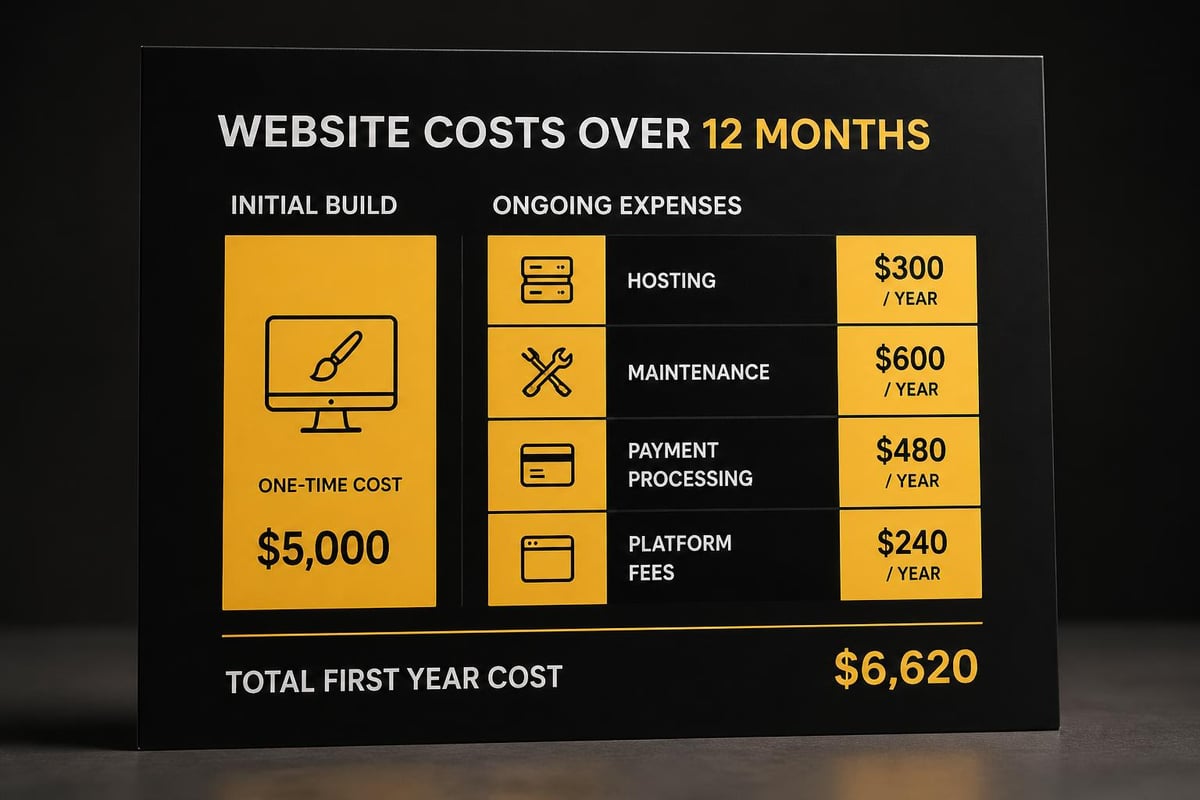
But here's what most business owners miss: the initial build is just one part of the equation.
The True Cost Breakdown
When evaluating affordable websites for small business, consider these ongoing expenses:
- Domain registration: $15-30 annually
- Hosting: $10-50 monthly for shared hosting, $30-300 for managed platforms
- SSL certificates: Often included now, but $50-200 annually if separate
- Payment processing fees: 1.4%-2.9% per transaction plus fixed fees
- Maintenance and updates: $50-500 monthly depending on complexity
- Email hosting: $5-15 per mailbox monthly
A website that costs $2,000 upfront but requires $500 monthly in maintenance isn't affordable. A $5,000 build with minimal ongoing costs often is.
Platform Options: What Works for Small Australian Businesses
The platform you choose fundamentally shapes both your initial investment and long-term costs.
Website builders have evolved significantly, with options now spanning from drag-and-drop simplicity to robust eCommerce platforms.
Shopify: The eCommerce Sweet Spot
Shopify dominates Australian small business eCommerce for good reason. The platform starts at $39 AUD monthly and includes hosting, security, and payment processing.
You're not just buying a website builder. You're accessing a complete business operating system.
For product-based businesses, Shopify eliminates the technical complexity that bogs down other platforms. You don't need to worry about server capacity during a sales spike or whether your payment gateway will work properly.
The real advantage? Shopify grows with you. Start with basic features, add apps as needed, and scale without rebuilding from scratch.
| Shopify Plan | Monthly Cost (AUD) | Transaction Fees | Best For |
|---|---|---|---|
| Basic | $39 | 2.0% + payment fees | New stores, 1-2 staff |
| Shopify | $105 | 1.0% + payment fees | Growing stores, 3-5 staff |
| Advanced | $384 | 0.6% + payment fees | Established stores, 6+ staff |
WordPress + WooCommerce: Maximum Control
WordPress powers 43% of all websites globally. With WooCommerce, it becomes a capable eCommerce platform.
The appeal is control and flexibility. Own your data, customize everything, pay only for what you use.
The reality is complexity. You're responsible for security updates, plugin conflicts, hosting performance, and backup management. For many small business owners, this becomes a significant hidden time cost.
WordPress works brilliantly if you have technical knowledge or a reliable developer relationship. For most small Australian businesses launching their first online store, it's like buying a commercial kitchen when you just need to cook dinner.
Squarespace and Wix: Quick But Limited
These platforms deliver beautiful templates and easy setup. Monthly costs range from $16 to $52, making them genuinely affordable websites for small business on paper.
The limitations emerge as you grow. eCommerce functionality is basic, customization hits walls quickly, and migrating away later means rebuilding entirely.
Many business owners start here then face expensive migrations within 12-18 months.
Consider these platforms for service-based businesses with simple booking or contact needs. For product sales beyond a handful of SKUs, invest in a proper eCommerce platform from the start.
What You Actually Need (and What You Don't)
Most small business owners either under-spec or over-build their websites. Both waste money.
Essential Features for Every Business Website
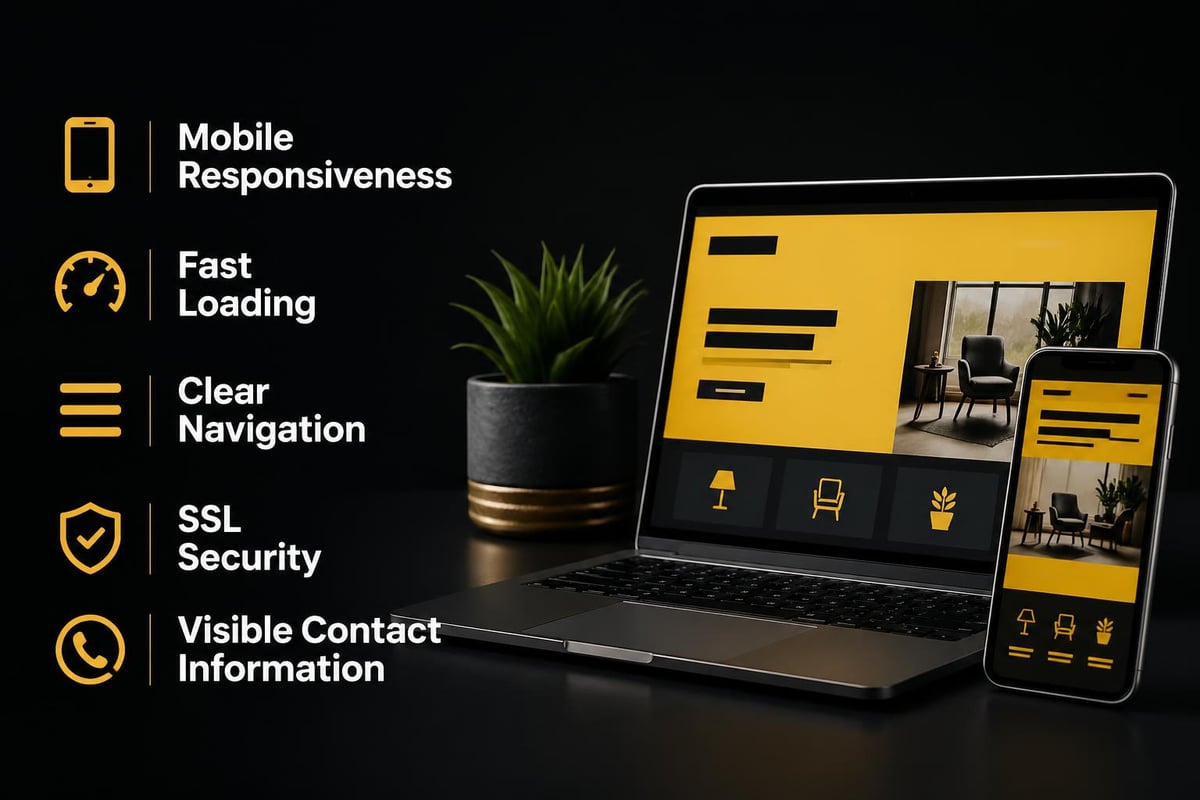
Every professional website needs these fundamentals:
Mobile responsiveness is non-negotiable. Over 70% of Australian web traffic comes from mobile devices. Your site must work flawlessly on phones and tablets.
Fast loading speed directly impacts both conversions and search rankings. Aim for under three seconds on mobile networks.
Clear navigation means visitors find what they need in three clicks or fewer. Complex mega-menus and buried contact forms kill conversions.
SSL security protects customer data and builds trust. Google also penalizes non-secure sites in search rankings.
Contact information should be visible on every page. Phone, email, and physical address (if relevant) build legitimacy.
eCommerce-Specific Requirements
Online stores need additional infrastructure:
- Product catalog with search and filtering
- Shopping cart with clear checkout process
- Payment gateway integration (Stripe, PayPal, etc.)
- Shipping calculation and tracking
- Inventory management
- Customer account functionality
- Order confirmation and tracking emails
For Australian businesses, ensure your platform handles GST correctly and integrates with local payment providers. International platforms sometimes miss these regional requirements.
Features You Probably Don't Need Yet
Many agencies pad quotes with unnecessary additions. Skip these initially:
Custom illustrations and animations look impressive but rarely improve conversions enough to justify $2,000-5,000 in additional costs.
Advanced CRM integration can wait until you're processing enough orders to need automated customer segmentation.
Multiple language support only matters if you're actively selling to international markets.
Blog functionality is valuable for SEO but shouldn't delay your launch. Add it later when you have capacity to create content consistently.
Live chat becomes useful around 100+ daily visitors. Before that, email and phone work fine.
Focus on launching with essentials, then add complexity based on actual customer behavior and feedback.
The Hidden Costs That Destroy Your Budget
Affordable websites for small business fail when hidden costs emerge months after launch.
Plugin and App Addiction
Every Shopify app or WordPress plugin costs money and adds complexity. That $5 monthly app seems trivial until you're paying for fifteen of them.
Before adding any paid app, ask: Can I achieve this manually until I have the volume to justify automation?
Many stores launch with $200+ monthly in app costs they don't actually need yet.
Template Customization Scope Creep
You pick an affordable template, then want "just a few tweaks." Three designer invoices later, you've spent more than a custom build would have cost.
Templates work when you accept their structure. Fighting against template limitations wastes money.
Either choose a template that matches your needs as-is, or budget for custom development from the start.
Content Creation Bottlenecks
Your developer can build a brilliant website, but someone needs to write product descriptions, take photos, create policies, and populate pages.
This takes substantially longer than business owners expect. Professional product photography costs $50-200 per product. Copywriting runs $100-300 per page.
Budget both time and money for content, or your affordable build sits empty for months while you scramble to create materials.
Ongoing Maintenance Reality
Website maintenance includes security updates, broken link fixes, plugin compatibility, backup management, and performance optimization.
DIY platforms shift this burden to you. Managed platforms handle most of it automatically.
Calculate the value of your time honestly. Spending four hours monthly troubleshooting plugin conflicts might cost more than paying for a managed solution.
Finding the Right Development Partner
Not every small business needs to hire a developer, but many should.
When DIY Makes Sense
Build your own website if:
- You're launching a simple service business with under ten pages
- You genuinely enjoy learning new technical skills
- Your time isn't better spent on product development or sales
- You're comfortable with ongoing troubleshooting and updates
The best website builders make DIY viable for straightforward projects.
When to Hire a Professional
Bring in a developer when:
- You're launching an eCommerce store with more than 20 products
- Your time is better spent on business development
- You need specific functionality beyond standard templates
- You want to launch quickly and professionally
For small Australian eCommerce businesses launching their first Shopify store, Done-for-you Shopify Builds deliver everything needed to launch within four weeks with clarity and strategy, avoiding both agency bloat and DIY frustration.
Red Flags in Development Quotes
Watch for these warning signs:
Vague deliverables like "modern design" or "optimized for conversions" without specific features or metrics.
No revision limits sound generous but often indicate unclear scope that leads to endless tweaks.
Extremely low prices from overseas developers frequently result in communication breakdowns and incomplete work.
No contract or payment terms create disputes about scope and deliverables.
Promises of "guaranteed" rankings violate every search engine's guidelines and indicate either dishonesty or incompetence.
What a Good Quote Includes
Professional quotes specify:
- Exact features and functionality
- Number of pages and templates
- Revision rounds included
- Timeline with milestones
- Training provided
- Post-launch support terms
- What you're responsible for providing (content, images, etc.)
Clear scope protects both parties and prevents budget blowouts.
Building for Growth, Not Just Launch
The most expensive mistake is building a website that works today but can't scale.
Platform Lock-In Risks
Some platforms make migration difficult or impossible. Your products, customer data, and content become trapped.
Before committing to any platform, research export options. Can you download your customer list? Product catalog? Order history?
Shopify excels here with robust export functionality. Some cheaper platforms deliberately make leaving difficult.
Integration Requirements
Your website needs to connect with:
- Accounting software (Xero, MYOB, QuickBooks)
- Email marketing platforms (Klaviyo, Mailchimp)
- Inventory management systems
- Shipping providers (Australia Post, Sendle, StarTrack)
- Social media platforms
Platforms with strong app ecosystems handle this smoothly. Custom builds require developer work for each integration.
Budget for integration costs beyond the initial build.
Performance at Scale
A website handling ten orders weekly has different requirements than one processing a hundred daily.
Shared hosting crumbles under traffic spikes. Database queries slow as product catalogs grow. Checkout processes that work for a handful of customers frustrate hundreds.
Choose platforms and hosting that handle 10x your current volume. The cost difference is minimal, but the headaches you avoid are substantial.
Real Numbers from Australian Small Businesses
Let's examine what affordable websites for small business actually cost in practice.
Service Business: $2,500 Total
A Melbourne-based consulting firm needed a professional online presence with service descriptions, case studies, and contact forms.
They chose Squarespace Business plan at $27 monthly, paid for professional copywriting ($800), and hired a designer for template customization ($1,200).
Total first-year cost: $2,500 including domain and email. Ongoing: $324 annually plus occasional content updates.
This worked because their needs were simple and unlikely to change dramatically.
Product Business: $6,800 Total
A Sydney homewares brand launched with 45 products on Shopify.
Platform setup and theme customization: $3,200. Product photography: $2,400. Professional copywriting for core pages: $800. Apps and integrations: $400 setup.
Monthly ongoing: $170 including Shopify plan, email marketing, review apps, and accounting integration.
First-year total: $6,800. This investment paid for itself within three months of launch.
Complex eCommerce: $12,500 Total
A Brisbane-based business selling customizable products needed advanced functionality beyond standard templates.
Custom Shopify development: $8,500. Product photography and content: $2,800. Custom app development for product configurator: $1,200.
Monthly ongoing: $285 including platform, apps, and maintenance.
First-year total: $12,500. Revenue hit $180,000 in year one, making this an affordable investment relative to results.

Common Mistakes That Waste Money
Years of working with small businesses reveal predictable patterns that destroy budgets.
Rebuilding Before Launching
Perfection paralysis keeps businesses in endless revision cycles. You're not launching until everything is absolutely perfect.
This wastes money on revisions and delays revenue. Launch with strong fundamentals, then improve based on actual customer behavior.
Ignoring SEO Basics
Many affordable websites for small business skip foundational SEO, then pay for expensive fixes later.
Basic SEO costs almost nothing during initial build: descriptive page titles, meta descriptions, proper heading structure, image alt text, and clean URLs.
Adding these after launch requires revisiting every page. Do it right initially.
Choosing Based Only on Price
The cheapest option usually costs the most long-term. Either through limitations that force rebuilds, hidden ongoing fees, or time spent fighting the platform.
Evaluate total cost of ownership over three years, not just initial investment.
Not Planning for Content Updates
Your business changes. Products get added. Prices adjust. Policies update. Sales run.
If you can't update your own content, you're paying a developer for every minor change. This gets expensive quickly.
Choose platforms and builds that give you control over routine updates while keeping complex changes for professionals.
Forgetting About Analytics
You can't improve what you don't measure. Google Analytics setup costs nothing but time, yet many sites launch without it.
From day one, track visitor behavior, conversion rates, popular products, and traffic sources. This data informs every future decision and optimization.
Making Your Decision
Affordable websites for small business require matching your actual needs with realistic budget and capability.
Your Decision Framework
Answer these questions honestly:
What's your technical comfort level? If you dread technical tasks, factor professional help into your budget.
How much time can you dedicate? DIY saves money but requires substantial time investment.
What's your revenue timeline? Longer DIY builds delay revenue. Professional builds launch faster.
How complex are your needs? Simple sites justify DIY. eCommerce with multiple products justifies professional development.
What's your growth plan? If you're testing a concept, start simple. If you're committed long-term, invest in scalability.
Platform Recommendations by Business Type
Service businesses with simple needs: Squarespace or Wix. Quick setup, professional templates, affordable ongoing costs.
Service businesses needing customization: WordPress with a good theme and developer assistance for initial setup.
Product businesses selling physical goods: Shopify for Australian businesses. The ecosystem, reliability, and growth path justify the investment.
Digital product sellers: Shopify works, but also consider specialized platforms like Gumroad or SendOwl if your catalog is small.
Businesses selling both products and services: Shopify with booking apps, or WordPress with WooCommerce plus booking plugins.
The right platform makes everything easier. The wrong one creates constant friction.
Investment Priorities
If budget is tight, invest in these areas first:
Mobile experience matters more than desktop design in 2026.
Fast hosting affects both conversions and SEO rankings.
Professional product photography for eCommerce dramatically impacts conversion rates.
Clear copywriting that explains benefits, not just features.
Reliable payment processing builds customer trust.
Delay fancy animations, complex integrations, and extensive content until you're generating revenue.
Your Next Steps
Start with brutal honesty about your needs, capabilities, and budget.
Research platforms thoroughly. Test builders with free trials before committing.
Get specific quotes from developers with clear scope and deliverables.
Calculate total first-year costs including all platform fees, apps, hosting, and content creation.
Choose based on total value, not just initial price.
Remember that affordable websites for small business aren't about finding the cheapest option. They're about investing appropriately in a tool that drives business growth while avoiding waste on features you don't need yet.
The website that launches, converts customers, and grows with your business is affordable regardless of initial cost. The cheap site that sits unused or requires expensive rebuilds within months is the real waste of money.
Getting affordable websites for small business right means balancing cost, functionality, and your actual growth needs without compromise on essentials. If you're launching an eCommerce store and want a clear path from concept to revenue without agency bloat or DIY frustration, Kida Digital specializes in conversion-led Shopify builds for small Australian businesses, delivering scalable stores within four weeks so you can focus on growing your business instead of troubleshooting platforms.


Be the first to comment