Most Shopify case studies you’ll find are about global brands with big teams and bigger budgets. They’re interesting, but they don’t tell you much about what works for a small Australian store run by one or two people.
So this page starts with my own clients: what their stores looked like before, what we changed, and what happened next. Further down you’ll find Shopify’s case studies from larger brands, and the lessons that apply to stores of any size.
Ipswich Cake Room: online sales from $4k to $10k a month
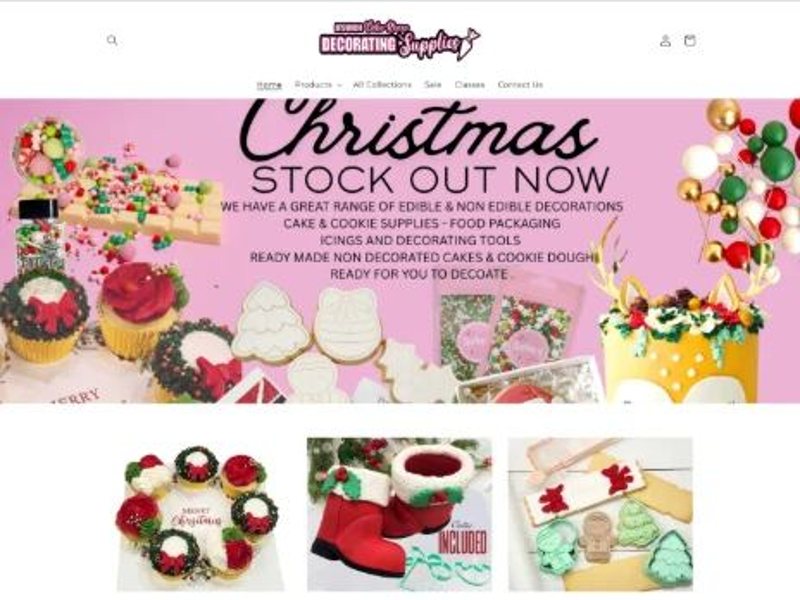
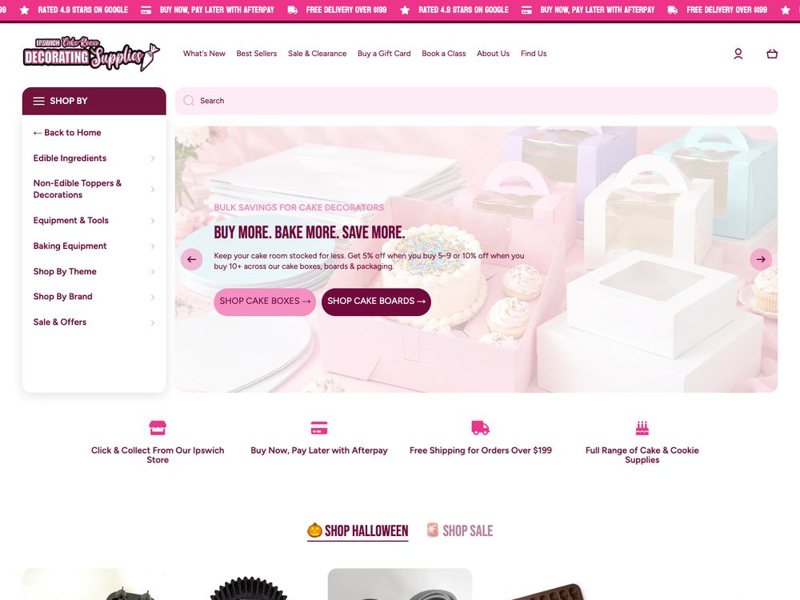
The business: a cake decorating supplies store in Ipswich, Queensland, with a busy physical shop and an online store that wasn’t pulling its weight.
The problem: the store had a huge range, but it was hard to shop. The colours and branding lacked focus, the navigation didn’t match how customers looked for products, and there was nothing helping customers add the extra items they’d need for a bake.
What we changed:
- A full Shopify retheme, with a clear colour scheme and brand focus
- Navigation rebuilt around how customers actually shop for cake supplies (I explain the approach in 5 rules for Shopify navigation)
- Upsells and cross-sells, so a cake tin suggests the topper and the colours that go with it
- Sharper brand messaging and copy across the site
- Ingredient information moved into metafields, and a separate product template for the Colour Mill buy-five-get-one-free offer (how we chose between the two)
The result: monthly online sales went from about $4,000 to $10,000, alongside around $40,000 a month in-store. I still work directly with Leah on her marketing, ads, branding and website improvements.
Isaac & Mai: a rebrand and a 2.5% conversion rate
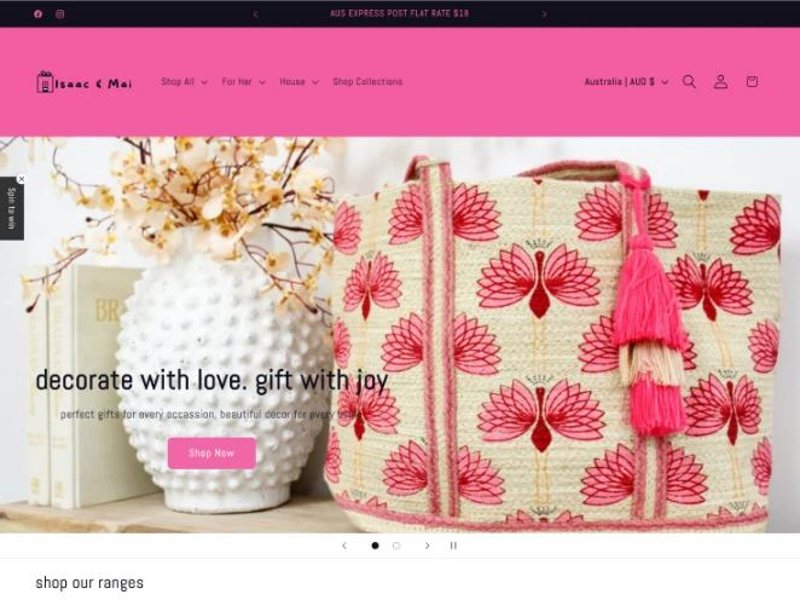
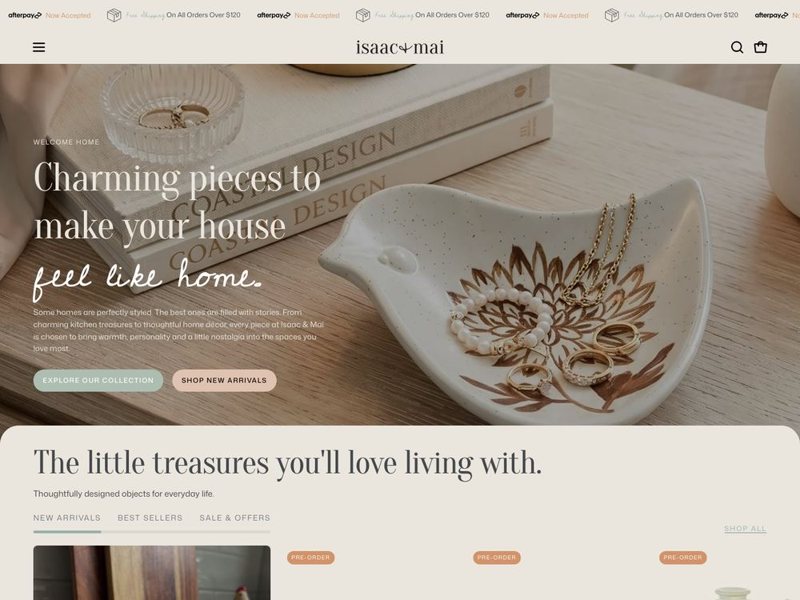
The business: an Australian homewares store selling charming pieces for the kitchen and home.
The problem: the brand and the range had drifted. The store didn’t clearly show what Isaac & Mai does best, so it was hard for new customers to connect with it.
What we changed:
- A full Shopify retheme and rebrand
- A catalogue refocused around the products that define the brand
- A new business direction to match
- Meta ads to put the new store in front of new audiences
The result: the store now converts at 2.5%, and the ads are reaching audiences the business had never reached before. I still work with Sally on her marketing, ads, branding and website.
“She completely understood my vision for my website rebrand, communicated clearly throughout the entire process, and kept me involved every step of the way.”
Sally Jess, Owner, Isaac & Mai
What these two stores have in common
- Neither started with a bigger ad budget. Both started by making the store easier to understand and easier to shop.
- Structure came before decoration. Collections, navigation and product pages did more than any single design flourish.
- Small changes added up. Upsells, clear product information and focused messaging each removed a reason not to buy.
- The work didn’t stop at launch. Both owners kept improving the store month by month.
Shopify case studies from bigger brands
If you’re after case studies from larger businesses, Shopify publishes its own. These are worth reading for specific problems:
- Skullcandy: a fast replatform and digital transformation
- Mejuri: cutting fulfilment costs and lead times
- FROM FUTURE: selling across online and retail with Shopify POS
- Russell Hendrix: B2B ecommerce on Shopify
- Sea Bags: bringing many physical stores onto one platform
- Dermalogica: lifting conversions with a modern Shopify theme
- V’s Barbershop: running retail and wholesale side by side
The common thread is the same as in my small-store examples: they fixed a specific problem in how customers found, chose or received products, rather than chasing a redesign for its own sake.
How to apply this to your store
- Find where people drop off. In Shopify Analytics, compare sessions, add-to-cart rate and checkout rate. If people add to cart but don’t check out, start with your cart. If they don’t add to cart, start with your product pages.
- Fix structure before style. Clear collections and navigation help every visitor, every day.
- Make one change at a time and give it a few weeks before judging it.
Want results like these?
If your store already gets traffic but not enough sales, an optimisation sprint is the fastest way to find and fix what’s getting in the way. If it needs more than that, I also do full rethemes and rebuilds. Get an instant quote or see more before-and-afters in my portfolio.

Written by Kiah Bush
Shopify Partner and founder of Kida Digital, a Shopify and web design studio in Norwest, Sydney. 12+ years in web design and 30+ Shopify builds, website designs and optimisations for small Australian businesses.
More about Kiah