

Choosing the right shopify web designer can make or break your online store before it even launches. In 2026, Australian small businesses face a confusing landscape of designers who promise beautiful stores but deliver layouts that don't convert. The gap between aesthetic appeal and sales performance has never been wider, and most store owners don't realize the difference until they're six months in with disappointing results. Understanding what truly matters in Shopify design saves you time, money, and the frustration of rebuilding later.
The Real Role of a Shopify Web Designer
A shopify web designer doesn't just make your store look good. They architect your customer's journey from first click to checkout completion.
The difference matters more than most people think. A designer focused purely on aesthetics might create a stunning homepage that wins design awards but converts at 0.8%. A conversion-focused designer builds a simpler store that converts at 3.2% and generates actual revenue.
Here's what separates them:
- Conversion designers prioritize user flow over visual complexity
- They understand product page psychology and purchase triggers
- Every design decision connects to a measurable business outcome
- They build for mobile-first experiences because that's where Australian shoppers are
- Performance and speed rank equal to visual appeal
The best shopify web designer brings both skills together. They create stores that look professional while driving the metrics that matter: add-to-cart rates, checkout completion, and average order value.
What Australian Small Businesses Actually Need
Small eCommerce businesses operate under different constraints than enterprise brands. You don't need custom app development or advanced API integrations on day one.
You need a store that works immediately and scales as you grow. A designer who understands this builds differently than one chasing large agency budgets.
Most Australian stores succeed with streamlined builds that cover the fundamentals exceptionally well. That means clean product pages, intuitive navigation, trustworthy checkout flows, and mobile experiences that don't frustrate customers.
The strategic design decisions that impact conversion rates often look simple on the surface but require deep understanding of customer behavior.
Design Elements That Actually Drive Sales
Pretty doesn't pay the bills. Strategic design does.
Product Page Architecture
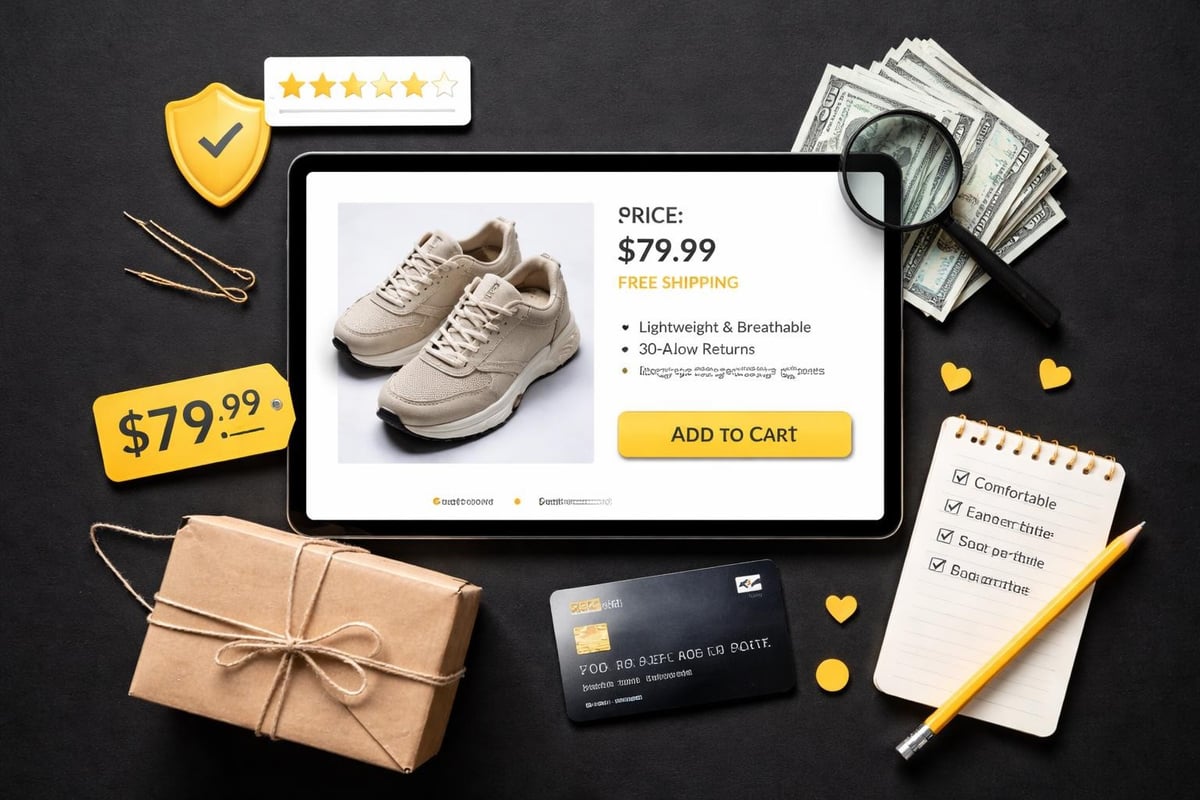
Your product pages do the heavy lifting in your store. A shopify web designer worth their fee knows exactly how to structure them.
The research shows clear patterns across successful stores. Product images need to load in under 2 seconds on mobile. Descriptions should answer questions before customers need to ask them. Pricing must be immediately visible without scrolling on any device.
Trust elements like reviews, guarantees, and shipping information reduce purchase anxiety. But they need strategic placement, not just scattered across the page wherever they fit.
Key product page elements that convert:
- High-quality images with zoom functionality (minimum 5 images per product)
- Clear, benefit-focused headlines that speak to outcomes
- Prominent add-to-cart buttons in contrasting colors
- Real customer reviews displayed above the fold
- Shipping information and delivery estimates
- Mobile-optimized layouts that don't require pinch-and-zoom
According to data from Baymard Institute, 69.8% of shopping carts are abandoned. Poor product page design contributes directly to that statistic.
Navigation and Site Structure
Customers who can't find products quickly leave. It's that simple.
Your navigation should work like a well-organized physical store. Categories make sense at a glance. Search functions actually return relevant results. Filters help customers narrow options without confusion.
A skilled shopify web designer builds navigation that accommodates both browsers and buyers. Browsers want to explore your range. Buyers already know what they want and need the fastest path to checkout.
The best practices for Shopify theme design emphasize clear information architecture that scales with your catalog growth.
| Navigation Type | Best For | Conversion Impact |
|---|---|---|
| Mega menu | Stores with 50+ products across multiple categories | Medium-High |
| Simple dropdown | Stores with focused product lines (under 30 products) | High |
| Sidebar filters | Categories with varied attributes (size, color, material) | High |
| Search-first | Stores where customers know product names | Medium |
Mobile Experience as Default
Your shopify web designer should build for mobile first, desktop second. That's not a preference in 2026, it's reality.
Data from the Australian Communications and Media Authority shows that 79% of Australians now shop on mobile devices. Your store needs to work flawlessly on a phone screen or you're eliminating most of your potential customers.
Mobile design isn't just shrinking desktop layouts. It requires rethinking every interaction for thumb navigation, smaller screens, and distracted browsing contexts.
Forms need larger input fields. Buttons require adequate spacing to prevent mis-taps. Images must load progressively without blocking content. Checkout flows should minimize typing through smart defaults and autofill support.
Technical Foundations That Support Design
Beautiful design fails without solid technical implementation. Your shopify web designer needs to understand both.
Performance and Speed Optimization
Page load speed directly impacts your revenue. Google research shows that 53% of mobile users abandon sites that take longer than 3 seconds to load.
Every design choice carries performance implications. Large hero images look impressive but tank load times if not properly optimized. Custom fonts add character but require careful implementation to avoid render-blocking.
A competent shopify web designer balances visual appeal with technical performance from the start. They compress images without visible quality loss. They minimize custom code that slows rendering. They test on real devices, not just browser simulators.
Critical performance metrics to track:
- First Contentful Paint under 1.8 seconds
- Largest Contentful Paint under 2.5 seconds
- Cumulative Layout Shift under 0.1
- Time to Interactive under 3.8 seconds
These aren't abstract technical goals. They're the thresholds that separate stores customers enjoy from stores they abandon.

Accessibility and Inclusive Design
Accessible design isn't optional anymore. It's both legally smart and commercially beneficial.
The core principles of effective Shopify web design include designing for users with varying abilities and contexts.
Approximately 18% of Australians live with disability according to the Australian Bureau of Statistics. That's nearly one in five potential customers who might struggle with poorly designed stores.
Accessible design means sufficient color contrast for readability. It means keyboard navigation for users who can't use a mouse. It means proper heading structure for screen readers. It means form labels that clearly explain required information.
The commercial benefit extends beyond accessibility compliance. Stores built with inclusive design principles work better for everyone. Clear labels help all customers. Logical heading structure improves SEO. Keyboard navigation benefits power users who prefer shortcuts.
Choosing Between DIY, Templates, and Custom Design
Not every store needs a custom shopify web designer from day one. Understanding your options helps you make strategic decisions.
When Templates Work Well
Shopify themes have improved dramatically. Quality paid themes now offer professional designs with good conversion foundations.
Templates work best when you're launching quickly with limited budget and standard product types. If you're selling physical products without complex variations, a well-chosen theme gets you to market fast.
Scenarios where templates make sense:
- First-time eCommerce businesses testing market demand
- Stores with under 50 products in simple categories
- Limited budget (under $5,000 for full launch)
- Standard product types without unique presentation needs
The limitation emerges as you scale. Templates constrain your brand differentiation. They lock you into design patterns that might not match your customer's journey. Customizing them beyond surface changes often costs more than starting fresh.
When You Need a Designer
Hire a shopify web designer when your store strategy requires more than template constraints allow.
That typically happens when you're selling products that need custom presentation, when you've identified specific conversion problems to solve, or when brand differentiation matters to your market position.
Complex product catalogs benefit from custom design. If you're selling configurable products, subscription bundles, or items with extensive variations, custom design handles that complexity better than adapted templates.
For Australian small businesses launching their first store with clear revenue goals, a done-for-you Shopify build provides the sweet spot between template limitations and agency costs. This approach covers everything needed to launch within four weeks while maintaining conversion-focused design principles.
The Agency Alternative Question
Large Shopify agencies charge $10,000 to $50,000 for store builds. That pricing reflects their overhead structure, not necessarily the value delivered to small businesses.
Most Australian small stores don't need enterprise-level features or month-long discovery phases. They need focused execution on conversion fundamentals without the agency bloat.
The gap between agency pricing and small business needs has created space for streamlined alternatives that deliver professional results at accessible price points.
Design Strategy Beyond Launch Day
Your store design isn't finished when you launch. It evolves based on real customer behavior and business growth.
Data-Driven Design Iteration
A strategic shopify web designer builds stores ready for optimization from day one.
That means implementing analytics properly. It means setting up conversion tracking for key actions. It means structuring your store so you can test variations without rebuilding everything.
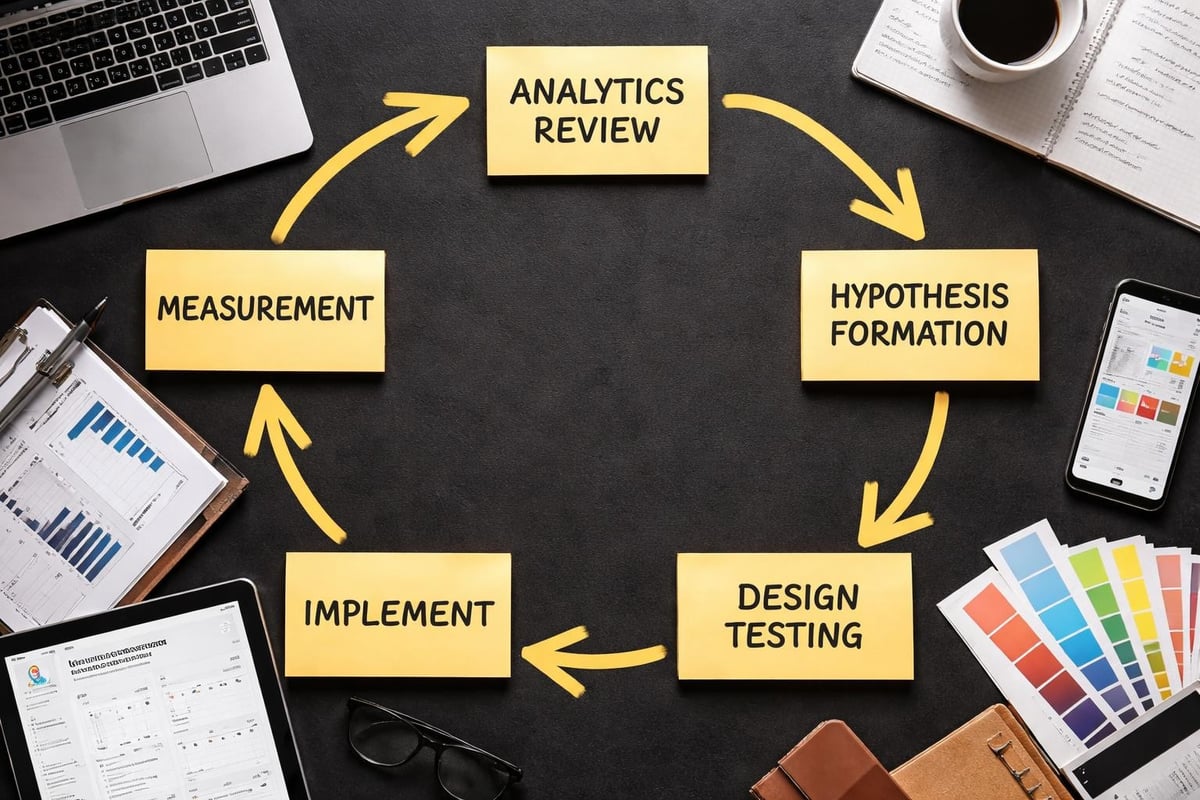
The most successful stores treat design as an ongoing conversation with their customers. They watch where people click. They identify where people abandon. They test solutions and measure results.
Heatmap tools reveal which product images get attention and which get ignored. Analytics show which collections drive sales and which collect dust. Customer recordings expose friction points in your checkout flow.
Monthly optimization priorities:
- Review top 10 product pages for conversion rate variations
- Analyze mobile vs desktop performance gaps
- Test alternative product image sequences
- Optimize worst-performing category pages
- Refine checkout flow based on abandonment patterns
This iterative approach delivers better long-term results than trying to perfect everything before launch. Real customer behavior teaches you more than assumptions ever could.
Scaling Design With Business Growth
Your store design must accommodate growth without constant rebuilds.
A thoughtful shopify web designer builds scalable foundations. They structure your theme so adding new collections doesn't break layouts. They implement design systems that maintain consistency as you expand. They choose apps and integrations that won't conflict as your stack grows.
The technical architecture matters as much as visual design. Well-organized code makes future changes faster and cheaper. Modular design patterns let you swap components without touching unrelated elements.
Planning for scale doesn't mean over-engineering on day one. It means making smart architectural choices that don't lock you into corners as you grow.
Common Shopify Design Mistakes to Avoid
Experience shows the same mistakes across hundreds of new stores. Learning from others' errors saves you time and money.
Overcomplicating the Customer Journey
More isn't better in eCommerce design. Every additional step, click, or decision point reduces completion rates.
New store owners often cram everything onto their homepage. They add every possible product filter. They require account creation before allowing purchases. They build complex navigation structures that confuse more than clarify.
The website design tips from Shopify emphasize clarity and simplicity over feature abundance.
Strip your design back to what customers actually need at each stage. Homepage visitors need to understand what you sell and why they should care. Category browsers need clear filtering and sorting. Product viewers need confidence-building information. Checkout users need speed and security.
Ignoring Mobile-Specific Behaviors
Designing for mobile isn't just responsive layouts. It's understanding how people actually use phones while shopping.
Mobile shoppers browse in shorter sessions with more distractions. They're often comparison shopping across tabs. They're less patient with slow loading or difficult interactions. They abandon at higher rates when faced with typing or complex forms.
Your shopify web designer should optimize for these behavioral differences. That means larger tap targets, simplified forms, progressive disclosure of information, and streamlined checkout flows that minimize input requirements.
Neglecting Post-Purchase Experience
Design doesn't stop at checkout completion. The post-purchase experience affects repeat rates and referrals.
Order confirmation pages, shipping notifications, and delivery communications all represent design touchpoints. They reinforce brand perception and influence whether customers return.
Smart designers optimize confirmation pages to reduce buyer's remorse, set clear delivery expectations, and encourage social sharing. They ensure transactional emails match store branding. They design account pages that make reordering simple.
Failing to Optimize for Australian Context
Australian eCommerce has specific considerations that international designers often miss.
Shipping costs and delivery times matter enormously to Australian shoppers. GST-inclusive pricing is expected, not optional. Payment preferences include local methods like AfterPay and Zip. Customer service expectations include local contact options and Australian business hours.
A shopify web designer familiar with the Australian eCommerce landscape builds these considerations into their design strategy from the start.
| Design Element | Australian Expectation | Impact of Missing It |
|---|---|---|
| Pricing display | GST-inclusive, AUD clearly marked | Cart abandonment, trust issues |
| Shipping information | Costs and timeframes visible before checkout | High abandonment rates |
| Payment options | AfterPay, Zip, PayPal alongside cards | Limited conversion, lost sales |
| Contact information | Australian phone number and business hours | Reduced trust, support friction |
| Returns policy | Clear Australian Consumer Law compliance | Legal risk, customer disputes |
Investment Expectations and Timeline Reality
Understanding what professional Shopify design actually costs helps you budget appropriately and avoid cheap solutions that create expensive problems.
Realistic Budget Ranges for 2026
Quality shopify web designer services range from $3,000 to $15,000 for small Australian businesses, depending on scope and complexity.
Budget template customization runs $2,000 to $4,000. This covers theme selection, basic customization, product upload, and essential setup. You get a functional store quickly but limited strategic input or custom features.
Professional custom design ranges $5,000 to $10,000 for most small stores. This includes strategic planning, custom design work, conversion optimization, proper technical setup, and usually some post-launch support.
Premium builds exceed $10,000 when you need extensive custom development, complex integrations, or specialized functionality. Most small Australian stores don't need this level initially.
The lowest prices rarely deliver value. Designers charging $500 to $1,500 typically use automated tools, provide minimal strategic input, and leave you with technical debt that costs more to fix than rebuild.
Timeline Realities for Different Approaches
Template-based launches can happen in one to two weeks if you have content ready. The speed comes at the cost of strategic foundation and conversion optimization.
Professional custom builds typically require four to six weeks for complete execution. This includes discovery, design, development, content population, testing, and launch preparation. Rushing this timeline usually creates problems that surface after launch.
The streamlined four-week build process balances speed with quality by focusing on conversion essentials rather than feature bloat.
Typical project timeline breakdown:
- Week 1: Discovery, strategy, and design direction (20% of timeline)
- Week 2-3: Design execution and development (50% of timeline)
- Week 4: Content population and testing (20% of timeline)
- Final days: Launch preparation and deployment (10% of timeline)
The biggest timeline variable isn't the designer's work, it's content readiness. Product descriptions, images, policies, and brand assets need completion before design work can progress efficiently.
Maintaining Your Store After Launch
Your relationship with design doesn't end at launch. Ongoing maintenance and optimization determine long-term success.
Essential Ongoing Tasks
Every Shopify store needs regular maintenance regardless of how well it's initially designed. Theme updates address security issues and compatibility. App updates prevent conflicts. Performance monitoring catches issues before they impact customers.
Monthly tasks should include checking for broken links, testing checkout flows, reviewing page speed, updating seasonal content, and analyzing conversion metrics.
Most small businesses handle this themselves or work with their original designer on a support retainer. The key is consistency rather than complexity.
When to Redesign vs Optimize
Full redesigns are expensive and disruptive. Most stores benefit more from continuous optimization than periodic overhauls.
Consider a full redesign only when your brand positioning fundamentally changes, your product range dramatically expands beyond original structure, or your conversion rates consistently lag despite optimization efforts.
For everything else, targeted optimization delivers better ROI. Fix specific problem areas rather than rebuilding what already works. Test variations before committing to changes. Measure impact before expanding modifications.
The data from your store guides these decisions. Low product page conversion suggests image or description issues. High cart abandonment points to checkout friction. Poor mobile conversion indicates responsive design problems.
Building Internal Design Capability
Some small businesses eventually bring basic design capability in-house. This makes sense for routine updates and minor adjustments.
Learning basic Shopify theme customization lets you update banners, adjust layouts, and modify content without designer involvement for every change. The Shopify web design tutorials provide practical starting points.
But know your limits. Custom code modifications, performance optimization, and conversion strategy still benefit from professional expertise. Breaking your theme with amateur modifications costs more to fix than hiring properly from the start.
Finding the right shopify web designer means looking beyond portfolios to understand their approach to conversion, their grasp of Australian eCommerce realities, and their commitment to building stores that drive actual business results. The difference between pretty layouts and profitable stores comes down to strategic thinking, technical competence, and focus on customer behavior over design trends. If you're launching or rebuilding your Shopify store and need a conversion-focused approach without agency complexity, Kida Digital specializes in getting Australian small businesses from concept to launch in four weeks with all the fundamentals in place.


Be the first to comment