

Choosing the right partner to build or optimise your Shopify store isn't just about finding someone who knows the platform. It's about finding a partner who understands your business goals, your budget constraints, and the reality of running a small eCommerce operation in Australia. A shopify expert agency brings specialised knowledge to the table, but not all agencies are created equal. Some promise the world and deliver bloat. Others focus on what actually moves the needle for your business.
What Actually Defines a Shopify Expert Agency
A shopify expert agency is more than just a web development firm that happens to work with Shopify.
These agencies hold official certification from Shopify, demonstrating proven expertise in building, customising, and optimising stores on the platform. According to data from Shopify's partner ecosystem, there are over 6,000 certified partners globally, but only a fraction specialise in serving small Australian businesses with realistic budgets and timelines.
The distinction matters because certification requirements ensure agencies maintain current knowledge of platform updates, best practices, and emerging features. In 2026, this includes understanding Shopify's latest checkout extensibility options, subscription models, and international selling capabilities.
Core Services Provided
Most agencies in this space offer a combination of development, design, and strategic support.
Development work includes custom theme builds, app integrations, and technical implementations that go beyond what standard templates provide. This might involve creating custom product builders, integrating with specific fulfilment systems, or building subscription functionality.
Design services focus on creating user experiences that convert visitors into customers. This isn't just about making things look pretty. It's about understanding buyer psychology, mobile optimisation, and reducing friction in the purchasing journey.
Strategic consulting helps business owners make informed decisions about platform features, app selections, and growth tactics. A good shopify expert agency will tell you when you don't need an expensive custom solution.

They'll also guide you away from unnecessary complexity that drains your budget without delivering results.
When Small Businesses Actually Need an Agency
Not every eCommerce business needs a shopify expert agency from day one.
Some scenarios clearly warrant professional help. Others can be handled with DIY approaches or lighter-touch support.
Clear Indicators You Need Expert Help
You're launching a complex product catalogue with thousands of SKUs and variant combinations. Managing this properly requires database structure knowledge and experience with bulk import processes that most business owners don't possess.
Your profit margins justify the investment in conversion optimisation. If you're selling products with healthy margins and decent traffic volume, even small improvements in conversion rates deliver significant revenue increases. A 2025 study by Baymard Institute found the average eCommerce conversion rate sits at 2.5-3%, but optimised stores regularly achieve 4-6%.
You've hit technical limitations with your current setup. Perhaps you launched DIY and now need custom functionality your theme can't support. Or you're migrating from another platform and want to avoid costly mistakes.
When DIY Makes More Sense
You're testing a business concept with minimal initial investment. Spending five figures on a store before validating product-market fit rarely makes sense for small Australian businesses.
Your product range is simple and straightforward. Selling a handful of products without complex variations doesn't require enterprise-level infrastructure.
You have time to invest in learning the platform yourself. Shopify's learning curve isn't steep for basic functionality, and plenty of small business owners successfully launch their first store without agency assistance.
How to Evaluate Potential Agency Partners
Shopping for a shopify expert agency feels overwhelming when dozens of options present themselves.
Focus on specific evaluation criteria rather than flashy portfolios or marketing promises.
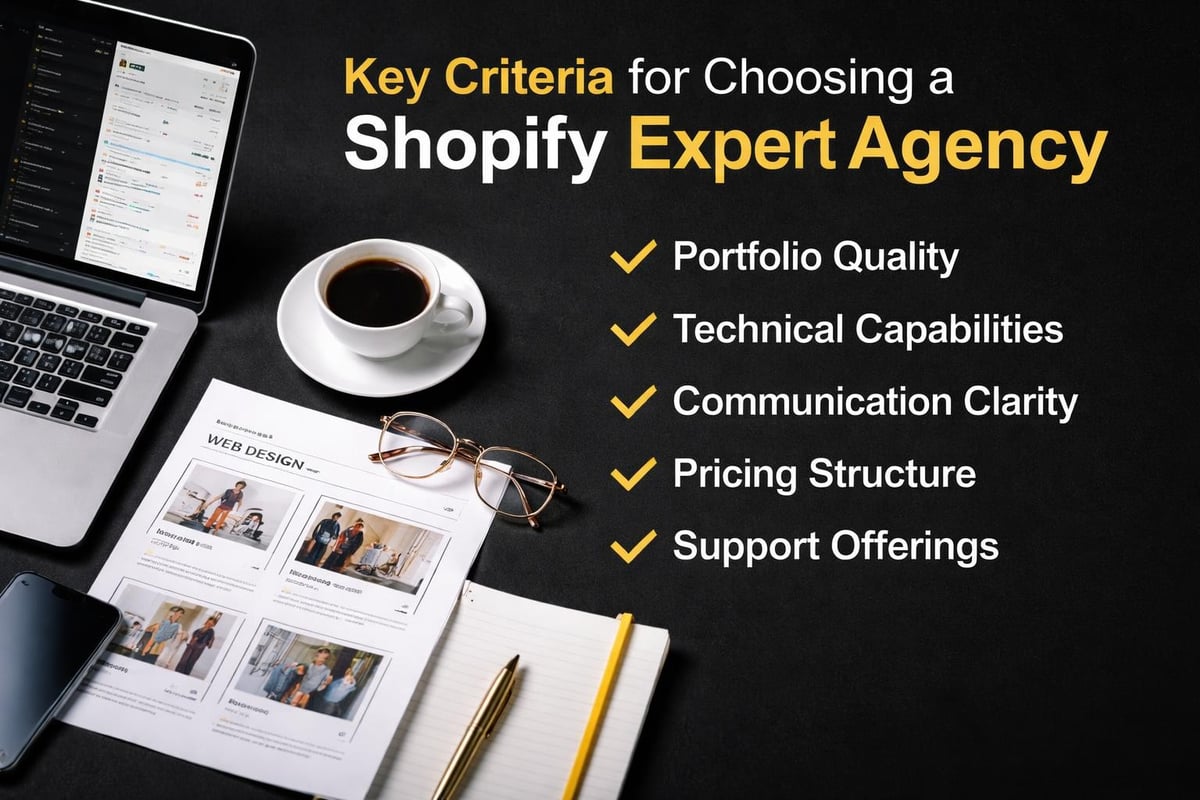
Portfolio and Case Study Analysis
Review actual client work, not just pretty mockups. Look for stores serving similar markets to yours. An agency that specialises in luxury fashion might not understand the needs of a hardware retailer or subscription box business.
Case studies reveal problem-solving approaches more than beautiful designs. What challenges did the client face? What specific solutions did the agency implement? What measurable results followed?
Ask for client references, particularly businesses of similar size to yours. A glowing testimonial from a million-dollar brand doesn't tell you how the agency treats smaller clients with tighter budgets.
Technical Capability Assessment
Request details about their development processes. Do they use version control? How do they handle testing before launch? What's their approach to mobile optimisation?
Understanding their app integration experience matters significantly. Some agencies default to expensive custom development when existing apps would solve the problem at a fraction of the cost. Others recommend app stacks that create ongoing subscription costs without delivering value.
Ask about their knowledge of Shopify’s technical architecture and recent platform updates. The liquid templating language, theme architecture, and API capabilities all impact what's possible within your budget.
Communication and Process Clarity
How clearly do they explain technical concepts? You shouldn't need a computer science degree to understand what they're building for you.
What does their project timeline look like? Be wary of agencies that can't provide specific milestones or delivery dates. Also question those promising complete custom builds in unrealistic timeframes.
Do they offer ongoing support after launch? Different types of specialist services include various post-launch arrangements, from retainer-based support to pay-as-you-go consulting.
Understanding Agency Pricing Models
Pricing varies dramatically across the shopify expert agency landscape.
You'll encounter everything from $2,000 basic builds to $50,000+ enterprise projects for essentially the same platform.
Common Pricing Structures
Fixed-price packages offer predictability and clearly defined deliverables. You know exactly what you're getting and what it costs. The limitation is reduced flexibility if your needs change mid-project.
Hourly billing provides maximum flexibility but can spiral beyond initial estimates. This works better for ongoing optimisation than initial builds. Rates for Australian agencies typically range from $120-250 per hour depending on expertise level and location.
Value-based pricing ties costs to expected business outcomes. Some agencies charge based on projected revenue increases or conversion improvements. This aligns incentives but requires trust and accurate baseline measurements.
Understanding why agencies charge premium rates helps set realistic expectations. Large agencies carry significant overhead. They employ account managers, project managers, designers, developers, and quality assurance specialists. That structure supports enterprise clients but creates bloat for small businesses.
What You're Actually Paying For
Your investment covers more than just development hours.
Good agencies provide strategic guidance that prevents expensive mistakes. They'll talk you out of unnecessary features and recommend simpler solutions that achieve the same goals.
You're paying for experience across multiple clients and industries. They've solved similar problems before and know which approaches work.
Support and training ensure you can manage your store confidently after launch. Without this, you're dependent on ongoing agency involvement for minor updates.
Alternative Approaches for Budget-Conscious Businesses
Not everyone needs a full-service shopify expert agency relationship.
Several middle-ground options exist between DIY chaos and enterprise-level agency partnerships.
Streamlined Agency Models
Newer agency models focus exclusively on efficient delivery for small businesses. These operations strip away account management overhead and lengthy discovery processes in favour of templated workflows and clear deliverables.
For small Australian eCommerce businesses launching their first Shopify store, my core Shopify package is designed to cover everything a new eCommerce business needs to launch within four weeks with clarity, momentum, and a clear strategy. No agency bloat or missing fundamentals. It includes the tools and integrations required to sell physical products, digital products, subscriptions, collect product reviews, or run a dropshipping store.
This approach suits businesses that need professional implementation but can't justify $20,000+ price tags for relatively straightforward stores.
Freelance Shopify Experts
Individual contractors often provide excellent value for specific technical challenges. They carry minimal overhead and typically charge less than agencies.
The tradeoff involves reduced capacity and potential availability issues. Freelancers juggle multiple clients and may not offer the same structured processes as agencies.
Hybrid DIY with Consulting
Launch the basics yourself using Shopify's tools and themes. Then engage an expert for specific challenges or optimisation improvements once you're generating revenue.
This staged approach preserves capital during validation phases while ensuring you get professional help when it matters most.
Red Flags When Evaluating Agencies
Certain warning signs indicate an agency relationship will likely disappoint.
Overpromising Results
Any shopify expert agency guaranteeing specific sales figures or conversion rates should trigger skepticism. Too many variables outside their control affect these outcomes.
They can influence your conversion rate through better design and user experience. They cannot control your traffic quality, product-market fit, pricing strategy, or competitive landscape.
Lack of Transparency
Vague proposals without specific deliverables make accountability impossible. You should know exactly what features, pages, and integrations you're getting.
Reluctance to discuss their development process or provide client references suggests they're hiding something. Established agencies with solid track records happily connect prospects with past clients.
Pushing Unnecessary Complexity
Some agencies recommend expensive custom solutions for problems that existing apps solve perfectly well. This generates higher project fees but doesn't serve your interests.
Question any proposal that seems overly complicated for your business size and needs. Shopify’s app ecosystem offers solutions for most common requirements without custom development.
Poor Communication During Sales Process
If they're unresponsive or unclear before they have your money, imagine the experience after signing a contract. Initial responsiveness usually represents their best behaviour.
Platform Knowledge Beyond the Basics
Working with a shopify expert agency should elevate your understanding of what Shopify can actually do.
Many business owners underutilise platform capabilities simply because they don't know they exist.
Advanced Shopify Features Worth Understanding
Metafields allow you to add custom data to products, collections, and other objects. This enables functionality like specification tables, care instructions, or custom product badges without app dependencies.
Shopify Flow automates repetitive tasks like tagging customers, updating inventory, or triggering email sequences. It's included in Shopify Plus but increasingly accessible to standard plans through app integrations.
Headless commerce separates your storefront from Shopify's backend, enabling completely custom frontend experiences. This suits businesses with unique design requirements or those managing multiple sales channels through a single inventory system.
Most small Australian businesses don't need these advanced capabilities immediately. But understanding they exist helps you plan for growth and make informed decisions about your technology stack.
Performance Optimisation Expertise
Shopify’s technical performance directly impacts conversion rates and search rankings. A knowledgeable agency optimises image loading, minimises app bloat, and structures code efficiently.
Google's Core Web Vitals now factor significantly into search rankings. Stores that load slowly or shift layout during loading face ranking penalties. Expert agencies implement lazy loading, proper image sizing, and efficient script management to maintain fast load times.
SEO Foundations Built In
Proper Shopify SEO implementation goes beyond basic title tags and meta descriptions. It includes structured data markup, proper URL structures, canonical tag management, and internal linking strategies.
An experienced shopify expert agency builds these foundations during initial development rather than treating them as afterthoughts. Retrofitting SEO into a poorly structured store costs more and delivers less than building it correctly from the start.
Ongoing Support and Growth Planning
The agency relationship shouldn't end at launch.
Your store needs regular updates, security patches, and performance monitoring to maintain optimal function.
Maintenance and Update Management
Shopify releases platform updates regularly. Themes and apps require periodic updates to maintain compatibility and security. Someone needs to test these updates before implementing them on your live store.
Some agencies include maintenance in ongoing retainer arrangements. Others offer it as needed on hourly billing. Determine the arrangement before launch to avoid unexpected costs.
Conversion Rate Optimisation Services
Initial launches rarely achieve optimal conversion rates immediately. Advisory services from experienced agencies identify friction points and improvement opportunities based on actual user behaviour data.
This might include checkout process refinement, product page layout testing, or navigation structure improvements. Small changes often deliver significant revenue increases when based on proper analysis rather than guesswork.
Strategic Growth Planning
As your business evolves, your store requirements change. A good agency partner helps you plan feature additions, new product launches, and expansion into new markets without creating technical debt.
They should advise on when to upgrade plans, which apps to add or remove, and how to structure your store for international expansion if that's part of your roadmap.
Making the Final Decision
Choosing a shopify expert agency ultimately comes down to alignment between your needs, budget, and their capabilities.
Create a shortlist of three to five potential partners. Request detailed proposals from each, ensuring they address your specific requirements rather than sending generic templates.
Compare proposals based on value delivered, not just price. The cheapest option often proves most expensive when factoring in missed opportunities, technical debt, and remedial work.
Trust your instincts about communication style and cultural fit. You'll be working closely with this team for weeks or months. Personality clashes or communication mismatches create frustration regardless of technical expertise.
Review contracts carefully before signing. Understand what happens if timelines slip, what's included in the quoted price, and how change requests are handled. Clear agreements prevent disputes later.
Finding the right Shopify development partner doesn't require choosing between expensive agency bloat and struggling through DIY tutorials. Small Australian eCommerce businesses deserve efficient, conversion-focused development that respects both your budget and timeline. Kida Digital delivers exactly that through a streamlined four-week process that covers everything from initial setup through launch, with clear pricing and no hidden surprises. If you're ready to build a Shopify store that actually drives sales without the agency markup, let's talk about what that looks like for your business.


Be the first to comment