
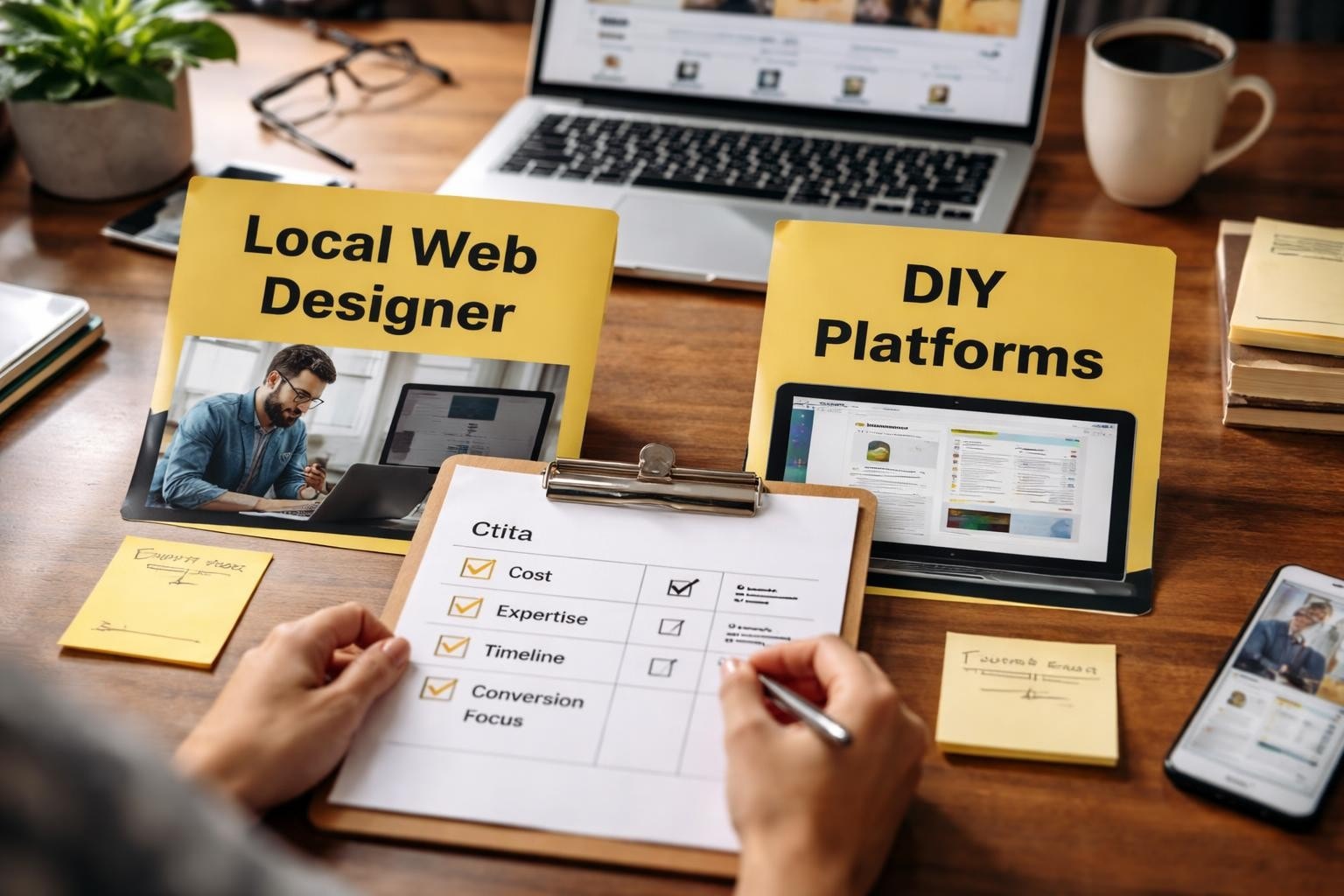
Searching for a website designer near me has become one of the most common queries for small Australian business owners ready to take their eCommerce idea online. The promise of local expertise, face-to-face communication, and someone who understands your market feels comforting in a digital landscape filled with offshore agencies and templated solutions. But the reality of finding the right designer in 2026 requires more than proximity. It demands clarity about what you actually need, what you're willing to invest, and whether local is truly better for your specific situation.
Why Small Businesses Search for Local Website Designers
The appeal of typing "website designer near me" into Google runs deeper than simple geography.
Australian small business owners often crave accountability. When you can meet someone for coffee in your suburb, the relationship feels more tangible. There's comfort in knowing they understand Australian consumer behaviour, GST compliance, and the quirks of shipping within our market.
Local designers offer several perceived advantages:
- Direct communication without timezone challenges
- Face-to-face meetings for complex discussions
- Understanding of local market trends and customer expectations
- Potential for ongoing support with quick response times
- Personal accountability and reputation within your community
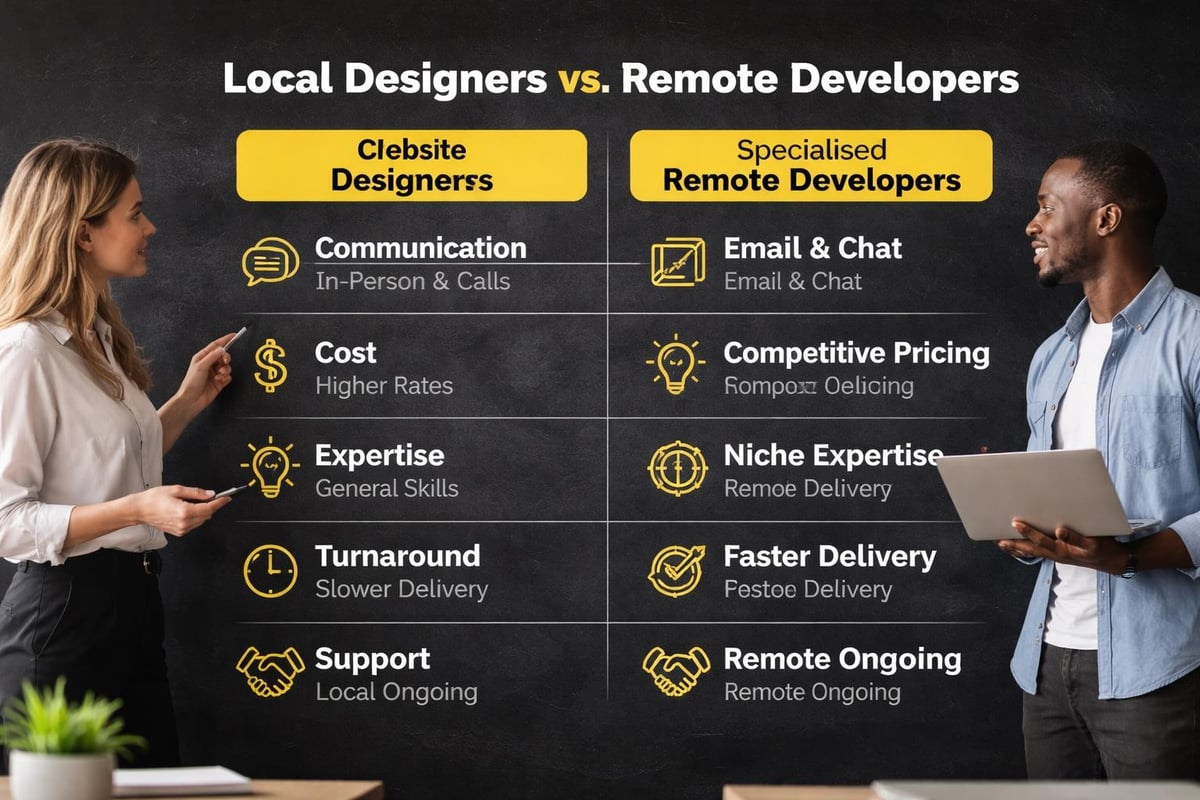
The benefits of choosing a local website designer extend beyond convenience. They often include better communication flow and faster turnaround on urgent requests.
But proximity doesn't automatically equal quality or value. Many small businesses discover that their local options charge premium rates for basic templates, lack eCommerce specialisation, or can't deliver the conversion-focused strategy needed to compete online.
The question becomes less about location and more about capability.
What Actually Matters When Choosing a Website Designer
Location ranks surprisingly low on the list of factors that determine whether your eCommerce store succeeds.
Your designer's understanding of conversion optimisation matters infinitely more than their postcode. A beautifully designed store that doesn't convert visitors into customers wastes every dollar you invested.
In 2026, the markers of quality website design have shifted. Templates no longer carry stigma when implemented strategically. Speed, mobile responsiveness, and checkout friction matter more than custom graphics.
Technical Competency Over Creative Flair
Your website designer needs to speak the language of sales, not just aesthetics.
They should ask about your average order value, your customer journey, and your abandoned cart rate before they ask about colour preferences. How to choose a web design company that understands your customers emphasises this customer-first approach.
Core competencies to verify:
- Platform expertise specific to eCommerce (Shopify, WooCommerce, or similar)
- Proven understanding of checkout optimisation
- Mobile-first design philosophy
- Page speed optimisation knowledge
- Integration capability with payment gateways, shipping apps, and marketing tools
- SEO fundamentals built into structure
Ask to see conversion rate data from previous projects. A designer who can't speak to metrics probably won't build with them in mind.
Portfolio Quality vs Portfolio Quantity
Browse their work with a critical eye focused on functionality, not just appearance.
Click through their previous eCommerce projects as if you're a customer trying to buy. How many clicks to checkout? Does the mobile menu make sense? Can you find product information quickly?
Beautiful homepage designs mean nothing if the product pages confuse buyers or the cart experience creates friction. Choosing a website designer requires evaluating real performance, not just visual appeal.
The Real Cost of Website Designers in Australia
Pricing for website design in Australia spans from $500 DIY-assisted builds to $50,000+ agency packages.
Most small eCommerce businesses sit somewhere between these extremes, typically budgeting $3,000 to $15,000 for their initial store build. Geography does influence these rates, with metropolitan designers often charging 20-40% more than regional specialists.
| Designer Type | Typical Range (AUD) | Timeline | Best For |
|---|---|---|---|
| Freelance Local | $2,000 – $8,000 | 4-12 weeks | Simple stores with basic needs |
| Local Agency | $8,000 – $30,000 | 8-16 weeks | Established businesses needing custom features |
| Specialised Remote | $3,000 – $12,000 | 2-6 weeks | eCommerce-focused builds with clear scope |
| DIY Platforms | $500 – $2,000 | Ongoing | Very small budgets, willing to learn |
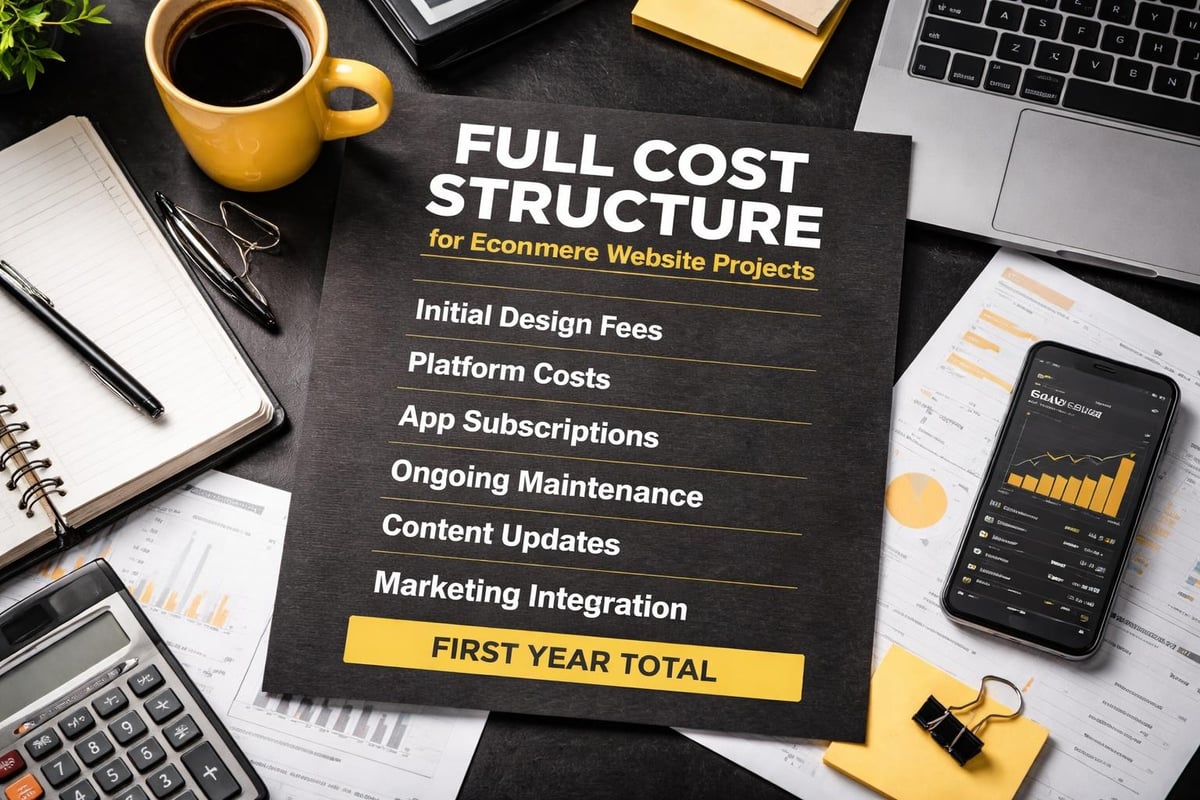
The hidden costs matter more than the quoted price. Ongoing support, content updates, app integrations, and strategy refinement all add to your total investment.
Many businesses searching for a website designer near me focus exclusively on upfront cost, then face sticker shock when they need simple changes post-launch. Clarify ongoing support structures before signing anything.
Some designers charge monthly retainers. Others offer pay-per-update models. A few include limited support in their initial package. Know which model you're buying into and whether it matches your technical comfort level.
When Local Doesn't Actually Matter
Remote collaboration tools in 2026 have eliminated most advantages of geographical proximity.
Screen sharing, project management platforms, and asynchronous communication often work better than scheduled in-person meetings. Small business owners running their operations rarely have time for regular face-to-face check-ins anyway.
The designer who truly understands eCommerce conversion strategy matters more than the one you can meet for lunch. Specialisation trumps location every single time.
Consider these scenarios where remote specialists deliver better outcomes:
Niche expertise: Finding a Shopify expert who's built 50+ stores beats finding a generalist web designer down the street who's done three.
Proven processes: Established developers with streamlined systems often deliver faster than local designers juggling multiple disciplines.
Value positioning: Specialists can often offer better pricing because they work efficiently within their expertise rather than learning on your project.
If you're launching a Shopify store, understanding the business model of eCommerce matters more than your designer's suburb. The platform, strategy, and execution determine success.
Questions to Ask Before Hiring Any Website Designer
Your initial conversation reveals more than any portfolio review.
A quality designer asks as many questions as they answer. They want to understand your business model, target customer, competitive landscape, and growth plans before discussing design at all.
Discovery Questions They Should Ask You
- Who is your ideal customer and what problem do you solve for them?
- What's your average order value and pricing strategy?
- How will customers find your store initially?
- What makes you different from competitors?
- What's your realistic timeline to launch?
If they jump straight to "what colours do you like," walk away. They're thinking about aesthetics, not business outcomes.
Questions You Should Ask Them
About process:
- What does your typical project timeline look like?
- How do you handle revisions and feedback?
- What happens if we need to pause the project?
About outcomes:
- What conversion rates do similar stores in my industry typically achieve?
- How do you optimise checkout flow?
- What metrics do you track post-launch?
About ongoing relationship:
- What support is included after launch?
- How do you handle urgent issues?
- Can I make basic content updates myself?
The answers matter less than their willingness to discuss them transparently. Evasive responses signal future communication problems.
DIY Platforms vs Professional Designers
Many small businesses weighing the search for a website designer near me also consider DIY options.
Understanding what website builders are helps frame this decision. Modern platforms like Shopify offer impressive capabilities for non-technical users.
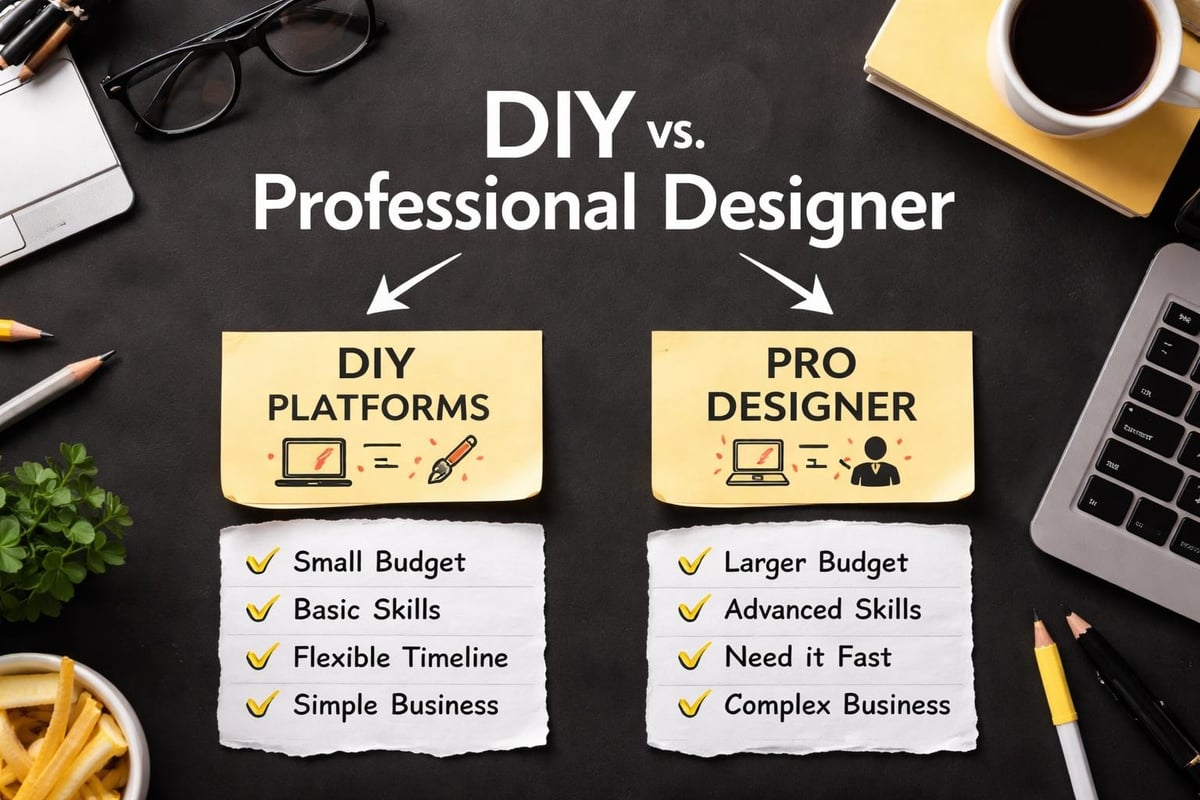
The DIY path works for:
- Very tight budgets under $2,000 total
- Simple product catalogues with minimal customisation
- Business owners willing to invest significant learning time
- Testing product-market fit before major investment
Professional designers make sense for:
- Businesses ready to scale beyond test phase
- Complex product requirements or custom functionality
- Owners who value their time higher than designer fees
- Situations requiring strategic eCommerce guidance
The middle ground increasingly makes sense for Australian small businesses. Starting with a professionally built foundation, then managing content and minor updates yourself, combines the best of both approaches.
For businesses moving beyond DIY experiments, Done-for-you Shopify Builds provide the strategic foundation without agency bloat or missing fundamentals. This approach delivers everything needed to launch within four weeks while maintaining clarity and momentum.
Platform Choice Shapes Designer Selection
Your platform decision should precede your designer search, not follow it.
If you're selling physical products online in 2026, Shopify dominates the Australian eCommerce landscape for small businesses. WooCommerce serves businesses already invested in WordPress. Custom platforms rarely make sense at small business scale.
Choosing the right website builder involves evaluating ease of use, scalability, and long-term costs.
Choose your platform first, then find a designer who specialises in it. A Shopify expert can build your store in two weeks. A generalist web designer might take three months learning the platform on your budget.
Platform-specific expertise delivers:
- Faster build times due to familiarity
- Better app recommendations from experience
- Troubleshooting knowledge from solving similar issues
- Understanding of platform limitations before they become problems
- Access to proven templates and starting points
The "website designer near me" who works across six different platforms lacks the depth of the specialist who's built 100 Shopify stores. Depth beats breadth in eCommerce development.
Red Flags in Website Designer Proposals
Certain warning signs indicate trouble ahead regardless of location or price.
Vague timelines signal disorganisation. "4-6 weeks" differs vastly from "launched by May 15th." Professionals commit to dates.
No questions about your business model reveals surface-level thinking. Designers focused on appearance over strategy can't deliver conversion-focused stores.
Reluctance to show similar projects often means they don't have relevant experience. Every portfolio has gaps, but complete absence in your category warrants concern.
Ownership ambiguity around your final files, content, and store access creates post-launch headaches. You should own everything upon final payment.
No discussion of SEO fundamentals means you'll launch invisible to search engines. Basic structure, page speed, and mobile optimisation should be standard, not add-ons.
Unlimited revisions sounds generous but often means undefined scope and extended timelines. Healthy projects have structured feedback rounds.
Trust your instinct on communication style. If they're difficult to reach or unclear during sales conversations, they won't improve after you've paid.
Template-Based Builds vs Custom Design
The stigma around templates has disappeared among savvy eCommerce operators.
In 2026, premium Shopify themes offer sophisticated functionality that custom builds required five years ago. Choosing a website template with strategic customisation delivers better value than custom design for most small stores.
| Approach | Timeline | Cost Range | Best Use Case |
|---|---|---|---|
| Premium Template (customised) | 2-4 weeks | $3,000-$8,000 | Clean, proven starting point needing brand adaptation |
| Heavily Modified Template | 4-8 weeks | $6,000-$15,000 | Unique requirements with some custom features |
| Fully Custom Design | 8-16 weeks | $15,000-$50,000 | Established brands with specific UX needs |
Your first store rarely needs custom design. It needs to launch, test your market, and start generating revenue. Perfectionism kills more eCommerce businesses than imperfect launches.
Template-based builds allow faster iteration based on real customer behaviour rather than assumptions. You can invest in custom development once you've proven your business model and understand what actually needs customisation.
The Conversion-Focused Designer Difference
Most website designers create pretty pages. Conversion-focused designers create selling systems.
The difference shows immediately in their approach. They discuss your product margins, shipping strategy, and customer acquisition cost before touching design software.
They build stores assuming visitors are sceptical, distracted, and ready to abandon at any friction point. Every element serves a strategic purpose, not just aesthetic appeal.
Conversion-focused designers prioritise:
- Clear value propositions above the fold
- Trust signals placed at decision points
- Streamlined checkout with minimal fields
- Mobile-first experience for thumb-friendly navigation
- Page speed optimisation for impatient browsers
- Strategic placement of social proof and urgency
A conversion rate increase from 1.5% to 2.5% generates 67% more revenue from the same traffic. This matters infinitely more than your homepage hero image.
When searching for a website designer near me, ask about their approach to Shopify website building with conversion as the primary metric. Their answer reveals whether they think like a designer or a business strategist.
Timeline Expectations for Website Projects
Australian small businesses consistently underestimate how long quality website builds require.
A basic 5-10 page Shopify store with standard functionality needs minimum three weeks when executed properly. This assumes you provide content, product information, and timely feedback.
Complex stores with custom features, extensive product catalogues, or integration requirements extend to 8-12 weeks minimum. Agencies quoting 2-3 weeks for these builds either cut corners or will miss deadlines.
Realistic timeline breakdown:
- Discovery and planning (3-5 days): Understanding requirements, defining scope, creating strategic direction
- Design concept (5-7 days): Initial layouts, homepage design, key page templates
- Feedback and revision (3-5 days): Your review, requested changes, refinement
- Build and development (7-10 days): Full store construction, app integration, functionality testing
- Content population (5-7 days): Product uploads, page content, policy pages, navigation
- Testing and refinement (3-5 days): Cross-browser testing, mobile optimisation, checkout flow testing
- Launch preparation (2-3 days): Final reviews, domain connection, SSL setup, go-live
Total realistic timeline for standard eCommerce store: 4-6 weeks from kickoff to launch.
Your responsiveness directly impacts timeline. Designers can't move forward without your feedback, content, and decisions. Delayed responses extend projects regardless of their efficiency.
Support and Maintenance Post-Launch
The relationship with your website designer shouldn't end at launch.
Stores require ongoing attention: app updates, security patches, content adjustments, seasonal promotions, and performance optimisation. Clarifying post-launch support prevents future frustration.
Support models to consider:
- Included support period: 30-60 days of included assistance post-launch for bug fixes and questions
- Monthly retainer: Ongoing relationship with allocated hours for updates and improvements
- Pay-per-task: You pay for specific requests as they arise
- Self-managed with emergency support: You handle routine updates, call for major issues
None of these models is inherently better. The right choice matches your technical comfort and available time.
Some designers provide training so you can handle basic content updates independently. This saves money long-term and gives you control over routine changes. Understanding Shopify store management helps you evaluate what you can realistically handle versus what requires professional assistance.
Making the Final Decision
Your choice of website designer shapes your eCommerce trajectory more than most business decisions.
Price matters, but value matters more. The cheapest option rarely delivers the best outcome. The most expensive doesn't guarantee quality.
Evaluate based on:
Strategic alignment: Do they understand eCommerce, not just web design?
Communication clarity: Can they explain technical concepts in plain language?
Relevant experience: Have they built stores similar to yours?
Realistic expectations: Do their timelines and promises feel grounded?
Cultural fit: Do you trust them and enjoy working with them?
The search for a website designer near me often begins with geography but should end with capability. Location creates convenience. Expertise creates results.
Finding the right website designer requires looking beyond proximity to focus on conversion expertise, platform specialisation, and strategic thinking. Whether you choose local or remote, template-based or custom, the designer who understands eCommerce fundamentals will serve your business far better than the prettiest portfolio. If you're ready to launch a conversion-focused Shopify store without agency bloat or DIY overwhelm, Kida Digital specialises in streamlined builds that get Australian small businesses online in four weeks with everything they need to start selling.


Be the first to comment