

Building an online store doesn't need to take months or cost five figures. If you're a small Australian business owner ready to sell online, knowing how to make a Shopify store properly gives you control over your launch timeline and budget. This guide strips away the fluff and walks you through what actually matters: getting your store live, looking professional, and ready to take orders.
Understanding What You Actually Need Before You Start
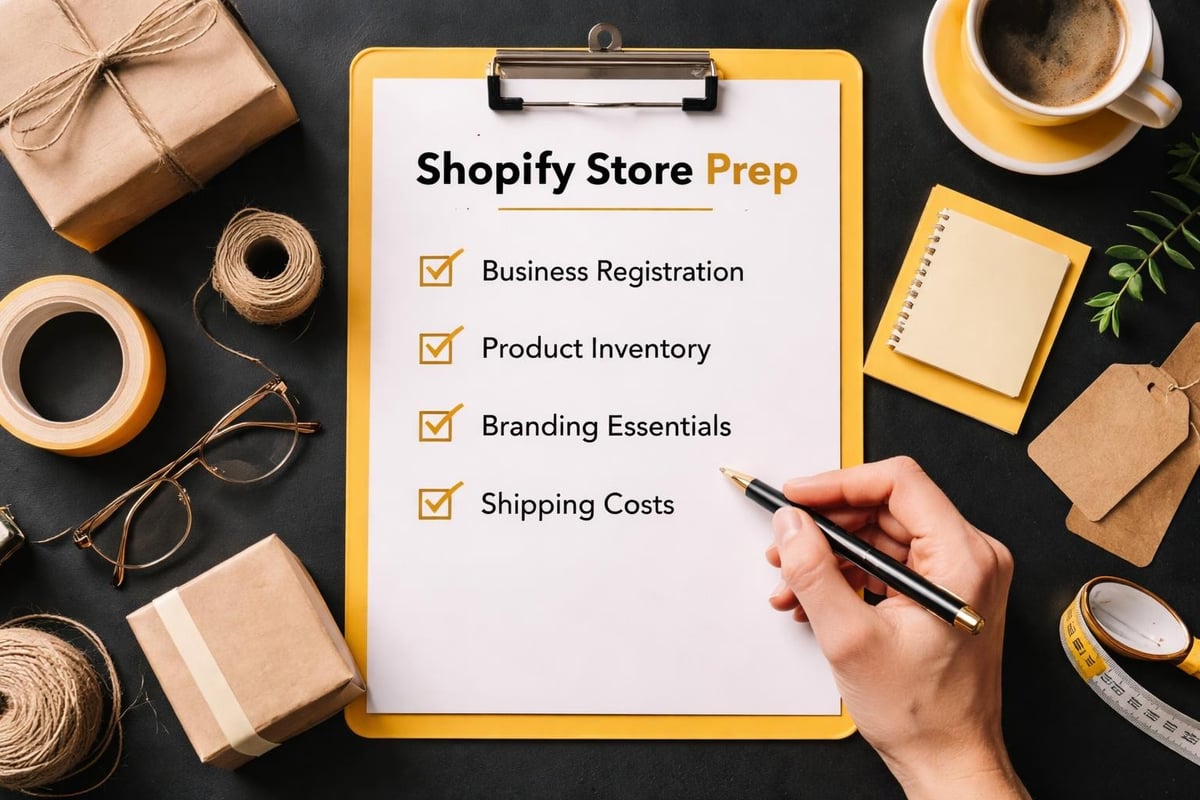
Before you touch Shopify's dashboard, get clear on three fundamentals.
First, know what you're selling and to whom. A store selling handmade candles to wellness enthusiasts needs different functionality than one dropshipping phone accessories. Your product type dictates your apps, shipping setup, and store structure.
Second, understand your business setup. You'll need an Australian Business Number for tax purposes and proper accounting from day one. Shopify connects with Xero and other platforms, but you need your business structure sorted first.
Third, define what success looks like in your first 90 days. According to Shopify's 2025 commerce trends report, new stores that set specific revenue targets within their first quarter are 3.2 times more likely to still be trading after 12 months.
What you need before you make a Shopify store:
- ABN and business name registered
- Product photos (even basic iPhone shots work initially)
- Product descriptions written or drafted
- Business bank account set up
- A rough idea of your shipping zones and costs
- Brand colors and logo (doesn't need to be fancy)
Most Australian business owners overthink this stage. You don't need perfect branding or a complete product range. You need enough to launch, test, and learn.
Creating Your Shopify Account and Picking Your Plan
Visit Shopify's website and start your free trial. You get three days without entering payment details, which is enough time to explore the platform and decide if it fits your needs.
Enter your email, create a password, and answer Shopify's brief questionnaire about your business. These answers help Shopify suggest relevant features, but you're not locked into anything.
Shopify's Australian pricing for 2026:
| Plan | Monthly Cost (AUD) | Best For |
|---|---|---|
| Basic | $49 | New stores with under 50 products |
| Shopify | $119 | Growing stores needing better reporting |
| Advanced | $469 | Established stores with complex shipping |
The Basic plan covers everything you need to make a Shopify store that converts. Don't overspend on features you won't use in your first six months.
According to TechRadar’s comprehensive Shopify review, the platform processed over $235 billion in sales globally in 2025, with Australian merchants representing one of the fastest-growing segments.
Once you've selected your plan, you'll choose your store's URL. This becomes yourname.myshopify.com initially. You can connect a custom domain later (highly recommended for credibility).
Setting Up Your Store's Foundation
Your first job inside Shopify is configuring the basics that affect every page and transaction.
Navigate to Settings in your Shopify admin. Start with Store Details. Add your business name, contact email, and Australian address. This information appears on invoices, shipping labels, and customer communications.
Move to Payments next. Shopify Payments is the simplest option for Australian stores, with competitive rates and no monthly fees. It processes payments directly without third-party gateways.
Shopify Payments transaction fees (2026):
- Basic plan: 2.4% + 30¢ per transaction
- Shopify plan: 2.15% + 30¢ per transaction
- Advanced plan: 1.85% + 30¢ per transaction
Alternatively, you can use PayPal, Afterpay, or other gateways, though Shopify charges an additional 2% fee for external payment processors on top of their fees.
Configure your shipping zones under Settings > Shipping and delivery. Create zones for Australian metro, regional, and international if relevant. Research Australia Post rates beforehand so your shipping costs are accurate. Nothing kills conversions faster than surprise shipping charges at checkout.
Set your tax settings next. Enable automatic Australian GST calculation under Settings > Taxes and duties. If you're GST-registered, Shopify handles the calculations. If not, you still need to track sales for when you hit the $75,000 threshold.
Choosing and Customizing Your Theme
Your theme determines how your store looks and functions. Shopify's theme store offers free and paid options, but don't assume expensive equals better.
The free Dawn theme launched in 2023 outperforms many premium themes in speed and conversion optimization. It's clean, mobile-responsive, and includes all essential features. Unless you have specific design requirements, start here.
To customize your theme, go to Online Store > Themes > Customize. You'll enter Shopify's visual editor where you can modify layouts without touching code.
Focus on these high-impact areas first:
- Header: Add your logo and simplify navigation to 4-5 main categories maximum
- Homepage: Feature your best-selling or hero products with clear call-to-action buttons
- Footer: Include essential links (shipping, returns, contact)
- Colors and fonts: Match your brand but prioritize readability over creativity
The Coursera guide on setting up Shopify stores emphasizes that successful stores prioritize user experience over visual complexity, particularly for mobile shoppers who represent 68% of Australian eCommerce traffic.
When you make a Shopify store, remember that most Australian shoppers browse on mobile devices. Check your customizations on your phone constantly.
Adding Products That Actually Sell
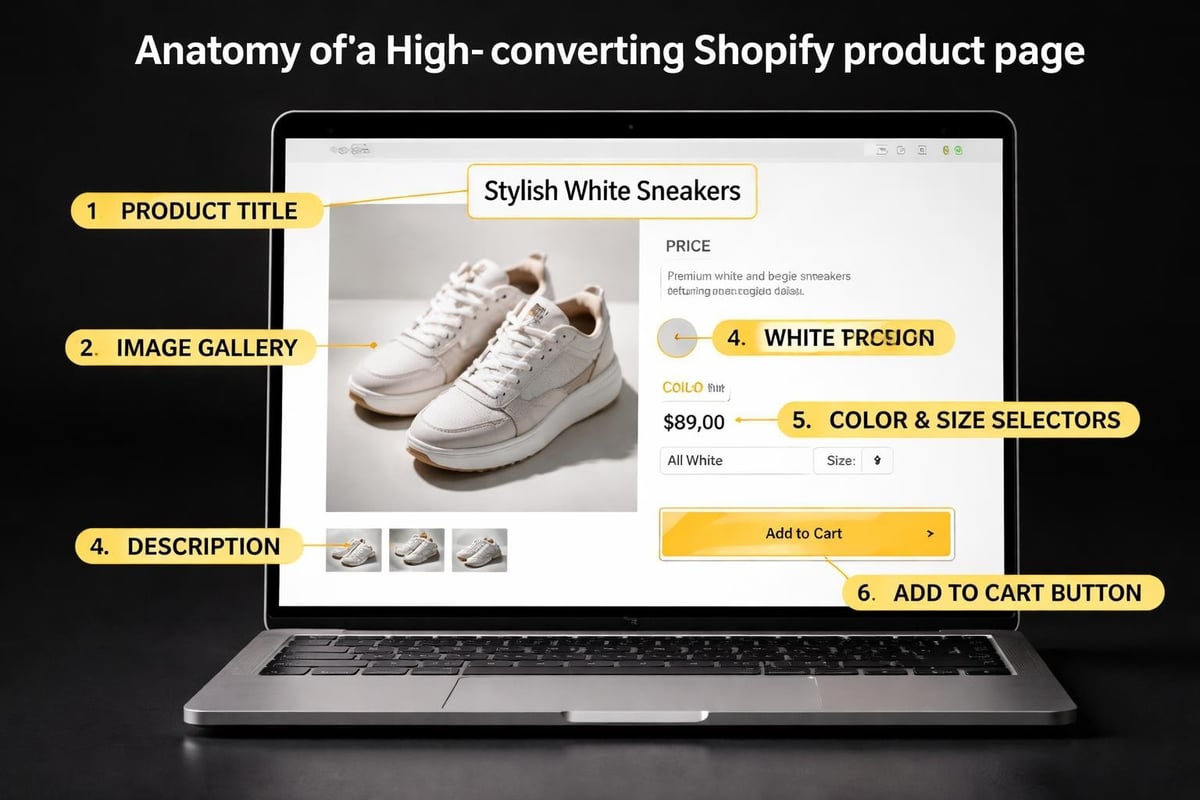
Product pages are where conversion happens or dies. Your job is making purchasing decisions easy.
Navigate to Products > Add product in your Shopify admin. For each product, you'll complete several fields that directly impact sales.
Write product titles that include what the item is and its main benefit or feature. "Organic Lavender Soy Candle – 8 Hour Burn Time" beats "Candle #4" every time.
Product descriptions should address buyer hesitations and highlight benefits. Use bullet points for specifications and short paragraphs for storytelling. Most people scan rather than read, so structure matters more than word count.
Essential product page elements:
- High-quality images (minimum 3 angles)
- Clear pricing with no hidden surprises
- Accurate stock levels
- Estimated delivery timeframes
- Size charts or dimension details where relevant
- Customer reviews once you have them
Upload your product images. Shopify recommends 2048 x 2048 pixels for optimal zoom functionality. Consistent backgrounds across products create a professional appearance even with DIY photography.
Set your pricing carefully. Include your cost, desired margin, Shopify fees, payment processing fees, and shipping costs in your calculations. Many new store owners underprice and struggle to become profitable.
Add inventory tracking under the product's "Inventory" section. Shopify can track stock levels across multiple locations and stop selling when items are out of stock.
Configure variants if your product comes in different sizes, colors, or options. Each variant can have its own SKU, price, and inventory level.
Installing Essential Apps Without Overdoing It
Shopify's App Store contains thousands of apps, but most new stores need fewer than five to start.
Here's what actually matters when you make a Shopify store:
Product reviews: Judge.me or Loox let customers leave reviews, building social proof. Reviews increase conversion rates by an average of 18% according to Shopify's 2025 merchant data.
Email marketing: Klaviyo or Shopify Email helps you capture subscriber emails and send abandoned cart reminders. Email delivers $42 for every dollar spent for eCommerce brands.
SEO optimization: Plug in SEO or SEO Manager help optimize your product pages for Google. Organic traffic costs nothing and compounds over time.
Avoid installing apps "just in case" you need them later. Each app adds code to your store, potentially slowing load times. Speed directly affects conversion rates, with every second of delay costing you sales.
Test apps during your trial period, but remove anything you're not actively using before launch.
For detailed guidance on Shopify web development best practices, understanding which apps align with business goals saves time and subscription costs.
Building Your Navigation and Page Structure
Clear navigation helps customers find products and builds trust through accessible policies.
Go to Online Store > Navigation. Create your main menu with product categories, collections, and essential pages. Keep it simple. Seven menu items is the maximum before decision fatigue sets in.
Create these fundamental pages under Online Store > Pages:
- About: Your brand story and why customers should trust you
- Contact: Email, phone, and business hours
- Shipping & Returns: Clear policies prevent customer service headaches
- Privacy Policy: Required by Australian privacy laws
- Terms of Service: Protects your business legally
Use Shopify's policy generators under Settings > Policies to create legally compliant templates. Customize them to reflect your actual practices, particularly around returns and refunds.
Link these pages in your footer menu so they're accessible from every page without cluttering your main navigation.
Collections organize products into browsable categories. Create collections under Products > Collections based on product type, price range, or featured status. Collections improve browsing and help with SEO when named strategically.
Configuring Checkout and Customer Accounts
Shopify's checkout is proven to convert, but you still need to configure it properly.
Under Settings > Checkout, customize your checkout experience. Enable customer accounts if you want repeat purchase data and easier reordering. For one-time purchase products, you might skip this and reduce checkout friction.
Add your refund and privacy policies. These appear as links during checkout and are legally required in Australia.
Configure email notifications under Settings > Notifications. Customize order confirmation, shipping confirmation, and abandoned cart emails to match your brand voice. These automated emails are customer touchpoints that either build confidence or create concern.
Enable abandoned cart recovery. Shopify automatically emails customers who add items but don't complete checkout. This single feature recovers 10-15% of abandoned carts on average.
Set up customer accounts carefully. Some stores benefit from accounts (subscription products, B2B), while others see better conversion with guest checkout. For small business websites, reducing barriers to purchase often matters more than collecting customer data.
Testing Everything Before Launch
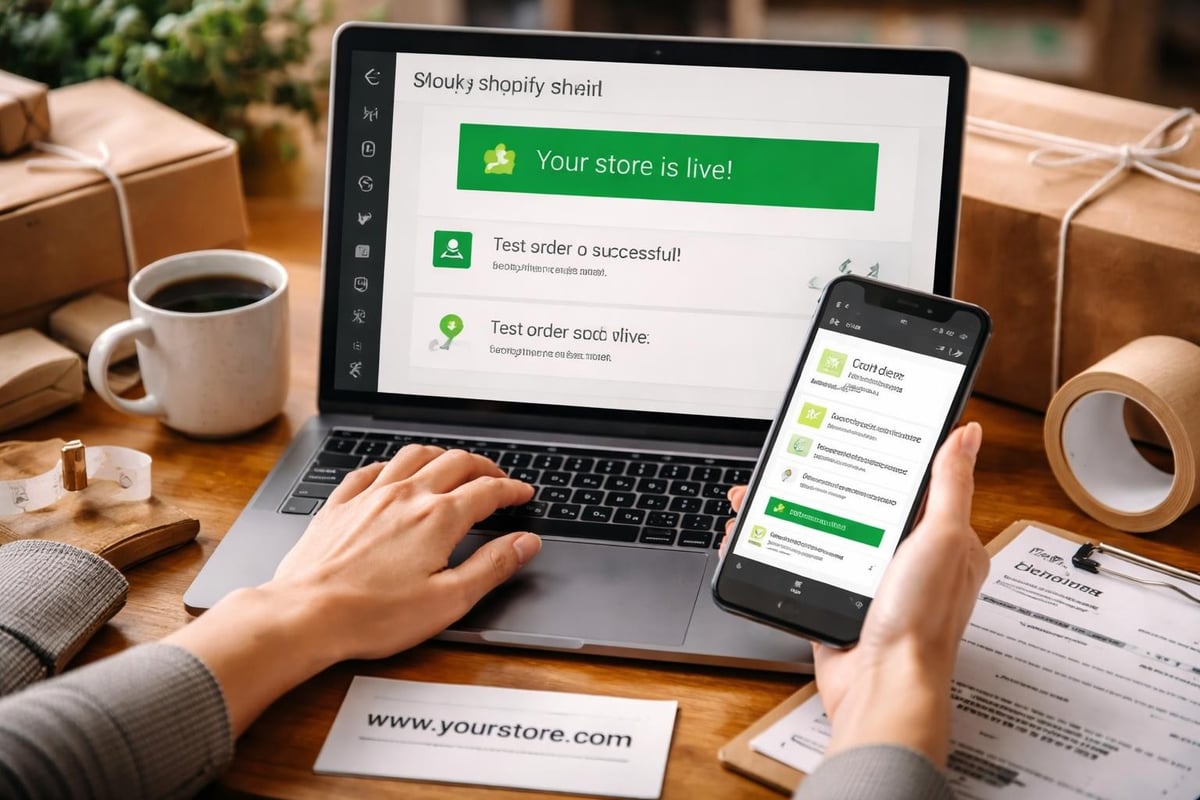
Never launch without thorough testing. Use Shopify's test mode to process fake transactions and verify everything works.
Create a test order by adding products to cart and completing checkout using Shopify's test payment details. Verify you receive the order confirmation email and the order appears in your admin.
Pre-launch testing checklist:
- Process test orders on desktop and mobile
- Check all email notifications arrive and display correctly
- Verify product images load quickly on mobile
- Test navigation from every page
- Confirm shipping calculations are accurate for each zone
- Review all policy pages for typos and accuracy
- Check contact forms submit properly
- Test cart and checkout on different browsers
Ask a friend or family member to browse your store and complete a test purchase. Fresh eyes catch issues you've become blind to.
Review your store on your phone extensively. According to TechRadar’s eCommerce platform comparison, Shopify stores see 71% of traffic from mobile devices, making mobile optimization non-negotiable.
Connecting Your Custom Domain
Your myshopify.com URL works, but a custom domain builds credibility and brand recognition.
Purchase a domain through Shopify or connect one you already own. Australian businesses often benefit from .com.au domains for local trust, though .com works globally.
Under Online Store > Domains, select "Connect existing domain" or "Buy new domain." Shopify guides you through DNS configuration. Changes can take 24-48 hours to propagate fully.
Once connected, set your custom domain as primary. This ensures all traffic, links, and SEO benefits point to your branded URL rather than the Shopify subdomain.
Launching and Your First 48 Hours
When you're ready to make a Shopify store live, remove password protection under Online Store > Preferences. Your store is now public.
Tell everyone. Email your contact list, post on social media, message previous customers if you're transitioning from another platform. Your network provides your first sales and social proof.
Monitor your analytics closely. Shopify's built-in analytics show traffic sources, popular products, and conversion rates. This data guides improvements.
Be prepared for technical questions. Have your shipping and return policies memorized. Respond to customer inquiries within four hours during business days.
Don't expect immediate sales explosions. Most successful Shopify stores build momentum over weeks through consistent marketing, SEO optimization, and customer experience improvements.
Marketing Your New Store
Having a live store means nothing without customers. Marketing starts on day one.
Google Business Profile is free and helps local discovery. List your business with accurate details and link to your Shopify store.
Start posting organic content on Instagram and Facebook. Show products in use, share customer stories, and provide value beyond selling. Engagement builds audiences over time.
Email marketing delivers consistent returns. Offer a 10% discount for email signups and send valuable content weekly, not just promotional emails.
Consider starting a blog within your Shopify store. Content marketing attracts organic traffic and positions you as an expert. One quality blog post per week addressing customer questions compounds over months.
Paid advertising accelerates results but requires budget and expertise. Start small with Facebook ads targeting your specific customer demographic. Test different product images and ad copy to find what converts.
Google Shopping ads put your products directly in search results when people search for what you sell. They're particularly effective for product-focused searches.
According to TechRadar’s guide to creating online stores, successful eCommerce businesses allocate 15-20% of projected revenue to marketing in their first year.
Continuous Improvement After Launch
Your store on launch day is version 1.0. Improvement happens through data and customer feedback.
Review Shopify Analytics weekly. Identify your most-viewed products versus most-purchased products. This gap shows where product pages need work.
Read customer feedback carefully. Common questions indicate missing information on product pages. Complaints highlight opportunities to improve policies or processes.
Monitor your cart abandonment rate. Above 70% suggests checkout friction, unclear shipping costs, or trust issues. Below 60% is solid for Australian stores.
Test changes systematically. Modify one element at a time (product image, description, pricing) and measure impact before making another change.
Add customer reviews as they come in. Social proof builds trust and increases conversion rates measurably. According to Shopify's merchant data, products with reviews convert 58% better than products without.
Speed matters enormously. Use Google PageSpeed Insights monthly to check load times. Remove unused apps, compress images, and choose faster themes if needed.
Consider whether you need professional help. If you've launched DIY but conversions are disappointing, investing in expert support often pays for itself quickly. For Australian businesses looking to optimize existing stores, targeted Shopify optimization packages can identify and fix conversion bottlenecks.
Common Mistakes to Avoid
Learning how to make a Shopify store involves avoiding predictable pitfalls.
Poor product photography kills conversion more than anything else. Invest in decent images even if that means hiring a photographer for a half-day shoot. Clear, well-lit photos on plain backgrounds outperform amateur efforts.
Unclear shipping costs cause cart abandonment. Display shipping estimates on product pages or offer free shipping above a certain threshold. Transparency beats surprises.
Missing contact information destroys trust. Display your email, phone, and business address prominently. Australian consumers expect local support.
Overcomplicated navigation confuses visitors. If customers can't find products within three clicks, you've lost them.
Ignoring mobile experience is suicide when 70% of traffic comes from phones. Test everything on mobile first.
Underpricing products to compete with marketplaces leaves no margin for marketing or growth. Price based on value, not fear.
Launching without policies creates legal risks and customer disputes. Clear, fair policies prevent problems.
Installing too many apps slows your store and creates technical conflicts. Start minimal and add only what proves necessary.
Scaling Beyond Launch
Once you've validated that your store concept works, growth requires different strategies than launching.
Expand your product range based on what's already selling. Customers voting with their wallets tell you what to focus on.
Improve your best performers. If one product drives 40% of revenue, create variations, bundles, or complementary products.
Build email flows beyond welcome sequences. Create post-purchase sequences requesting reviews, winback campaigns for lapsed customers, and product education series.
Invest in professional photography and copywriting for your hero products. Quality compounds as your traffic increases.
Consider wholesale or B2B if you're selling physical products. Shopify handles both retail and wholesale pricing tiers effectively.
Explore new traffic sources systematically. If Instagram works, test Pinterest. If Google Shopping performs, try Google Search ads.
Partner with complementary businesses for cross-promotion. A candle brand partnering with a homewares store benefits both audiences.
Build systems and processes as volume increases. Document your fulfillment workflow, customer service responses, and inventory management to maintain quality as you scale.
When you make a Shopify store with growth in mind, you build foundations that support scaling without requiring complete rebuilds. Small Australian businesses that plan for success from day one avoid expensive migrations and redevelopments later.
Building an online store is achievable when you focus on fundamentals over perfection and action over endless planning. Most Australian business owners who successfully make a Shopify store share one trait: they launched imperfectly and improved through real customer feedback rather than waiting for everything to be flawless. If you need your store built properly from the ground up without the agency premium or DIY learning curve, Kida Digital specializes in conversion-focused Shopify development for small Australian eCommerce businesses, delivering launch-ready stores in four weeks with all the essentials covered.


Be the first to comment