

Your website is the storefront that never closes. For small Australian businesses, it's often the first impression, the sales tool, and the customer service hub all rolled into one. Getting it right matters. But when you're looking for website designers for small business needs, the options can feel overwhelming. Agencies promise the world at eye-watering prices. Freelancers offer affordability but inconsistent quality. DIY platforms tempt you with control but demand time you don't have. The truth is simpler than the noise suggests. You need clarity on what actually matters, what red flags to avoid, and how to match your business needs with the right approach.
What Website Designers for Small Business Actually Do
The term "website designer" covers a broad spectrum of skills and services. Understanding what you're actually buying matters more than most business owners realise.
Some designers focus purely on aesthetics. They create beautiful mockups and visual concepts. Others handle the full build, including functionality, hosting, and ongoing support. Many sit somewhere in between.
Core services typically include:
- Visual design and branding alignment
- User experience planning and layout structure
- Responsive design for mobile and tablet devices
- Content management system setup
- Basic SEO implementation
- Site launch and initial troubleshooting
The best website designers for small business contexts understand conversion principles. They don't just make things look good. They build with your business goals front and centre. Every design decision should drive a specific outcome, whether that's capturing leads, making sales, or building trust with your audience.
The Real Cost of Website Design in 2026
Pricing for website design varies wildly across the Australian market. Understanding what drives these differences helps you evaluate quotes with clearer eyes.
Agencies often charge between $8,000 and $25,000 for small business websites. That price includes multiple team members, project management overhead, and extended timelines. Freelancers typically range from $2,000 to $8,000, with quality and reliability varying significantly. DIY platforms like Wix or Squarespace cost $20 to $60 monthly but demand substantial time investment from you.
For eCommerce businesses specifically, the numbers shift higher. A functional online store requires more complexity than a simple brochure site. You need payment processing, inventory management, shipping calculations, and customer account systems. TechRadar’s guide to small business website builders highlights how platform choice significantly impacts both upfront and ongoing costs.
The hidden costs matter just as much as the quoted price. Ongoing maintenance, security updates, hosting fees, and future modifications all add up over time. Smart business owners evaluate total cost of ownership, not just the initial build price.
Identifying Quality Website Designers for Small Business
Not all designers are created equal. Separating genuine professionals from those just getting started requires knowing what signals to look for.
Portfolio Evidence That Actually Matters
A designer's portfolio tells you more than their marketing copy ever will. Look beyond surface aesthetics to understand their real capabilities.
Check whether their previous work shows diversity or repetition. A designer who builds identical sites for every client lacks strategic thinking. You want someone who tailors solutions to specific business needs.
Look for measurable outcomes in case studies. Did their previous client's traffic increase? Did conversion rates improve? Vague statements about "happy clients" mean nothing without data to back them up. The collection of Shopify case studies demonstrates how real results should be presented with transparency.
Test the actual websites they've built. Click through them on mobile devices. Try to complete a purchase or fill out a contact form. Slow loading times, broken links, or poor mobile experiences reveal sloppy work regardless of how good the screenshots look.
Communication and Process Red Flags
How a designer communicates during the sales process predicts how they'll behave during your project. Pay attention early.
Vague timelines signal disorganisation. Professional designers provide clear project schedules with specific milestones. They might build in buffer time for revisions, but they should articulate the overall timeline with confidence.
Reluctance to discuss strategy before design is a major warning sign. Someone who jumps straight to colour palettes and font choices without understanding your business goals is focused on aesthetics over outcomes. Website designers for small business success ask probing questions about your customers, competitors, and conversion goals before opening design software.
Lack of clear contracts or scope documents creates trouble down the road. Every professional engagement should include written agreement on deliverables, timelines, payment terms, and revision policies. Handshake deals lead to misaligned expectations and frustration on both sides.
Choosing Between Different Designer Types
The right type of designer depends on your specific business context. Each option comes with distinct trade-offs worth understanding clearly.
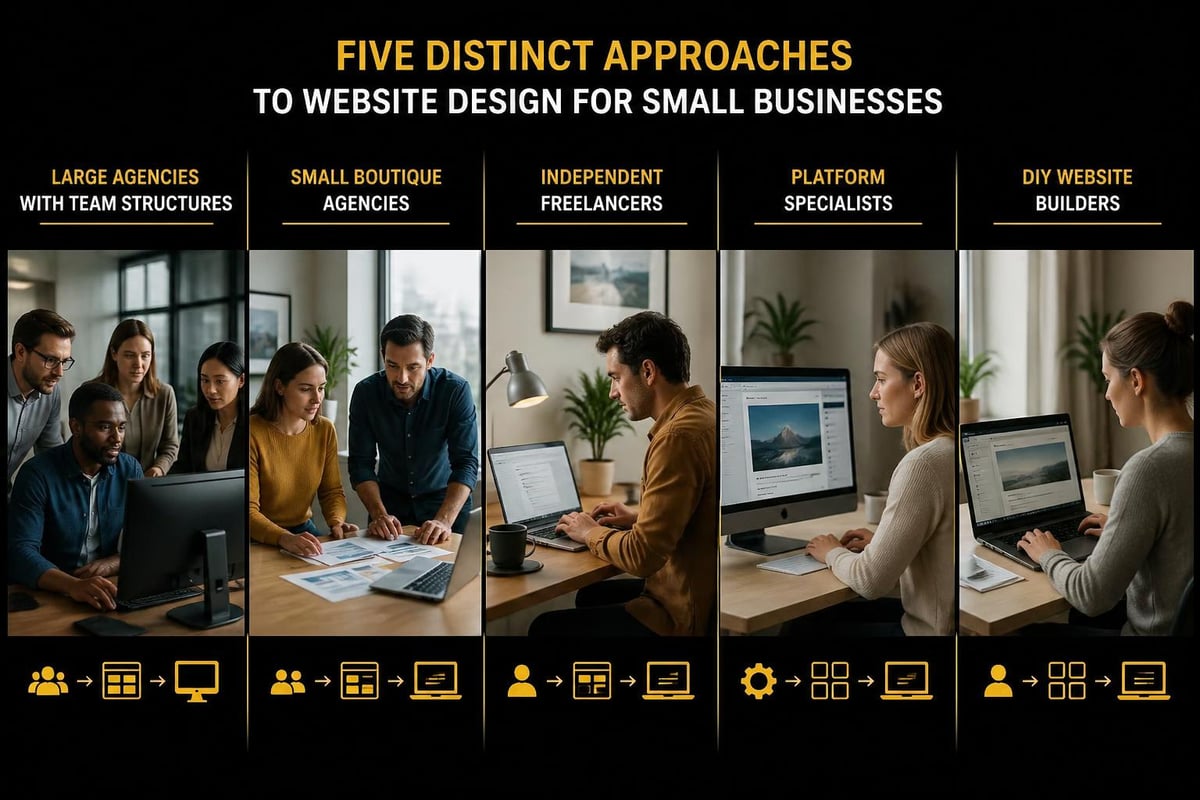
| Designer Type | Best For | Typical Cost | Timeline | Main Advantage | Main Drawback |
|---|---|---|---|---|---|
| Large Agency | Enterprise businesses, complex builds | $15,000-$50,000+ | 3-6 months | Full team resources | High cost, slow process |
| Small Agency | Growing businesses with moderate budgets | $8,000-$20,000 | 2-4 months | Professional structure | Still pricey for basic needs |
| Freelancer | Simple sites, flexible budgets | $2,000-$8,000 | 1-3 months | Lower cost | Inconsistent availability |
| Specialised Developer | eCommerce, specific platforms | $5,000-$15,000 | 1-2 months | Deep platform expertise | Narrower service scope |
| DIY Platform | Tight budgets, simple needs | $300-$1,000/year | Ongoing | Full control | Significant time required |
For eCommerce businesses, platform specialisation matters enormously. A generalist who dabbles in Shopify won't understand its conversion optimisation features the way a dedicated Shopify developer does. When your revenue depends directly on your website's performance, expertise in your specific platform becomes non-negotiable.
When to Consider Specialised Platforms
Not every business needs custom development from scratch. Understanding when pre-built platforms serve your needs saves money and accelerates launch timelines.
For eCommerce specifically, platforms like Shopify handle most technical complexity out of the box. Payment processing, inventory management, tax calculations, and shipping integrations come ready to use. The business eCommerce landscape has shifted dramatically toward these purpose-built solutions rather than custom builds.
The question becomes whether you need a designer who codes everything manually or one who configures and customises proven platforms expertly. For most small Australian businesses, the latter approach delivers better results faster and more affordably.
Custom coding makes sense for truly unique functionality requirements. But the majority of small business needs fit comfortably within what modern platforms offer. Focus your budget on conversion optimisation and strategic implementation rather than reinventing basic eCommerce functionality.
What Great Website Designers for Small Business Prioritise
The best designers focus on business outcomes rather than just visual appeal. Their priorities align with what actually drives results for small businesses.
Mobile Experience as Default
More than 60% of web traffic in Australia now comes from mobile devices. Yet countless small business websites still treat mobile as an afterthought.
Professional designers build mobile-first in 2026. They design for small screens initially, then enhance for larger displays. This approach ensures your most common visitors get the best possible experience.
Business.com’s website design tips emphasise mobile responsiveness as fundamental rather than optional. Touch-friendly buttons, readable text without zooming, and fast loading on cellular connections should be guaranteed, not hoped for.
Test any potential designer's previous work on your own phone. Navigate their portfolio sites using thumbs only. If the experience frustrates you, it will frustrate your customers too.
Page Speed and Technical Performance
Beautiful design means nothing if your site takes eight seconds to load. Visitors abandon slow websites at alarming rates, usually within three seconds of landing.
Competent designers optimise images, minimise code bloat, and implement caching strategies. They understand that technical performance directly impacts both user experience and search engine rankings.
Ask potential designers about their approach to performance optimisation. Vague answers like "we make sure sites load quickly" aren't good enough. Look for specific mentions of image compression, lazy loading, content delivery networks, or performance testing tools.
The SEO optimisation fundamentals that drive organic traffic depend heavily on technical performance. Search engines prioritise fast, well-structured sites over slow ones regardless of how attractive they appear.
Strategic Questions Before Hiring
Smart hiring starts with asking the right questions. The answers reveal far more about a designer's capabilities than their sales pitch ever will.
Ask these questions during initial conversations:
- What specific results have you achieved for previous clients in my industry?
- How do you approach mobile responsiveness and page speed optimisation?
- What happens if I need changes or support after launch?
- How do you handle content creation and copywriting?
- What metrics do you track to measure website success?
- Can you walk me through your typical project timeline?
- How do you handle scope changes or additional requests mid-project?
Pay close attention to how confidently they answer each question. Hesitation or deflection suggests gaps in their process or experience.
Understanding Post-Launch Support
The relationship with your website designer shouldn't end at launch. Ongoing support structures matter tremendously for long-term success.
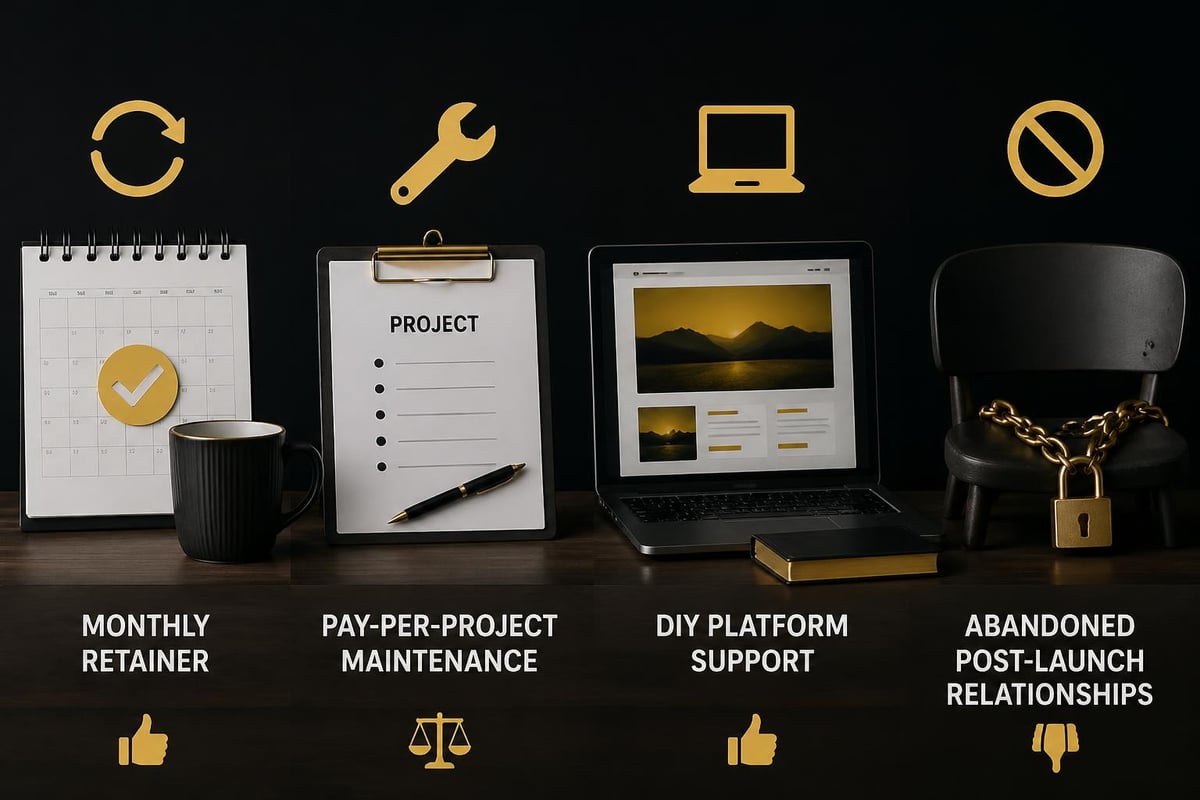
Some designers offer maintenance packages. Others hand over the keys and disappear. Neither approach is inherently wrong, but you need clarity upfront about what happens after launch.
Monthly retainer arrangements work well when you anticipate regular updates or modifications. Per-project billing suits businesses with occasional needs. DIY platforms provide ongoing support through help documentation and customer service teams.
For eCommerce businesses selling through Shopify or similar platforms, having access to someone who understands the specific system saves enormous frustration when issues arise. Understanding why agencies charge premium rates for Shopify sites reveals both the complexity involved and where alternatives offer better value.
The DIY Alternative Reality
Website builders have improved dramatically in recent years. They promise small business owners complete control without designer fees. The reality proves more complicated than the marketing suggests.
When DIY Actually Works
DIY platforms genuinely suit some business contexts. Simple service businesses with straightforward needs often thrive using Squarespace or similar builders.
If you have more time than money, enjoy learning technical systems, and don't need complex functionality, DIY can work well. The best website builders offer increasingly sophisticated features accessible to non-technical users.
The investment shifts from money to time. Building a professional-looking site yourself typically requires 40 to 80 hours of focused work. That assumes you have decent design sense and writing ability. Without those skills, the time investment grows substantially.
For eCommerce specifically, DIY becomes significantly harder. Managing product catalogues, configuring shipping rules, setting up payment gateways, and optimising conversion funnels demands expertise beyond what tutorials typically cover.
The Hidden Costs of Going Alone
Time represents the most obvious cost of DIY approaches. But other expenses hide beneath the surface.
Opportunity cost matters enormously for small business owners. Every hour spent wrestling with website builders is an hour not spent on revenue-generating activities. Your time has value even if you're not paying yourself directly.
Design and copywriting skills don't appear magically. Most DIY sites look amateur because creating professional design and compelling copy requires genuine expertise. Hiring a professional designer for small business needs often costs less than the revenue lost to a poorly executing DIY site.
Technical mistakes can prove expensive. Incorrectly configured SEO settings, poor site structure, or broken functionality damage your online presence in ways that take months to recover from. TechRadar’s guide to editing AI-generated websites highlights how even automated solutions require careful human oversight to avoid costly errors.
Making the Decision With Confidence
Choosing website designers for small business success ultimately requires matching your specific needs with the right approach and provider.
Start by clarifying your actual requirements. Write down what you need your website to accomplish. Be specific about functionality, timeline, and budget constraints. Vague goals lead to unsatisfying outcomes regardless of who you hire.
Get multiple quotes for comparison. But don't simply choose the cheapest option. Evaluate based on total value, including expertise, timeline, support, and likely results. The lowest bid often signals cut corners or hidden costs that emerge later.
Check references thoroughly. Contact previous clients directly. Ask about communication quality, timeline adherence, and post-launch support. Most designers willingly provide references if their previous clients were genuinely satisfied.
For Australian eCommerce businesses specifically, working with someone who understands local market conditions, payment preferences, and shipping logistics matters more than generic web design skills. The Done-for-you Shopify Builds approach at Kida Digital addresses exactly these concerns with a streamlined four-week process that covers everything new eCommerce businesses need to launch successfully.
Trust Your Instincts on Cultural Fit
Technical skills matter enormously. But cultural alignment and communication style impact project success just as much.
If a designer makes you feel stupid for asking questions, walk away. Professional designers welcome client questions as opportunities to educate and align expectations.
Trust matters in creative collaborations. You're inviting someone into your business vision and brand identity. That relationship requires mutual respect and genuine communication.
Pay attention to how potential designers talk about previous clients. Dismissive comments or blame-shifting suggests they'll treat you the same way when challenges arise. Look for designers who take ownership of outcomes and speak respectfully about all relationships.
Platform-Specific Considerations
Different business models demand different platform capabilities. Understanding these distinctions prevents costly mismatches between your needs and your designer's expertise.
Service businesses often thrive on simple content management systems. WordPress, Squarespace, or custom HTML sites serve these needs adequately. The focus stays on clear communication, easy contact methods, and establishing credibility.
eCommerce businesses require dramatically more complexity. Product catalogues, inventory tracking, payment processing, shipping calculations, tax handling, and customer accounts all demand robust infrastructure. Experts weigh in on website builder selection by highlighting scalability and built-in functionality as critical factors.
Subscription businesses need recurring payment systems and customer account management. Membership sites require content restriction and access control features. Each business model brings specific technical requirements that generic website designers may not understand fully.
Choosing website designers for small business eCommerce specifically means finding someone who lives and breathes conversion optimisation on your chosen platform. Surface-level familiarity isn't enough when your revenue depends directly on website performance.
Finding the right website designers for small business needs doesn't require perfect information or unlimited budget. It requires clarity about what matters, honest assessment of your constraints, and willingness to ask probing questions before committing. Whether you choose an agency, freelancer, or specialised developer, the key is matching expertise with your specific business model and growth stage. Kida Digital specialises in conversion-led Shopify development for small Australian eCommerce businesses, delivering scalable online stores from concept to launch in four weeks without agency bloat or DIY frustration.


Be the first to comment